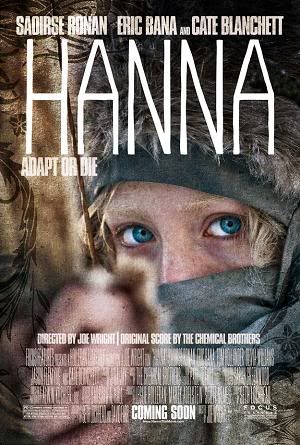
Hanna (Wright, 2011)

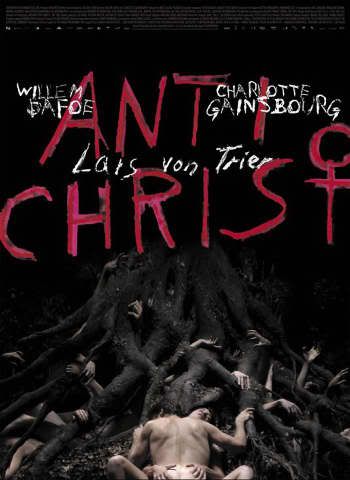
 Well, let us answer that question through a more thorough look at Antichrist, or at least what I am able to surmise with only a single viewing and a mind that still is attempting to process all the symbols and themes that Lars is compelled to toss my way over the relatively lean 110 minute run. Through a wonderfully disciplined style, possessing the occasional whimsy of Alice in Wonderland mixed with the stark realism of a film more akin to Elephant, Von Trier crafts what is, without a doubt, one of the most visually beautiful films in a year that is packed with gorgeous cinema. Whether wandering through the woods and back to Eden, or remaining captive in the close quarters of the run down shack, the film blends the real and the surreal fantastically, which further highlights the Biblical ideas that run throughout without ever directly weaving the real world, theoretically 'our' world, together with the perceived, or perhaps symbolic is the better term as the religious aspects certainly do not appear to be presented as factual. It may be overly cliche to say that the filmmaker is a artist whose canvas is his film, but Von Trier has so many sequences in this film that just stand out as portrait~esque that the comparison is more than relevant. And then to have such sequences placed alongside the sex scenes, it just creates a magical juxtaposition, given the presentation of sex throughout the latter part of the film.
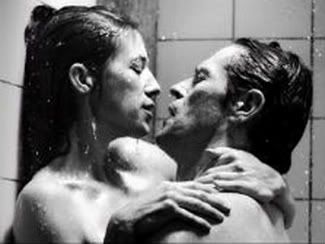 Speaking of sex, it seems that there is a good deal going on here, but it all serves a greater purpose and is really not as plentiful as is to be expected given how much attention I am drawing to the scenes. I suppose in many ways the film is about, at least to an extent, the evils of sex, or pleasure in general. Dafoe's character advises against sex with his wife during her mental healing, it may partially be to blame for the initial tragedy, and Gainsbourg's behaviour in the final chapter can likely support a reading of the evils of sex. Yet Von Trier does not make things that simple at all, he adds in the whole portion about acorns to show the preciousness of life, he directly frames sex as beautiful during at least three portions throughout the film, and he does not let Dafoe off in the least, in fact he may even be condemning Dafoe. To prevent any further rambling, for now, I'm going to completely ignore transitional rules and jump right into performance. Dafoe is solid, and perhaps he has the tougher task given that he is expected to mostly be the serious and straight character, but what Charlotte Gainsbourg does as the She character is phenomenal. I liked her role in I'm Not There, but in Antichrist she does not only turn in a performance worthy of an Oscar, she displays one of the greatest performances of all time. The strength is not found in how much she has to do so much as it is found in the emotion that she brings to the role. Given the film's ambiguous nature she has to play evil and righteous, whore and saint, sane and insane, and still convey the grief that anyone in her situation is expected to possess. Praise upon praise can be given to Gainsbourg for her performance in Antichrist, but the most effective summation is best kept simple: she brings an insane complexity to a nameless character, Gainsbourg is fantastic.
 Aside from performances, the chapter structure of the film is interesting as well. The breaks help keep the pacing pitch perfect and they all tie together into a mostly cohesive whole, retaining meaning as individual portions and as a collective. They chronicle the degradation of everything as well, and I do not mean to be vague by using the term 'everything,' but I do feel that it is the most applicable word in this case. Either way, let's toss up a spoiler warning now for the parts that seem to have audiences all riled up. Likely it will not mean too much out of context, so you should be safe reading, but if you do not want some specific actions revealed then I guess continue to the final paragraph for my closing thoughts. Antichrist was, despite causing who knows how many people to scream and faint and whatever else at Cannes, relatively tame throughout. Sure the film is occasionally overt in the way sex is handled and Gainsbourg has a scene where she walks around completely topless, and then there's that doe with the miscarried deer hanging out of it, but the only parts that I had any trouble watching, and even these are watchable as they are not very long, is when Gainsbourg smashes Dafoe's penis in with something, though that is concealed. However, the follow up where she gives him a hand job so he ejaculates blood instead of semen is slightly unnerving. I was unsettled throughout the whole scene, but I suppose that is to be expected. The other, and likely more unsettling, bit is when Gainsbourg castrates herself by cutting off her clitoris. It's an intense scene, but it serves a purpose and showing the act graphically is necessary to get the full effect, especially when paired with the cut to the deer that immediately follows. So yeah, the film gets unsettling in a few parts, but otherwise I do not understand exactly where the disgust for the film originates.
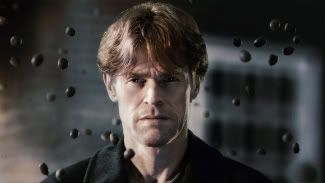 So was this the best place to start with Von Trier? I'm not entirely sure without seeing what else he had worked on, but given the numerous layers, symbols, themes, and ideas that he has going on during this film I have to imagine that it will be tough for his older works to create the same reaction I had toward Antichrist. Antichrist has all the markings of a technically great film, and as far as the extraneous material goes I found myself engaged throughout the entire run, so from an entertainment perspective, and I use the term referring to my mental engagement with the film not any pure bliss of simply watching, it's pretty fantastic as well. Antichrist contains some of the year's best cinematography, likely the year's best performance so far, and more literary and artistic flourishes than just about anything I have seen all year. I need time for it to sit and another viewing to process a good majority of the material properly, so I cannot say if the film is nearly as good as Adventureland, Lymelife, or The Cove just yet, but Antichrist is at least the fourth best film of the year and a truly jarring and rewarding experience.

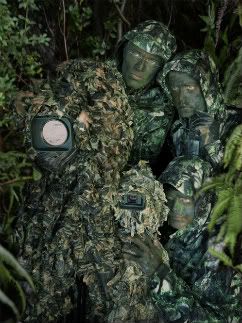
 About a year after the mesmerizing, and Academy Award Winning, doc, Man on Wire, The Cove begins to set up as a documentary that draws influence from various styles of film, most notably espionage films. While The Cove has far fewer constructed sequences than Man on Wire, the comparisons to these genre films are still incredibly warranted because, even without the construction, the entire film is practically an adrenaline rush of social and political intrigue that had me riveted from beginning until end. The action sequences here, and by action I mean the car tailings, the cop stuff, and the actual infiltration, are all nicely handled and enhanced by one of the best scores of the year. The film is surprisingly suspenseful for the type of film that it is and, quite masterfully, never skips a beat in terms of narrative, which is and of itself an impressive characteristic in any type of film, let alone a documentary.
 Of course the film also succeeds as a standard documentary as well. The interviews all serve the film's purpose, the examination is immediately identified and builds throughout, and the whole thing advertises a payoff that, unlike in other docs, hits incredibly hard. For example, the film goes about humanizing the dolphins incredibly effectively. However, to say that the film is simply about dolphins is misleading, as Food, Inc, as well as other older documentaries, has chronicled an abusive industry. No, the tragedy of The Cove is elevated by the dolphin trade, but the actual sadness is in the exposure of government policy, the corruption of power, and the countless victims that will result in the future, all of which the film covers nicely. These aspects are all universal, and I would argue that every individual a part of at least once, usually for extended portions of time. The struggle is tragically heartbreaking and seems to be overlooked in favor of the film's more overt material.
 Still, I do not mean to lessen the effect of the dolphin killings on screen, as the film serves wonderfully as a call to arms for that particular cause as well. The entire film's intrigue is built on seeing the inside of this cove, and once the film really starts to drive at that things start to pick up immensely. And of course that all leads to the hidden cameras in the cove, and the final fifteen minutes of the film, which also happen to be the best fifteen minutes or so of the year in cinema thus far. Soul shatteringly gruesome, the massacre of these dolphins is shown in full force, capped off by the greatest shot of the year, a cove where the water has gone completely red. The film then starts to wrap things up in grandiose fashion. One interview we have been seeing throughout the entire film is revealed to have taken place after the discovery of the footage, as O'Barry, after just being shot down with "I told you, we are not going to talk about what ifs," pulls out a camera and asks the man to take a look at some footage. Sure it's not very professional, I guess, but it's such a satisfying conclusion, you just want the man to be confronted with this evidence. And his reaction is priceless. Cue the reveal at the IWC, the final monologue, the obligatory call to arms, and then the mesmerizing introduction of David Bowie's "Heroes" as the credits start to roll.
 It started during that hidden camera sequence, but by this point I had been effectively bowled over. I recall getting upset over films, I recall weeping after seeing George Washington, but until watching The Cove I had never broken down in tears in a movie theater. The political implications I talked about earlier, mixed with the chilling score and the scenes of the red water left me practically immobile. Does the film have some flaws as a documentary? Probably, as there are one or two points that really do not go very far. Does The Cove present all the facts? I don't really know. However, as I finally worked up the strength to leave the theater and began stumbling my way to the car before breaking down again, I was practically positive that The Cove is nothing short of one of, if not definitively, the best films of the year so far.
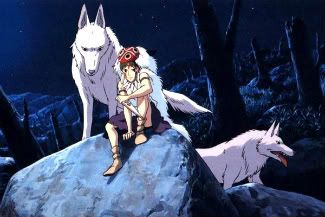 The first striking characteristic the film possesses, well aside from the visual aesthetic, is found in the form of the story. Now I do not use the word story in the sense that the word refers to plot, but rather I mean to say in the way the story is told. In many ways Princess Mononoke is a fairy tale, not unlike classic Disney films that focus on Princesses, albeit with much more characterization, as it possesses all the whimsy of a magical world existing in a mostly realistic setting. The world is really well established. The story is simple enough that it feels like it is being told instead of watched, a characteristic that is captured perfectly in the film, but I do not think designating Mononoke as a simple fairy tale completely does the film justice. In many ways Princess Mononoke feels more like a myth, lore passed down from generation to generation and being refined through each progressive telling of the tale. Now I'm sure I got this feeling because of the film's context, it does take place in historical Japan, I think, so the fact that it feels like a myth rather than a fairy tale is expected. However, what I found particularly fascinating was how it felt so culturally specific yet works so well for an audience member who is not a part of this culture. I think part of Miyazaki's ability is to craft and play with this universal magic without sacrificing the Japanese element of the film. In short, the way the story is presented is pretty wonderful.
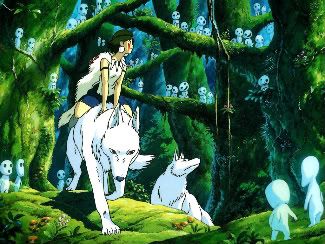 Of course that is not to say that the film is all whimsy and child friendly. The content is rather mature, limbs fly all over the place and blood plays a hefty part in Mononoke, but it is all handled so gracefully. And there is that little environmental aspect, but the film handles it more as a reverence that is nicely disguised to work with the time instead of being something that hits the viewer over the head. Plus the film does not take the whole 'all technology is terrible' route either, so I can definitely appreciate that given the way Miyazaki openly says that both sides can coexist peacefully. The film works as an allegory alright, but as a straight up film it works as well. The opening sequence is riveting and really all of the action sequences are high energy filled thrill rides. On top of that the film mostly nails all of the sombre moments as well, so I am mostly confident when I say that the run time, despite being a little lengthy, is not a detriment to the film at all, though I did need to take a break during the run time for what that is worth. Actually though it is refreshing to see an animated film willing to stretch out the run to over two hours, as most great animated films I generally want to see more of, so having Mononoke take on a lengthier feel, which also enhances the mythological epic feeling, was a wise choice.
 Speaking of animated films, all the technical aspects on display here are top notch. From character animation to the way scenes are drawn, the film is a visual power house. Obviously the imagination in the fantastic characters is going to stand out, Miyazaki has a way with designing these larger creatures that oozes originality, but the real strength is the way that he designs the worlds. The forests, the mountains, and the towns all have a believable beauty to them, not to mention that the traditionally drawn animals are incredible. However, to enhance these creatures, the ones that actually speak are voiced with an insane intensity that makes for numerous great voicing performances. Now I watched the film with subtitles so really all I could go on was how the lines were delivered, but even with this I found myself mostly swept away with the characters. A lot of effort apparently went into the dub as well, so I watched a few scenes with the American voice cast and I can mostly say that the quality of the voice acting there is at least on the level of the Japanese voices. The film, all around, sounds spectacular. Mix that with a brilliant score and the film records high marks in terms of technical quality as well.
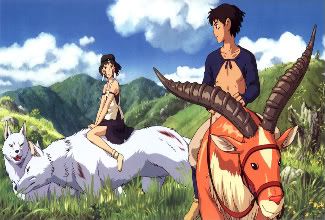 So by now it should be pretty obvious that I loved my time with Princess Mononoke. The film is mature, complex, and pretty much a master piece. It avoids the pitfalls that plague some of Miyazaki's lesser works like Spirited Away and Howl's Moving Castle, and I would have to say that it rivals My Neighbor Totoro and possibly even Porco Rosso as the best Miyazaki film that I have seen. Okay, well maybe not Porco Rosso, but I certainly love it as much as Totoro. Any minor problems that I found with Princess Mononoke have quickly been forgotten in one night's time and I am left remembering all of the breath taking positives. On the whole, the film seems to capture what is great about animation, both Eastern and Western, and I think for that alone Princess Mononoke deserves to be championed as an artistic accomplishment. Truly one of the best films ever made.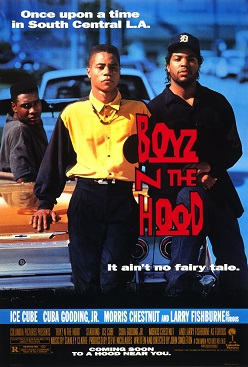
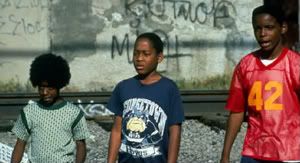 Boyz N the Hood starts off wielding a ten ton hammer that is swung around with more violent rage than any act of brutality in the whole film, all in an attempt to hit the viewer over the head with some simplistic parallel that apparently is designed to be deep or insightful or something like that which hardly works. The scene which I refer to is, of course, the one where the children see that blood is turning yellow and one says "that's because of the plasmids separating," or a similar line. Oh boy, it's like the kids are learning the same thing as everyone except in a different way because of their living circumstances. The streets are just as educational as the classroom. Piss off, John Singleton, you think this is anything but a needlessly overt way to start off a film? Mix that in a few scenes later with Trey's arrival at his father's house depicting, after cleaning, a run down lawn shown alongside the neighbor's beautiful green grass. Lovely, everything is always greener on the other side. Good move.
 Thankfully, Singleton backs off of these cliched and overly simplistic literary devices when the boys exit childhood and become high school seniors preparing for the end of school. Sadly, what replaces these tired devices proves to be just as detrimental to the film. Singleton essentially trades in his run down Toyota for a tractor with two wheels. The script takes an odd turn to a very cliched Hollywood story telling sense where a love interest is needlessly thrown in, a wife and bastard child are added to set up for more emotional impact later in the film, and the story takes no turn from the first party until the credits. The film just feels like an independent film fighting with a Hollywood film and, much like Doughboy and Ricky earlier, the film just gets dingy and gives up. While there are the occasional sequences that do take a few risks, as a whole the film is so by the numbers that these small probes into meaningful territory are completely undermined.
 What seemed so tough whilst watching the film though was not that the film simply kept inserting cliche after cliche, but that it needlessly heightened just about every circumstance and conflict. A scene towards the end where Ricky's SAT scores are revealed proves to be absolutely cringe worthy. Singleton forces stakes into the film and they really stick out as cheap and unnecessary when placed alongside what is supposed to be a tragically brutal and realistic portrayal of impoverished life. On top of that, Singleton's direction, while a few really great shots are used, such as the walk down the rail road tracks, is pretty erratic, ranging from terrible to incredible at any moment in the film. Toss in the score and many times the film started to feel less like an in depth look at urban life and more like an after school special.
 Perhaps Singleton's most apparent crime in the film is not inserting needless drama, though that charge is mighty hefty, but rather the most glaring flaw is Singleton's refusal to let the film speak without dialogue. Despite having opportunities, and even using them at times, to imply things instead of directly speaking to the viewer, Singleton feels compelled to give elongated monologues where Larry Fishburne speaks to the audience about his message, and it really comes off as insincere and overly constructed. Then there are parts where someone talks about how things just keep happening "over and over again." It's all pretty painful to listen to and detracts from any impact the film hopes to make on a viewer. The film is not helped by the actors either. Fishburne is decent, but Cuba is pretty bad and Ice Cube is mostly tolerable.
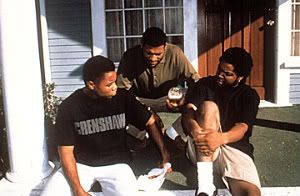 And of course there is the fact that the film is going over territory already explored in much greater depth, in much more detail and with much more sophistication, in other films. The whole concept of being trapped and unable to escape, or the perceived mentality of being contained, is straight out of Charles Burnett's wonderful film Killer of Sheep. Aside from being a much more striking and emotionally engaging film, Killer of Sheep also exists in a much more reserved fashion and does not need to insult the viewer by spoon feeding ideas at each possible opportunity. On top of this, Spike Lee has explored the other territory this film masquerades as exploring in an attempt to appear complex and thought provoking. Despite it not being a tremendous film, Spike Lee's Do The Right Thing provides a more engaging and insightful look at urban life and the injustices of American society without resorting to the theatrics on display in Singleton's film, allowing for a more naturalistic film that enhances the message instead of detracts.
 Much like Do The Right Thing, Boys N the Hood becomes incredibly overt at the end. Yet while Spike continues to call on reality, Boyz N the Hood continues to rely on its cheap theatrics to attempt and force a greater emotional impact on the viewer before proving to be an ultimately hollow experience. The follow up 'here's what these characters are doing now' lines that fade in and out, aside from reinforcing the After School Special feeling, continue to draw attention to the fact that everything on screen is artificially heightened and constructed; thus, any attempt to draw parallels between these characters and the reality is, for the umpteenth time, ground into a dust and blown away in the wind.
 Ultimately, Boyz N the Hood is nothing more than a jumbled mishmash of ideas that are far too willing to conform to Hollywood convention to discover the sort of effective statement that the film so desperately attempts to find. Even without considering the fact that other films, and older films, have done what Singleton attempts, Boyz N the Hood still proves to be a joke of a film that struggles to ever find ground solid enough to stand on either as a high profile Hollywood film or as a thought provoking call to social action. I honestly would like to know if anyone, after seeing the Burnett film and the Lee film, can still make a case for Boyz N the Hood being worth much at all. Hell, I'd be interested in hearing this case made even from someone who has not seen either the Lee or Burnett films because it baffles me that this film can be considered anything except for glorified garbage. I imagine there is more entertainment and more insight to be gained from watching Don't Be a Menace to South Central While Drinkin' Your Juice in the Hood.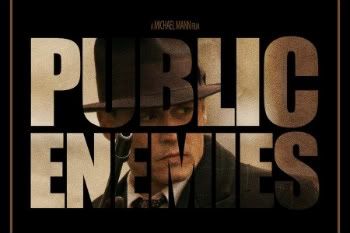
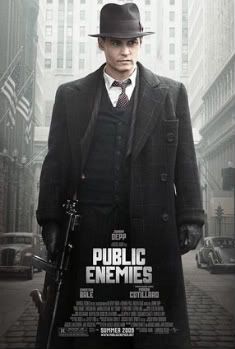 Well, partially I suppose. Mann's direction ranges from brilliant to irritating, though he handles all of the action sequences spectacularly, unlike two other films featuring Bale released recently, and really the whole film is visually stunning. The costumes are great, the scenes are beautiful, and there are a number of shots that are simply top notch. All in all I'm pretty pleased with what Mann put together. Similarly, the acting is pretty damn great as well, though I don't really understand why Bale is billed as a lead. Sure he plays an important role in the plot, but he is not in the film an incredible amount of time and there are points where it is easy to forget that he is even around. When he is on screen though he's really good, playing his character believably and drifting in and out of accents that seem straight out of his 3:10 to Yuma character and the Jack Rollins character from I'm Not There. The real star though, as expected, is Depp. His performance is perfect, he brings so much to the Dillinger character that each moment he is on screen the audience is left guessing what he will do and how he will react to the situations around him. Depp plays things cool and collected when needed but he also captures the force of a truly dangerous man, it's damn impressive.
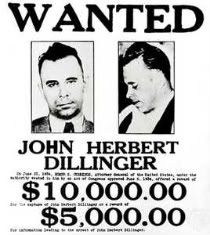 Minimal back story or motivation is given, perhaps because it's a 'true' story or perhaps not, and the film never clearly establishes a definitive goal that should be reached by the end; very little overarching plot exists in the film. Still, the film is incredibly captivating. This structure is mighty interesting and should make for a dull film that does not demand engagement, but Mann establishes the world so perfectly that it is simple to be swept away and simply go along as an observer in a manner that combines all the entertainment of a film with the interesting aspects of a History Channel special. It's pretty damn impressive and it is nice to see Mann not overly cram the film with cliche and convention in favor of entertainment and an easy to swallow film. He simply lets the film exist, adding to the 'real world' quality and enhancing the world that is presented, all blending together spectacularly.