It seems like it was only yesterday I was writing up my Top Tracks and Top Albums of 2011 so far. In fact, it was a couple of days before yesterday. Despite the year being phenomenal for music, as I was looking over the list of movies I have seen in 2011, the abridged list (so the one that excludes all the 2010 releases that I am carrying over because of Filmspots eligibility purposes) is incredibly top heavy. So much so that I almost considered just doing a Top Five Movies list at this point in time because I did not think I have seen ten 2011 movies that were worth dedicating entire paragraphs to at this point in time. The trade off, I think, is that the movies that are at the top of the list are, in many cases some of the millennium's best films. Be sure to look back on the Q1 Top Films list to see how things have shaken up since then. Now dim the lights, grab the old fashioned popping corn, and let's make a list.
Showing posts with label Tree of Life. Show all posts
Showing posts with label Tree of Life. Show all posts
Wednesday, July 6, 2011

Friday, June 17, 2011
The Power In Your Voice. Your Rough Touch. You Keeping Care Of Me, Keeping Watch
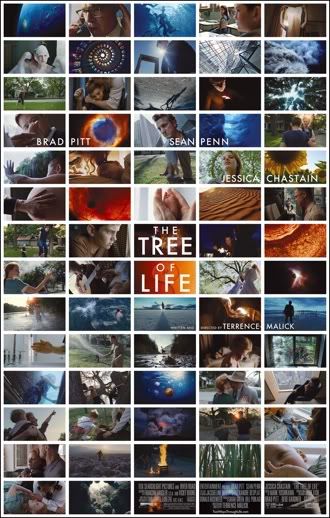
The Tree of Life (Malick, 2011)
"Where wast thou when I laid the foundations of the earth? declare, if thou hast understanding."
And with that brief verse from the Book of Job, Terrence Malick's latest - Palme d'Or winning - film The Tree of Life begins to lay the foundation for a thorough examination of humanity. Moments later we have the primary female voice, via trademark Malickian voice over similar to Badlands and Days of Heaven, posit a thesis that carries throughout the film: during life humans must either walk the path of nature or the path of grace. As we are thrown in to a small 1950's American town the movie makes it blatantly apparent that it casts a wide net, takes on a scope as large as life itself. It really is a beautiful juxtaposition to open the film with, starting as wide and expansive and then keeping those ideas contained to an incredibly specific, focused area. Malick presents the quintessential American life, 1950's USA white, middle class suburbia, and reaches for an understanding of the universal. And from there the film only grows.
Subscribe to:
Posts (Atom)