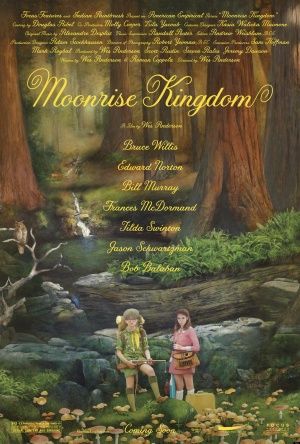
Moonrise Kingdom (Anderson, 2012)
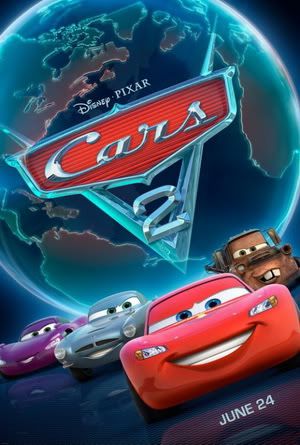


 However, Toy Story 3 is hampered by all the fat around the edges, despite the film's attempts to conceal the weaker points that seemingly weave their way in to keep audiences entertained as a standard action/adventure film in the vein of Up and Wall*E's dreadful final 'chase' acts. Essentially, Toy Story 3 is Toy Story 2 except better paced. Remember the not so funny part in Toy Story 2 where the two Buzz Lightyears got mixed up and the one acted like Buzz did in at the start of the first film? That aspect is mostly back again, except now Buzz is back to acting like a 'real' spaceman while speaking Spanish! And dancing! Zany! And the whole lovable, elderly, fat guy who turns out to be controlling, manipulative, and downright despicable, remember that bit? Well that plot line is recycled in the form of Lotso, a bear abandoned by his former owner, making a nice foil for Jesse. Speaking of Jesse, recall how intolerable she was in the previous film? Well she is better in this one because her role is incredibly downsized. Since the film cuts between so many different areas so quickly, and has the characters constantly moving forward, Jesse, and really very few of the toys, ever get to take center stage, which results in some fairly underdeveloped characters. At one point Woody encounters three new toys, all of which seemed interesting, but these characters are on the screen for such a short time they feel more like joke devices than actual characters, resulting in really simplistic interpretations of these individuals. The same can be said of the figures in Lotso's 'family.'
 As a refinement of Toy Story 2, Toy Story 3 works on just about every level. As a successor to Toy Story, this film falls incredibly short. As an entry in Pixar's catalog, Toy Story 3 is, like many of the studio's films, a middle of the road feature that contains flashes of enjoyment and even brilliance, but is held back by so many paint by numbers story telling techniques, irritating characters, and flat jokes that these features seem lesser by comparison. However, the greatest achievement of Toy Story 3 is the restraint in how emotion is handled. My largest problem with the first ten minutes of Up the obvious manipulation going on in that portion of the film, a trait that only became more apparent as the film tried to integrate emotion further in the run time, and the same can be said of Wall*E and even parts of the masterful Ratatouille. When Toy Story 3 attempts to create a specific mood it works so well, it is just a shame the rest of the film has to exist.
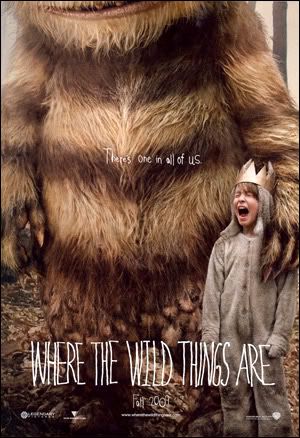
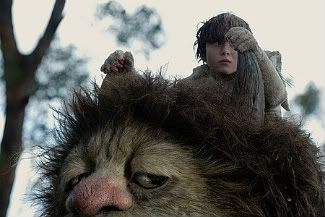 In many ways Jonze does deliver a film that is so much more than a simple film made for family friendly audiences, we have a movie that is essentially a trip into the psyche of a vulnerable child as he apparently attempts to come to terms with all of the turmoil in his life. Jonze does, for better and worse, capture the idea of childhood with this film, in each and every regard. Unfortunately, that freedom also shines through in the narrative, or in many cases the lack thereof. The majority of the film when we spend time where the wild things are, the viewer is given only minor references to what portion of Max these creatures are supposed to represent or what the point of him being here is, other than to make things looks pretty for the viewer. But the film is a character study, we don't really need a plot, right? Right. Sadly, the character we are studying is developing constantly, but he is doing it through six or seven lesser portions that simply do not stand alone as compelling enough characters to warrant all the conflict and emotion that Jonze forces on the viewer. In many ways this film is like Antichrist, you know the symbolism is going on because the film pushes the viewer in that direction, but in neither film are we given enough to completely let these symbols exist naturally in the film, but with Antichrist the entire film is overtly allegorical, where as this film is all over the place because we need to believe the reality of the reality as well as the reality of the fantasy in this world. Perhaps I am over-analyzing the film, but I cannot help but I do feel safe in asserting that the film is more rewarding to contemplate afterward than it is to watch during. But that contemplation is the mark of a great film, I am so torn.
 You know what else is the mark of a great film? Technical prowess. Jonze has this prowess in spades. Everything about the film up to the point where Max first encounters the wild things is absolutely brilliant. Not only are all of the actors near flawless, a trait that does carry throughout the entire film, but the camera is used so intimately that the intended emotion of each scene practically oozes from the screen. Pair that with the wonderful use soundtrack, the fantastic editing, and the intense art direction and we could have one fantastic film. Actually, all of those things mostly do run throughout the entire film. Why do I not love this film more? Anyhow, Jonze miraculously loses all of this emotion as the film continues, only capturing flashes of the initial greatness about ever 15 minutes or so. Thankfully the film is God damned beautiful, so despite the narrative and character development not being too engaging during the run the visuals are more than enough to keep the film afloat.
 But I think things need to stay more than just afloat, in such a personal yet apparently universal film each and every viewer needs to be able to both sympathize and judge Max all at once. Perhaps that is what is missing in the middle. Early on, when we are still in the real world, everything Max does and each different scene not only reveals more and more about his character, though hardly in overt manners, while conveying different emotions. So much so that I imagine each and every viewer can, to some extent or another, connect with at least one of the things that Max experiences. Rebellion, isolation, joy, freedom, imagination, everything. Jonze displays it all, and he does it wonderfully. Hell, the film nearly had me in tears, which would have easily been a record, about fifteen minutes in when Max is lying on the ground under his mother's desk and she stresses out over work. I spent most of my adolescence in a single parent household and I completely connected with what Jonze had on display, but as a viewer I was also able to see the tragic beauty. And then we get the gut-wrenching scene where Max's mother has her boyfriend over. The way events transpire, it's devastatingly brilliant. But then that emotion disappears and we are given a pretty film to look at for a while.
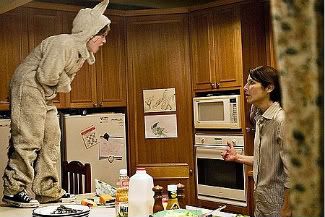 Much like a child telling a story, the narrative offers basic symbols and moments of genius, but it just does not give enough during the film to truly showcase its brilliance. Yet after the credits rolled it's all mostly there, it just takes looking closer at the subtext. It's so confusing. I really do not know where I stand on the film, whether I love it, dislike it, respect it, admire it, adore it. I do not know. I honestly considered giving the film two ratings, but I can't do that, mostly because scores are meaningless. I'm certain this is not one of my favorite films of the year, yet aside from my top two or three there are no other films I have seen this year that I am more eager to revisit. I'll have to see if I can find someone to go with in the near future and hopefully get a fresh interpretation, maybe that will help me figure things out more. Let's just say it's pretty good, and pretty bad, and pretty fantastic.
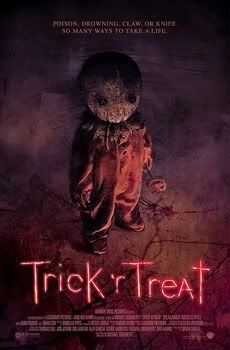
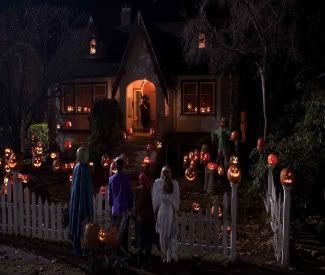 A uniform narrative, at least in the sense that it all does occur in one area on a single night, the film follows four different groups of people on Halloween night. All of the stories flow normally, the cuts are not awkward or anything like that, and they are strung together by the ominous Sam character, a young child with a burlap sack or something similar covering his head. Visually it works wonders and keeps a mysterious figure at the center of what is already a collective of incredibly compelling tales. The performances are nothing incredibly special, I suppose Anna Paquin is the big name but she has never done much for me and she only continues to underwhelm in this film, and the direction did not have me stunned, but the film is edited excellently and really wonderfully paced and constructed, so I have no qualms about the technical aspects of the film at all. In fact, the film has a visual style that practically drips the essence of Halloween. Unlike any film I have ever seen before, and admittedly they are few and far between, no movie conveys all the atmosphere that comes with this time of year. It's absolutely intoxicating in a way that the all time great holiday movies are, and in many ways this film has the substance to exist as a great film even outside of the Halloween time frame. I suppose anyway since it just released and I will have to revisit it in a few months to verify this claim.
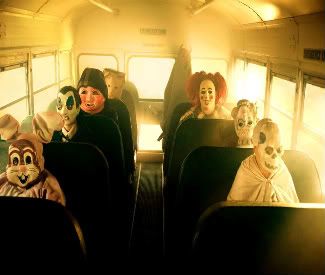 Many aspects of this film really reminded me of some childhood memories magnified and readjusted for a person who, like myself, grew up with these television programs and has missed similar thrills that cater to a more mature demographic. The film captures the thrill of a show like Are You Afraid of the Dark?, the excitement of a movie like Hocus Pocus, and the twists and turns that R.L. Stein delivered in his Goosebumps books and television series. Having the film tap into all of these different entertainment forms, while still making everything modern, occasionally bloody, usually frightening, and R rated in terms of language and what not, makes for a film that not only hits all the right notes in regard to nostalgic purposes, but also acts as a great thrill ride that does not let up at all during the 90 minute or so run. I am honestly stunned that such a high quality film was kept out of theaters and saved for a direct to DVD release, it truly is impressive that such a film could slip through the cracks because it seems to be able to appeal to anyone at all, even a non horror fan like myself. Who does not like to have a little fun?
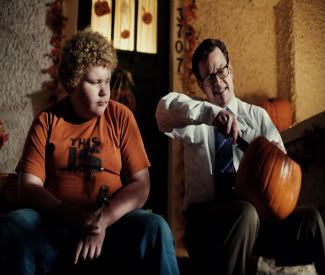 So, unlike Antichrist, Trick 'r Treat is a much more traditional horror film, or at least that is what I have gathered. Plus the way it embraces Halloween is absolutely stunning, though I have probably fawned over that enough over the course of this review. Sure the film is not flawless in the sense that it has insane thematic depth, character development, or even interesting direction, but it also does little to nothing wrong aside from getting a little predictable toward the end. The film is a good time, it's a unique tale, it has a central symbol and idea that are both advanced incredibly well, and it really is a film that should enter the holiday cannon. The film is not scary, so those looking to be frightened should probably look elsewhere, but everyone really should go out of their way to check out this film, preferably before or on Halloween, because it truly is one Hell of a ride.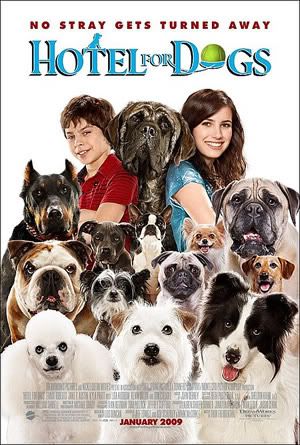
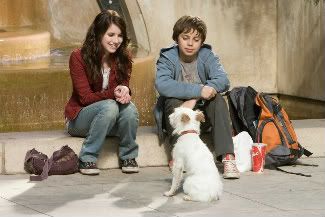 In actuality, Hotel for Dogs is pretty standard stuff at its heart, but the film puts on enough of a show to keep things both fresh and interesting enough to sustain its abnormally lengthy run time of almost two hours. Things start off interestingly enough as the viewer is greeted by a constructed plastic town full of whimsy and the 1950's American Spirit, or something of the sort, before introducing us to Friday as he prowls the streets of some pseudo-city area for some food. Shortly after we are introduced to both Andi and Bruce, Friday's owners and the film's protagonists. Marking these opening sequences is some pretty nice direction, mixing in a few pretty neat shots and sequences, but ultimately nothing of huge interest. All of these things set up nicely for the film as a whole because on the whole the film proves to be a mostly mixed bag of entertainment in spite of the standard technical pieces.
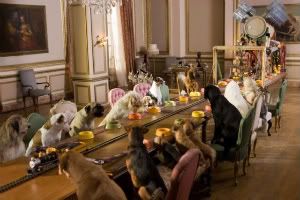 Of course there is one major exception to this, and that is in the design and integration of the devices used inside of the Hotel. Most of the inventions that the film has Bruce come up with are really fun bits of whimsy inserted into the film to give it a nice atmosphere without being too over the top or unrealistic. Sure there is a suspension of belief needed to buy into all of the things that are happening on screen, but the film asks the viewer to do this from the beginning and, for the most part, earns this suspension while still keeping things contained in this world through the whole thing instead of breaking it when it could be convenient for the narrative.
 Of course this is not the film's only triumph. While the narrative as a whole is pretty predictable, and when the film takes advantages of connecting plot to larger themes things become pretty obvious, the construction is mostly admirable and the film rarely wastes any time or has any points that feel like stalls in the narrative process. Also the integration of the 'we are orphans and the dogs are like us' metaphor is nice considering that the film is geared toward a younger audience, not to mention that it, mostly, avoids being overly direct or dumbed down to the point where it insults older viewers. There is an extended monologue at the end where things start to get a bit preachy, but it mostly works in context of the film despite almost serving as a literal soapbox. Unfortunately the film does not really integrate humor as well as it could, especially considering that Jake T. Austin has already shown an ability to be incredibly funny when given the correct material. Sure the film has Troy Gentile turn in a strikingly funny performance as Mark, but on the whole the film could have been a good deal funnier than the final product would imply.
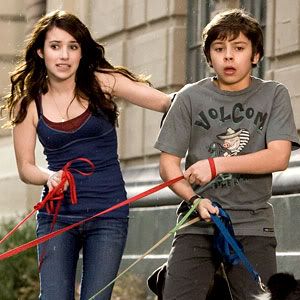 Speaking of Jake T. Austin, I was really looking forward to seeing how he would do in a full length film after watching him develop from a slightly tolerable throw away character to one of the most interesting cast members in Disney's Wizards of Waverly Place series, but I was very disappointed with his part in the film. He always felt like he was trying a bit too hard to be the reserved, sheltered, and conflicted younger brother type. He has a few flashes that are really promising, but the role does not offer much and Austin, sadly, does not do much to make it how own, but he is still growing and he shows promise as an actor. Of course it does not help that he is constantly alongside Emma Roberts. I had jokingly said that, after seeing her in Lymelife, that she has potential to top both my Lead and Supporting Actress lists for the year so far, but little did I know that it would turn out to be almost true. In a sea of near mediocrity, Roberts turns in a marvelous performance that must cement her as the most interesting young actress currently working. The range she shows is impressive, but the believability and personality she brings to the Andi character is endearing and inspired. Most of the supporting cast is really good, but Roberts is clearly the standout star and, while I would really need to think of other actresses to know where she falls in my rankings, she certainly is pretty damn impressive here.
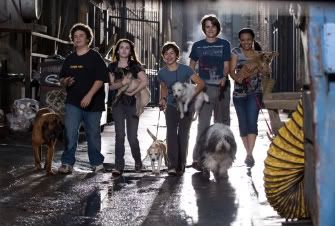 All in all Hotel for Dogs, despite being nothing revolutionary, possesses enough charm, and more than enough dogs, to have kept me both entertained and enjoying my time with the film. Sure, I tend to give most films that involve canines a pass, but here the film is well constructed enough to really succeed and sustain itself without feeling overly cheesy or ever mind numbingly stupid. Highlighted by Emma Roberts' second incredible performance of the year, Hotel for Dogs is a nice bit of escapist cinema with enough earned emotional pull to lift it from decent to good territory. It's a film I would not mind watching again some time in the future and really had my surprised with how much I had eventually enjoyed the film. The film also has a pretty funny Reservoir Dogs homage in it too, which is pictured above.
 The film immediately starts out by showcasing Ramsay's directorial prowess, a trait that never lets up once during the film. The movie overflows with stunning shots and sequences that high light the atmosphere at the time and showcase some of the most spectacular cinematography I have ever witnessed in a film. At the start of the film, for about the first twenty minutes or so, it is actually very fortunate that the camera is used in such a wondrous manner because without such technical prowess I think it may have easy to lose interest in the hurried narrative; however, the reason the interest in the story is not there immediately is likely a result of how Ramsay opens the film and what expectations she works into the viewer's mind. When a film opens with a character we are generally led to believe that this figure will be the central character, and then Ramsay flips that entire notion on its head. It's a really impressive technique that adds to the film's meticulous construction in just about every aspect. Of course the film picks up immensely after the twenty minute mark when James goes on his first bus ride, so the prowess then begins to elevate the film instead of simply sustaining the movie.
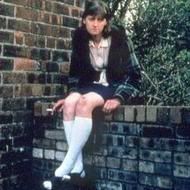 Of course all the technical accomplishment a film may possess can easily be undermined by poor acting, but thankfully all of the actors in the film are really great and handle their roles with similar care to how Ramsay handles the script and the camera. In the role of James, William Eadie turns in an incredibly heartfelt performance that completely captures the mentality of a youth both in and out of place. He shows a spectacular range and is pretty phenomenal. Tommy Flanagan is pretty great as the Da, but of the secondary characters the obvious stand out comes in the form of Lynne Ramsay Jr. in the role of Anne Marie. She hits all of her notes pitch perfectly and always makes the audience want to hate her, but she possess some sort of mysterious charm that really prevents that, until the film begins to close and we see just how perfectly she played the part and how much respect she seemingly had for her character. It's mighty impressive that such a young girl can turn in such a powerful performance.
 While it seems that this review is a bit shorter than my other looks at films, admittedly it is pretty rushed, I believe the reason for this is because the film covers so much ground that I am fairly sure that I was unable to completely grasp everything on a first viewing so I figured I would just discuss the highlights until I inevitably revisit the movie in a few years. I would also like to discuss, not at length or give any specifics, the fact that I'm pretty sure the film was designed specifically with my interests in mind. Never has another film gotten an ending so right nor with such mastery, beauty, and naturalism. It really is fantastic. Ratcatcher really nails just about everything in terms of quality and value while managing to turn in a compelling and complex film that takes great care to give the viewer just enough information to make the experience unique and rewarding. Sure it's no George Washington, the movies focus on two completely different topics and George Washington really covers much more territory, but who cares? Ratcatcher is still one Hell of a film that I can fully endorse.