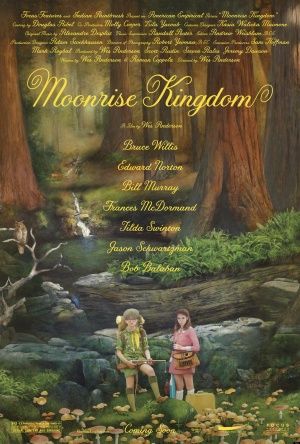
Moonrise Kingdom (Anderson, 2012)


Three Colors: Red (Kieslowski, 1994)
I entered Krzysztof Kieslowski's final entry in his Three Colors Trilogy, Three Colors: Red, with a great deal of uncertainty tinged with a splash of hopefulness. I had little frame of reference for this film, knowing little about the actual plot that would be explored and having never seen another film from the Polish director, but the reputation these films have built up since their release in the early 1990's is astounding. However, outside of the reputation I did not know the plot of this film or its exact connections to the previous two films in the trilogy. So after sitting down to confront this film would it have been better to build context with the other two films or will I have to already begin revising my Top 97?

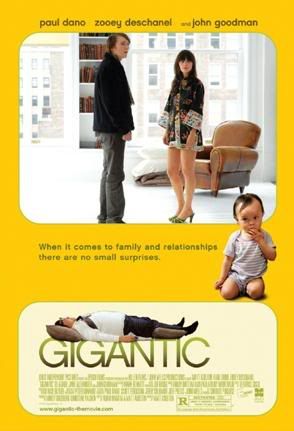
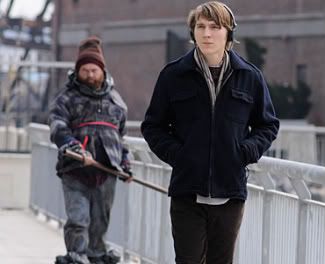 The ideas presented in the film are mighty interesting as well, though the movie could have likely used another ten minutes or so to give the viewer a push in some sort of general direction. I am all about ambiguity, and the way the film is constructed the ambiguous nature of the plot lines proves to be crucial to the entire experience, but the idea does not completely pay off at the end. However, I find myself incredibly interested to take a look back and see if I over looked any tiny details that may help give me something more to latch onto and ponder even more in depth. The humor, surprisingly, lands when it is used, but the film is hardly a laugh a minute. Thankfully, the film also crafts some pretty fascinating characters to make up for the fact that that plot is a little lean. But the film is also fairly complex and, much to my delight, only hints instead of coming out and actually revealing things, which I love in films. It makes the audience work, and I can respect the script for taking that chance.
 Of course a lot of the writing could easily go to waste with a cast that is not capable of handling the roles. As I said, Deschanel is brilliant, and beautiful, and just about everything the role needs. Of course placing Dano opposite her, and having him turn in a performance that is both human and genuine, capturing the struggles of what appears to be a troubled man attempting to exist in 'normal' society, is a choice that pays off in droves. Goodman is mighty great as well, and Asner turns in a performance that is certainly at least five steps above his voice work in the underwhelming, and incredibly overrated, Pixar film Up from earlier this year. Other highlights of Gigantic include a soundtrack that rivals Adventureland and Lymelife for the year's best, a fantastic supporting cast, and a highly stylized world that all add up to one Hell of a debut for Matt Aselton.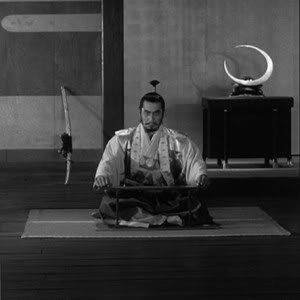
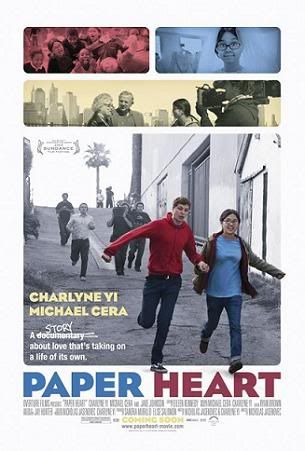
 Speaking of constructed, the actors on display here are pretty fantastic. In many ways the only actor in the film is Jake Johnson as he plays the film's director, Nicholas Jasenovec, but I am fairly sure that each cast member in the film, that is the non interviewees, are all performing. Yi is spectacular, and she needs to be for the film to succeed at any level, but her real strength constantly seems to be her reluctance mixed with her curiosity. These traits keep the interviews compelling, but they also help build her character progressively throughout the film. Still, the obvious standout has to be Michael Cera. Cera plays an altered version of himself, seemingly embracing and challenging the notions of him always playing the same character, with tremendous humor and subtlety. Cera is mighty spectacular in the role, slightly reminiscent of his time on the Clark and Michael web series but also a good deal more refined. He does not play himself, Michael Cera plays the public perception of Michael Cera.
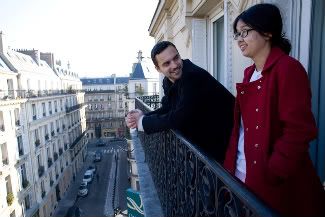 As for the technical aspects, the film is actually impressive as well. Designed to keep the viewer off guard, Paper Heart switches from overly documentary sequences, where the film grain is kicked up to enormous levels, to really beautiful and disciplined shots, like the walk through the forest between Yi and Johnson. However, the sequence that stands out would have to be the scenes in Paris. At the drop of a hat the film takes these entirely constructed sequences and switches the way they are presented almost instantaneously, which is even more impressive the more I look back on the film. However, the direction is not the only striking visual aspect showcased here. The film has numerous charming sequences where interviewees detail their own personal love stories while Yi animates the stories with hand crafted puppets. These scenes are some of the most visually striking of the film and are used to great effect. The film is also enhanced by the score, which is mighty top notch.
 In many ways, Paper Heart is probably a comparable film to Bruno, and I would actually be interested in doing a follow up comparison of the two films so someone should make me do that in the near future, in the sense that both subvert a viewer's notions of what a docu/mockumentary should be and how the topics should be covered. Obviously, Paper Heart is more of a film than Bruno, and even more complex as I begin to write more and more about my short time, about an hour and a half, with the film, but they both share some downfalls as well. Not all of the interviews land and the laughs, though clearly there, are not as big as in a straight comedy. However, all of these minor problems are practically irrelevant when looking at the bigger picture. Paper Heart is a layered and complex film that does not only examine love, but examines the entire idea of fabricated realities. At first I was not entirely blown away by the film, but, as is the case with every great film, the more thought I allot to Paper Heart, the better the film appears.

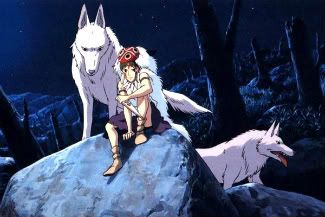 The first striking characteristic the film possesses, well aside from the visual aesthetic, is found in the form of the story. Now I do not use the word story in the sense that the word refers to plot, but rather I mean to say in the way the story is told. In many ways Princess Mononoke is a fairy tale, not unlike classic Disney films that focus on Princesses, albeit with much more characterization, as it possesses all the whimsy of a magical world existing in a mostly realistic setting. The world is really well established. The story is simple enough that it feels like it is being told instead of watched, a characteristic that is captured perfectly in the film, but I do not think designating Mononoke as a simple fairy tale completely does the film justice. In many ways Princess Mononoke feels more like a myth, lore passed down from generation to generation and being refined through each progressive telling of the tale. Now I'm sure I got this feeling because of the film's context, it does take place in historical Japan, I think, so the fact that it feels like a myth rather than a fairy tale is expected. However, what I found particularly fascinating was how it felt so culturally specific yet works so well for an audience member who is not a part of this culture. I think part of Miyazaki's ability is to craft and play with this universal magic without sacrificing the Japanese element of the film. In short, the way the story is presented is pretty wonderful.
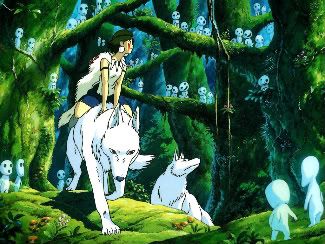 Of course that is not to say that the film is all whimsy and child friendly. The content is rather mature, limbs fly all over the place and blood plays a hefty part in Mononoke, but it is all handled so gracefully. And there is that little environmental aspect, but the film handles it more as a reverence that is nicely disguised to work with the time instead of being something that hits the viewer over the head. Plus the film does not take the whole 'all technology is terrible' route either, so I can definitely appreciate that given the way Miyazaki openly says that both sides can coexist peacefully. The film works as an allegory alright, but as a straight up film it works as well. The opening sequence is riveting and really all of the action sequences are high energy filled thrill rides. On top of that the film mostly nails all of the sombre moments as well, so I am mostly confident when I say that the run time, despite being a little lengthy, is not a detriment to the film at all, though I did need to take a break during the run time for what that is worth. Actually though it is refreshing to see an animated film willing to stretch out the run to over two hours, as most great animated films I generally want to see more of, so having Mononoke take on a lengthier feel, which also enhances the mythological epic feeling, was a wise choice.
 Speaking of animated films, all the technical aspects on display here are top notch. From character animation to the way scenes are drawn, the film is a visual power house. Obviously the imagination in the fantastic characters is going to stand out, Miyazaki has a way with designing these larger creatures that oozes originality, but the real strength is the way that he designs the worlds. The forests, the mountains, and the towns all have a believable beauty to them, not to mention that the traditionally drawn animals are incredible. However, to enhance these creatures, the ones that actually speak are voiced with an insane intensity that makes for numerous great voicing performances. Now I watched the film with subtitles so really all I could go on was how the lines were delivered, but even with this I found myself mostly swept away with the characters. A lot of effort apparently went into the dub as well, so I watched a few scenes with the American voice cast and I can mostly say that the quality of the voice acting there is at least on the level of the Japanese voices. The film, all around, sounds spectacular. Mix that with a brilliant score and the film records high marks in terms of technical quality as well.
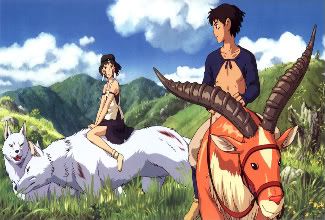 So by now it should be pretty obvious that I loved my time with Princess Mononoke. The film is mature, complex, and pretty much a master piece. It avoids the pitfalls that plague some of Miyazaki's lesser works like Spirited Away and Howl's Moving Castle, and I would have to say that it rivals My Neighbor Totoro and possibly even Porco Rosso as the best Miyazaki film that I have seen. Okay, well maybe not Porco Rosso, but I certainly love it as much as Totoro. Any minor problems that I found with Princess Mononoke have quickly been forgotten in one night's time and I am left remembering all of the breath taking positives. On the whole, the film seems to capture what is great about animation, both Eastern and Western, and I think for that alone Princess Mononoke deserves to be championed as an artistic accomplishment. Truly one of the best films ever made.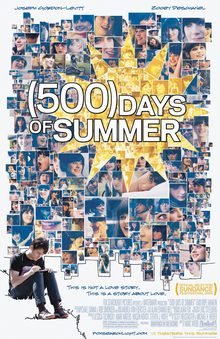
 The film is certainly marked by a distinctive visual style at times, both in the way it looks and the way the camera is used, but the whole thing is pretty erratic throughout. Still, the range of shots Webb uses is impressive and has me excited to see what he works on in the future. The way he uses the camera to call back to other films is mighty impressive as well. Aside from a whole black and white foreign sequence that brilliantly recalls a few Ingmar Bergman films, the hand drawn opening echoes Juno, there's an Annie Hall element to the plot, and then a good deal of others in the between. Sadly these references are not always used to great effect. Unlike the stunning split screen expectations v. reality sequence that heralds Annie Hall, the film's first two acts are mostly genre tributes just for the sake of tribute, including a terrible musical sequence. The film calls attention to use of convention, but like, to quote the severely overrated Dark Knight, a dog chasing a car the film does not know what to do once it catches it. In a sense, (500) Days makes an interesting parallel to Duncan Jones's film Moon, which also subverts genre expectations but to the film's benefit.
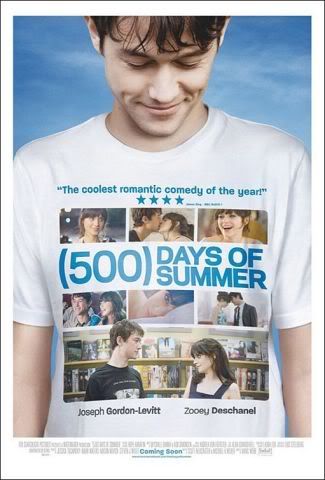 Just like Moon, this film showcases some pretty stellar acting as well. Jo and Zo are brilliant, particularly Zo who gives my second favorite performance by an actress this year. She plays her part perfectly, generating an almost inexplicable magical charm that simply draws the viewer toward her character. In fact she is so genuine in her performance that, when the film makes its big reveal, it almost feels like she has betrayed the viewer. Sadly, the supporting cast is nothing to write home about. Sure they all give decent performances, but the film is clearly a vehicle for Jo and Zo, so not showcasing an outstanding supporting talent is pretty obvious, I assume. Still, none of the performances are really terrible, which is a credit to the film.
 Ultimately, (500) Days is an interesting idea that does not completely live up to its potential during the fairly standard one hundred minute run time. However, it should be stated that the film has an unbelievably strong third act. Once that expectations v. reality scene starts the film barrels along and never pulls a punch. Unfortunately, getting to this point we have to deal with so many scenes that lack the needed humor or intrigue to keep things fresh, the first two acts are mighty bad. I am a man who values endings though, and the way the film pulls everything together is so damn great that I can easily state that the film is, at its worst, a pretty solid film that deserves a watch. Hell, I'll even tack on the B+.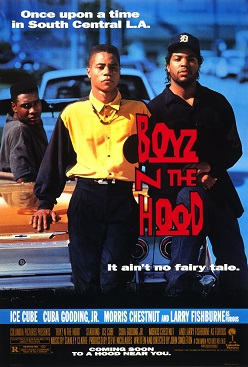
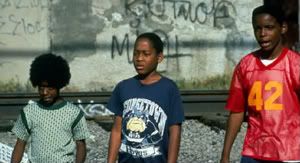 Boyz N the Hood starts off wielding a ten ton hammer that is swung around with more violent rage than any act of brutality in the whole film, all in an attempt to hit the viewer over the head with some simplistic parallel that apparently is designed to be deep or insightful or something like that which hardly works. The scene which I refer to is, of course, the one where the children see that blood is turning yellow and one says "that's because of the plasmids separating," or a similar line. Oh boy, it's like the kids are learning the same thing as everyone except in a different way because of their living circumstances. The streets are just as educational as the classroom. Piss off, John Singleton, you think this is anything but a needlessly overt way to start off a film? Mix that in a few scenes later with Trey's arrival at his father's house depicting, after cleaning, a run down lawn shown alongside the neighbor's beautiful green grass. Lovely, everything is always greener on the other side. Good move.
 Thankfully, Singleton backs off of these cliched and overly simplistic literary devices when the boys exit childhood and become high school seniors preparing for the end of school. Sadly, what replaces these tired devices proves to be just as detrimental to the film. Singleton essentially trades in his run down Toyota for a tractor with two wheels. The script takes an odd turn to a very cliched Hollywood story telling sense where a love interest is needlessly thrown in, a wife and bastard child are added to set up for more emotional impact later in the film, and the story takes no turn from the first party until the credits. The film just feels like an independent film fighting with a Hollywood film and, much like Doughboy and Ricky earlier, the film just gets dingy and gives up. While there are the occasional sequences that do take a few risks, as a whole the film is so by the numbers that these small probes into meaningful territory are completely undermined.
 What seemed so tough whilst watching the film though was not that the film simply kept inserting cliche after cliche, but that it needlessly heightened just about every circumstance and conflict. A scene towards the end where Ricky's SAT scores are revealed proves to be absolutely cringe worthy. Singleton forces stakes into the film and they really stick out as cheap and unnecessary when placed alongside what is supposed to be a tragically brutal and realistic portrayal of impoverished life. On top of that, Singleton's direction, while a few really great shots are used, such as the walk down the rail road tracks, is pretty erratic, ranging from terrible to incredible at any moment in the film. Toss in the score and many times the film started to feel less like an in depth look at urban life and more like an after school special.
 Perhaps Singleton's most apparent crime in the film is not inserting needless drama, though that charge is mighty hefty, but rather the most glaring flaw is Singleton's refusal to let the film speak without dialogue. Despite having opportunities, and even using them at times, to imply things instead of directly speaking to the viewer, Singleton feels compelled to give elongated monologues where Larry Fishburne speaks to the audience about his message, and it really comes off as insincere and overly constructed. Then there are parts where someone talks about how things just keep happening "over and over again." It's all pretty painful to listen to and detracts from any impact the film hopes to make on a viewer. The film is not helped by the actors either. Fishburne is decent, but Cuba is pretty bad and Ice Cube is mostly tolerable.
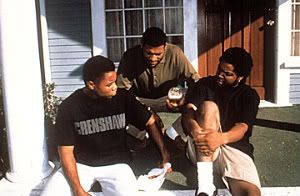 And of course there is the fact that the film is going over territory already explored in much greater depth, in much more detail and with much more sophistication, in other films. The whole concept of being trapped and unable to escape, or the perceived mentality of being contained, is straight out of Charles Burnett's wonderful film Killer of Sheep. Aside from being a much more striking and emotionally engaging film, Killer of Sheep also exists in a much more reserved fashion and does not need to insult the viewer by spoon feeding ideas at each possible opportunity. On top of this, Spike Lee has explored the other territory this film masquerades as exploring in an attempt to appear complex and thought provoking. Despite it not being a tremendous film, Spike Lee's Do The Right Thing provides a more engaging and insightful look at urban life and the injustices of American society without resorting to the theatrics on display in Singleton's film, allowing for a more naturalistic film that enhances the message instead of detracts.
 Much like Do The Right Thing, Boys N the Hood becomes incredibly overt at the end. Yet while Spike continues to call on reality, Boyz N the Hood continues to rely on its cheap theatrics to attempt and force a greater emotional impact on the viewer before proving to be an ultimately hollow experience. The follow up 'here's what these characters are doing now' lines that fade in and out, aside from reinforcing the After School Special feeling, continue to draw attention to the fact that everything on screen is artificially heightened and constructed; thus, any attempt to draw parallels between these characters and the reality is, for the umpteenth time, ground into a dust and blown away in the wind.
 Ultimately, Boyz N the Hood is nothing more than a jumbled mishmash of ideas that are far too willing to conform to Hollywood convention to discover the sort of effective statement that the film so desperately attempts to find. Even without considering the fact that other films, and older films, have done what Singleton attempts, Boyz N the Hood still proves to be a joke of a film that struggles to ever find ground solid enough to stand on either as a high profile Hollywood film or as a thought provoking call to social action. I honestly would like to know if anyone, after seeing the Burnett film and the Lee film, can still make a case for Boyz N the Hood being worth much at all. Hell, I'd be interested in hearing this case made even from someone who has not seen either the Lee or Burnett films because it baffles me that this film can be considered anything except for glorified garbage. I imagine there is more entertainment and more insight to be gained from watching Don't Be a Menace to South Central While Drinkin' Your Juice in the Hood.
 Speaking of larger context let's start pretty broad and begin narrowing things down from there. Kurosawa turns in another fantastic effort behind the camera and, in some ways even more than Rashomon, makes for a visually compelling film. Seeing how differently he handles shots in a larger and congested city as opposed to the tangled forests was interesting and really gave the film its own stylistic feel while keeping with elements that are quickly becoming Kurosawa trademarks. Once again seeing the influence that the man has had on future films is near unmistakable when watching Ikiru, but in some ways I almost felt that, as far as direction is concerned, Rashomon is just slightly stronger. However, every time I thought this we would get sequences like the playground one or the one in the bar early on. In other words, the film looks pretty damn beautiful.
 So now we'll get a little more concise and focus on the acting. While the film is littered with a ton of really good performances throughout, the anchor, as the script demands, must be Watanabe. Thankfully, Takashi Shimura turns in a top notch performance that hits all of the right notes. Even if the script was horrible, the direction terrible, and the other actors particularly dreadful, I am completely confident that Shimura's performance alone would make for compelling cinema. Obviously none of that is the case though and all the surrounding elements only help to enhance his job on screen. He captures the mentality of man perfectly and seeing him develop in the face of certain death and a crumbling family life is handled masterfully, both by Shimura and Kurosawa. The performance is truly incredible and certainly had me impressed throughout the hefty two and a half hour run time.
.jpg) Now the run time could have easily been a flaw, and there were one or two scenes where things slowed down a noticeable bit, but for the most part the film was paced excellently. It clearly followed a very direct Three Act structure, but age old tales have always been told about how life is, at its core, three different parts all making up a whole. I do not think it is by coincidence that Kurosawa structured the film in such a manner, and taken in context it's a truly remarkable technique. Actually, most of the artistic value of the film is handled wonderfully and just about all of the philosophical stuff is given ample attention.
Now the run time could have easily been a flaw, and there were one or two scenes where things slowed down a noticeable bit, but for the most part the film was paced excellently. It clearly followed a very direct Three Act structure, but age old tales have always been told about how life is, at its core, three different parts all making up a whole. I do not think it is by coincidence that Kurosawa structured the film in such a manner, and taken in context it's a truly remarkable technique. Actually, most of the artistic value of the film is handled wonderfully and just about all of the philosophical stuff is given ample attention. The one problem I had with the film was in the bureaucratic commentary. The film starts off with a whole round about sequence of going from department to department that is used incredibly, and most of the stuff in the third act, especially the final returning to work portion, is flawlessly executed, but the theme feels a bit underdeveloped during the middle portion. Now I know this theme was not supposed to act as the backbone of this portion, but having a little more there could have really pushed the film over the top for me. When the number of successes in a film are so plentiful, as is the case with Ikiru, the one flaw tends to stand out, but as I evaluate it I am able to realize that it does not hurt the film all that much. The only other potential problem I can think of, as was the case with Rashomon, is how direct the ending is, though thankfully nothing feels rushed or forced here, so the problem here is more personal and less technical, so my supporting evidence is limited.
 Ultimately, my second experience with Akira Kurosawa was similar to my first. Things start off fairly simple, but as the film builds it picks up momentum at an astounding rate and makes for an incredibly compelling film. I think the sheer amount of material here, extraneous ideas given to each individual viewer I mean, is so numerous that I need at least one more viewing to process everything, but I can say without a doubt that Ikiru demonstrates Kurosawa's versatility as a storyteller and as a director while still existing wonderfully as a narrative. Ikiru hits every note pitch perfect and has me, once again, excited to see more Kurosawa.
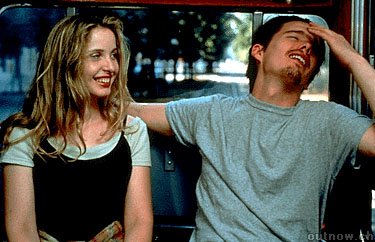 Part of the reason the film is so engaging is because it is anchored by two leads who each give performances for the ages. Ethan Hawke and Julie Delpy are near flawless as the two lovers, both bringing so much joy and humanity to the characters that it is near impossible for the viewer to not be wrapped up in the conversations that take place. And boy do conversations take place. Practically the entire film is spent alongside dialogue. Hawke starts and then Delpy picks up, Delpy starts and then Hawke picks up. They overlap each other, they ping pong off each other, they do it all and they keep the conversations going. Sure it's all off a script, but the chemistry here is truly amazing and it really sells the romance aspect the film presents. There is no questioning that these two people work together and that the stars have simply aligned perfectly for this evening.
 Of course the film is not without its flaws, the film gets a little talky, of course nothing all that surprising considering the amount of dialogue, but since just about all the conversations are either entertaining, intellectually stimulating, or a combination of both, the one or two slower sequences are not all that detrimental to the film as a whole. The ambiguous note that the film ends on is absolutely perfect too and the fact that everything all takes place over the course of one night is pretty damn impressive. The film is as entertaining as it is beautiful and, much like Jesse and Celine's night before the sunrise, the film goes by in what seems like a flash.
 But going on about all of these great elements does a disservice to the greatest stride that this film makes in the ten year span since the release of Sunrise, and that would be the direction. Linklater's camera work here is incredibly impressive and each shot feels so carefully constructed. Actually, the majority of the film stands out to me, at least visually, as similar to moving photographs. I am unable to really pick out a single shot that captures the Parisian beauty because the film is really packed full of them. The scenes in the cafe, the boarding of the boat, the walk to Celine's apartment, even the beginning sequence at the book store just bleed masterful craft. The film is a visual powerhouse.
 Before Sunset flies by just as quickly as Before Sunrise, but everything in the film is just so much more heightened and developed that it is not only the superior film, but an incredible film on its own merit. Linklater forsakes all the flash of the standard romance film, he strips away everything except the most basic of elements, and he lets things play out as two people reconnect. Linklater takes three basic elements (woman, man, and love) and weaves a compelling narrative with all the primal power of the greatest story tellers. It suffers a few of the same downfalls that I had with Sunrise, except toned down a bit, but once again the problems are not as noticeable in such a great film. And then there's always that beautiful ambiguity.
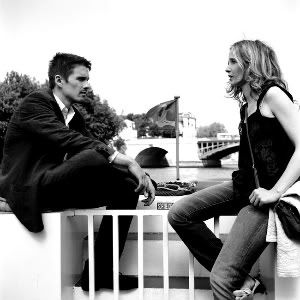 So I was going to write a bit more about how the two films connect, but I think I have compared, and used the word beautiful, more than enough for one blog post. The one thing I do want to say is that as individual films I am not sure that either is a masterpiece, but when taken together the whole experience is elevated. As a combination there are very few film experiences that I have had with the raw power and enjoyment from the Before Sunrise/Sunset series. Together they are a masterpiece and, I'll say it one last time, a true work of beauty.
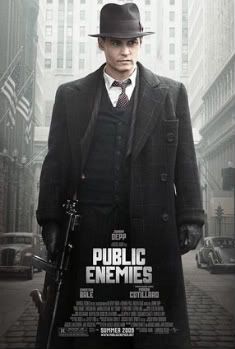 Well, partially I suppose. Mann's direction ranges from brilliant to irritating, though he handles all of the action sequences spectacularly, unlike two other films featuring Bale released recently, and really the whole film is visually stunning. The costumes are great, the scenes are beautiful, and there are a number of shots that are simply top notch. All in all I'm pretty pleased with what Mann put together. Similarly, the acting is pretty damn great as well, though I don't really understand why Bale is billed as a lead. Sure he plays an important role in the plot, but he is not in the film an incredible amount of time and there are points where it is easy to forget that he is even around. When he is on screen though he's really good, playing his character believably and drifting in and out of accents that seem straight out of his 3:10 to Yuma character and the Jack Rollins character from I'm Not There. The real star though, as expected, is Depp. His performance is perfect, he brings so much to the Dillinger character that each moment he is on screen the audience is left guessing what he will do and how he will react to the situations around him. Depp plays things cool and collected when needed but he also captures the force of a truly dangerous man, it's damn impressive.
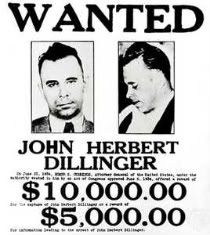 Minimal back story or motivation is given, perhaps because it's a 'true' story or perhaps not, and the film never clearly establishes a definitive goal that should be reached by the end; very little overarching plot exists in the film. Still, the film is incredibly captivating. This structure is mighty interesting and should make for a dull film that does not demand engagement, but Mann establishes the world so perfectly that it is simple to be swept away and simply go along as an observer in a manner that combines all the entertainment of a film with the interesting aspects of a History Channel special. It's pretty damn impressive and it is nice to see Mann not overly cram the film with cliche and convention in favor of entertainment and an easy to swallow film. He simply lets the film exist, adding to the 'real world' quality and enhancing the world that is presented, all blending together spectacularly.
