The Social Network (Fincher, 2010)
It seems that once every year a film comes out during 'Oscar season' that is labeled as immensely topical, a true testament to our time that perfectly captures a specific mentality that defines our world now, perhaps even defines a generation as a whole. Most of the time these films are mislabeled. Last year we had Up in the Air, the year before was Milk, and now it seems that David Fincher's The Social Network has taken the mantle of my generation's voice. However, just like all of these other films that are incorrectly labeled as purely topical ploys for attention, Fincher makes an attempt to transcend the times and deliver a cinematic experience from what appears to admittedly be a very topical concept: the invention of Facebook. So does Fincher deliver a film accessible by all, or something better left just for friends?
Showing posts with label Processed Grass. Show all posts
Friday, June 17, 2011
Thursday, April 21, 2011
Your Hair Is Brown. Your Eyes Are Hazel, And Soft As Clouds
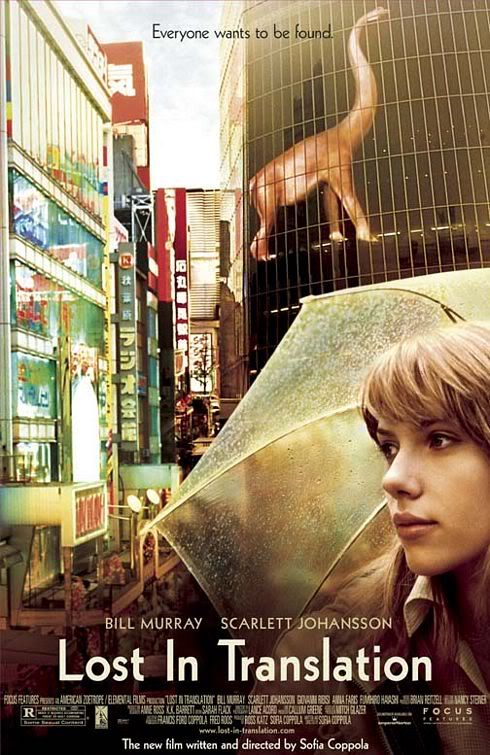
Lost in Translation (Coppola, 2003)
At the heart of what is likely Sophia Coppola's most iconic film, Lost in Translation, is the idea of two lost individuals finding themselves in a land where reality mingles with artifice. Obviously this does not imply that Japan is some stand in for society at large, but the location should not be trivialized as it is in a film like Before Sunrise, where the location is tangential to the overall romance. No, here Tokyo is almost essential to the central relationship because it exists as just far enough away, displaced enough to ensure that Charlotte (Scarlett Johansson) and Bob (Bill Murray) are going to have to spend some time together if only to pass the time, to have someone else who will listen. The film champions the most basic of human connections, and from there it continues to grow.
Coppola is known for being able to set moods in her films thanks to strings of visually evocative images that are interwoven with fairly simplistic stories. Lost in Translation proves to be no exception, especially for much of the first half of the film. Sure Murray is able to make the viewer empathize with a man who has apparently been beaten down by life. Despite being a once successful actor he is not passing on passion projects in order to cash in on his likeness. Johansson's Scarlett is just as aimless, being trapped in a relationship that keeps her locked away during the days and nights, simply passing the time in this high quality hotel. What is a philosophy major to do? Contemplate. These are two people who may not be lost, so much as stagnant. And despite the beautiful construction of scenes the film sort of stagnates with a couple half laughs and some passing interest in the singular lives of these two characters, but it never really picks up until they both begin leaving the hotel behind.
Shedding the confines lifts a type of oppression from the film, and the the vibrant streets of Tokyo make for an excellent retreat from the retreat when paired with the energy between the two leads and Coppola's wonderful camera. A run through a Japanese pachinko parlor, basically a slot house/arcade hybrid if my American interpretation of the game is reliable, stands out as one of the early sequences where we can begin to see the bonds between the two developing. While it would not be difficult to put a decidedly sexual undertone to the whole relationship, it seems more to me that each are simply learning from one another. Charlotte seeks affirmation that her life will get better than Bob's, and he seeks reaffirmation that there's still reason to continue with his life. As the film continues to build it becomes stark, beautiful, and utterly heartbreaking because the script takes the initial simplicity and, seemingly naturally, stumbles upon some of the most honest and truthful dialogue ever written.
Some films thrive on flash, and while there are plenty of visceral thrills and pleasures to be had with Lost in Translation it really is the minimalism that makes the film work so perfectly, especially towards the end. You can dig in to the film and find a complexity that is as wide open as the final encounter between Charlotte and Bob. People don't live or die, people just float. And in many ways, this film is a beautiful exercise in people floating along before encountering another individual. Having that chance to be free, to bare your soul to another, to learn and interact. It's this sense of freedom that the film captures, juxtaposing with with the newness and construction of the travel experience. We can't hold on to these feelings, but it makes us wonder why we hold this freedom back from others, how we perform for the world, and what it means to not perform. Eventually we will go on floating again, how permanent is any relationship? Maybe everyone has the answer, Lost in Translation certain appears to, but maybe we just don't want to hear it, we want to never know.
Netflix Rating: ****/*****
Rich
Comments are welcome and, for anyone with a literary mind, I encourage checking out my poetry blog filled with all original works for your reading pleasure.
Also I am on the old Twitter thing so I guess you can follow me at twitter.com/FLYmeatwad.
Coppola is known for being able to set moods in her films thanks to strings of visually evocative images that are interwoven with fairly simplistic stories. Lost in Translation proves to be no exception, especially for much of the first half of the film. Sure Murray is able to make the viewer empathize with a man who has apparently been beaten down by life. Despite being a once successful actor he is not passing on passion projects in order to cash in on his likeness. Johansson's Scarlett is just as aimless, being trapped in a relationship that keeps her locked away during the days and nights, simply passing the time in this high quality hotel. What is a philosophy major to do? Contemplate. These are two people who may not be lost, so much as stagnant. And despite the beautiful construction of scenes the film sort of stagnates with a couple half laughs and some passing interest in the singular lives of these two characters, but it never really picks up until they both begin leaving the hotel behind.
Shedding the confines lifts a type of oppression from the film, and the the vibrant streets of Tokyo make for an excellent retreat from the retreat when paired with the energy between the two leads and Coppola's wonderful camera. A run through a Japanese pachinko parlor, basically a slot house/arcade hybrid if my American interpretation of the game is reliable, stands out as one of the early sequences where we can begin to see the bonds between the two developing. While it would not be difficult to put a decidedly sexual undertone to the whole relationship, it seems more to me that each are simply learning from one another. Charlotte seeks affirmation that her life will get better than Bob's, and he seeks reaffirmation that there's still reason to continue with his life. As the film continues to build it becomes stark, beautiful, and utterly heartbreaking because the script takes the initial simplicity and, seemingly naturally, stumbles upon some of the most honest and truthful dialogue ever written.
Some films thrive on flash, and while there are plenty of visceral thrills and pleasures to be had with Lost in Translation it really is the minimalism that makes the film work so perfectly, especially towards the end. You can dig in to the film and find a complexity that is as wide open as the final encounter between Charlotte and Bob. People don't live or die, people just float. And in many ways, this film is a beautiful exercise in people floating along before encountering another individual. Having that chance to be free, to bare your soul to another, to learn and interact. It's this sense of freedom that the film captures, juxtaposing with with the newness and construction of the travel experience. We can't hold on to these feelings, but it makes us wonder why we hold this freedom back from others, how we perform for the world, and what it means to not perform. Eventually we will go on floating again, how permanent is any relationship? Maybe everyone has the answer, Lost in Translation certain appears to, but maybe we just don't want to hear it, we want to never know.
Netflix Rating: ****/*****
Rich
Comments are welcome and, for anyone with a literary mind, I encourage checking out my poetry blog filled with all original works for your reading pleasure.
Also I am on the old Twitter thing so I guess you can follow me at twitter.com/FLYmeatwad.
Wednesday, April 13, 2011
In Violent Times, You Shouldn't Have To Sell Your Soul
Scream (Craven, 1996)
"What's your favorite scary movie?"
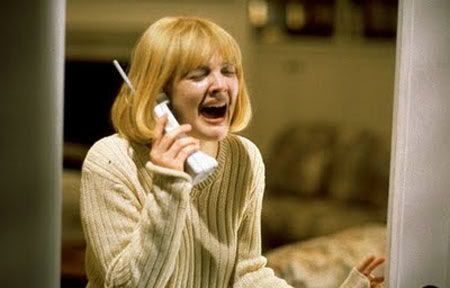
The scene that kicks off Wes Craven's Scream, an excellent exercise in tension building, is also likely the franchise's most iconic. A woman is getting ready to watch a movie, she receives a few phone calls of escalating intensity from a gravely voiced stranger which start with an innocent question and eventually end in a shrieking death threat. What's odd is that this confrontation does not involve the movie's central character, Sidney Prescot (Neve Campbell). It does, however, set up the intensity of the killer that will consume the town of Woodsboro.
Horror is a genre that I do not enjoy, and as I watched Wes Craven construct his 1996 slasher I figured out what most unnerves me about the genre. When a talented hand is controlling the camera, as is the case here, the viewer becomes powerless. Each camera angle, each cut (haha!), is used to withhold, for as long as possible, the release that will come when the threat, in this case Ghost Face, attacks. Craven tells you that it is going to happen, the warnings are there, but in his construction he makes you yearn for the attack, if only to experience the relief of release. He escalates the intensity of each scene, through the use of score and editing, to make the presence of Ghost Face as inviting as it is terrifying.
However, a film cannot exist on scares alone. What makes Scream stand out is the meta-textual components that have characters in the movie questioning the killer's movements throughout. If you've ever watched a movie and wondered if any of the inhabitants had ever seen a movie before, Scream makes you painfully aware that the inhabitants of Woodsboro know their horror films. As someone who is not well versed in the genre it is easy to feel left out, but the way that the script breaks down convention and then turns the screw just a bit further in its own execution (I'm on a roll here) of these tropes is handled to make sure that even the uninitiated will understand how the genre is being deconstructed and reconstructed. Self awareness is easy to mess up, having a film that does not make the self awareness seem pompous, while still noticeably winking at the audience, is a refreshing balance.
This self awareness is partly where the film breaks apart for me though. The end of the film has anchorwoman Gale Weathers (Courtney Cox) staring forward at the screen and recapping the fallout of the Woodsboro murders. Then Craven pulls back the camera as she walks toward the house where the largest bloodbath has taken place only moments earlier, and we see the camera that Gale was actually speaking to exist within this camera. The technique is beautiful and encapsulates what Craven reaches for throughout the film. My only question is, and it's a rather large inquiry: so what? The film is entertaining, it is, at least partially, scary, the performances are solid across the board (with Stu [Matthew Lillard] and Randy [Jamie Kennedy] being the stand outs), and the central mystery is gripping. But in the end the movie fails to say anything, either about the genre, the escapist nature of cinema, or any larger world implications. I watch film to be entertained, but I mostly watch movies to learn. I walked away from Scream pleased, entertained, but vastly unfulfilled.
Though I think, partially, I am selling the artistic merits of the film a bit short. In a film that is so steeped in deconstruction, that thrives on an awareness of convention and the reversal of convention, the 'confessions' of the killers is perhaps the inkling of theme that I seek. Craven builds up to this huge reveal of the killers, and the surprise is there, but when they get around to motive it appears as if the two young men have no reason for their killing. That lack of confession has its roots back in the anti-climax found in Bram Stoker's Dracula, the absence of reason goes back to the most notable horror convention: the lack of a visible explanation is the scariest thing of all. This idea, the way it is handled, is interesting, it's ballsy even. But I need more than balls, I need meat. Wait. Theme. I need theme.
Conceptually I am in love with Scream, much more so than I thought I ever would have been before sitting down and watching the movie, but I don't get married to concepts. No, I'm more likely to settle down with other, more developed, intangible ideas, which Craven's film simply does not take the time to offer. Damn fun, just a tad shallow. I am glad that one of my first tastes of the horror genre was in the form of Scream though because the scares were not so over the top, and it gives me plenty of ways to grapple with the other genre staples that I am going to tackle in the future. And I'm a sucker for metafiction, even aimless meta, so I'm looking forward to see how Craven expands on these concepts in the future franchise films.
Netflix Rating: ****/*****
Rich
Comments are welcome and, for anyone with a literary mind, I encourage checking out my poetry blog filled with all original works for your reading pleasure.
Also I am on the old Twitter thing so I guess you can follow me at twitter.com/FLYmeatwad.
The scene that kicks off Wes Craven's Scream, an excellent exercise in tension building, is also likely the franchise's most iconic. A woman is getting ready to watch a movie, she receives a few phone calls of escalating intensity from a gravely voiced stranger which start with an innocent question and eventually end in a shrieking death threat. What's odd is that this confrontation does not involve the movie's central character, Sidney Prescot (Neve Campbell). It does, however, set up the intensity of the killer that will consume the town of Woodsboro.
Horror is a genre that I do not enjoy, and as I watched Wes Craven construct his 1996 slasher I figured out what most unnerves me about the genre. When a talented hand is controlling the camera, as is the case here, the viewer becomes powerless. Each camera angle, each cut (haha!), is used to withhold, for as long as possible, the release that will come when the threat, in this case Ghost Face, attacks. Craven tells you that it is going to happen, the warnings are there, but in his construction he makes you yearn for the attack, if only to experience the relief of release. He escalates the intensity of each scene, through the use of score and editing, to make the presence of Ghost Face as inviting as it is terrifying.
However, a film cannot exist on scares alone. What makes Scream stand out is the meta-textual components that have characters in the movie questioning the killer's movements throughout. If you've ever watched a movie and wondered if any of the inhabitants had ever seen a movie before, Scream makes you painfully aware that the inhabitants of Woodsboro know their horror films. As someone who is not well versed in the genre it is easy to feel left out, but the way that the script breaks down convention and then turns the screw just a bit further in its own execution (I'm on a roll here) of these tropes is handled to make sure that even the uninitiated will understand how the genre is being deconstructed and reconstructed. Self awareness is easy to mess up, having a film that does not make the self awareness seem pompous, while still noticeably winking at the audience, is a refreshing balance.
Though I think, partially, I am selling the artistic merits of the film a bit short. In a film that is so steeped in deconstruction, that thrives on an awareness of convention and the reversal of convention, the 'confessions' of the killers is perhaps the inkling of theme that I seek. Craven builds up to this huge reveal of the killers, and the surprise is there, but when they get around to motive it appears as if the two young men have no reason for their killing. That lack of confession has its roots back in the anti-climax found in Bram Stoker's Dracula, the absence of reason goes back to the most notable horror convention: the lack of a visible explanation is the scariest thing of all. This idea, the way it is handled, is interesting, it's ballsy even. But I need more than balls, I need meat. Wait. Theme. I need theme.
Conceptually I am in love with Scream, much more so than I thought I ever would have been before sitting down and watching the movie, but I don't get married to concepts. No, I'm more likely to settle down with other, more developed, intangible ideas, which Craven's film simply does not take the time to offer. Damn fun, just a tad shallow. I am glad that one of my first tastes of the horror genre was in the form of Scream though because the scares were not so over the top, and it gives me plenty of ways to grapple with the other genre staples that I am going to tackle in the future. And I'm a sucker for metafiction, even aimless meta, so I'm looking forward to see how Craven expands on these concepts in the future franchise films.
Netflix Rating: ****/*****
Rich
Comments are welcome and, for anyone with a literary mind, I encourage checking out my poetry blog filled with all original works for your reading pleasure.
Also I am on the old Twitter thing so I guess you can follow me at twitter.com/FLYmeatwad.
Monday, April 11, 2011
Taking on 2011 - Top Films (Quarterly Review)
A tad overdue (curse you, term papers!), but the Quarterly Review moves on with the final entry until the wonderful month of June where the birds have risen from the ash, shattered the eggshells, dusted off the icky placenta of inexperience, spread their wings, consumed the mother's regurgitation. The flowers are fickle, they could leave you with the turn of Mother Earth's axis, I will be here forever. Pull out the reels, put on the critical cap, join me for this journey. We can never truly escape the danger zone.
5. Umshini Wam
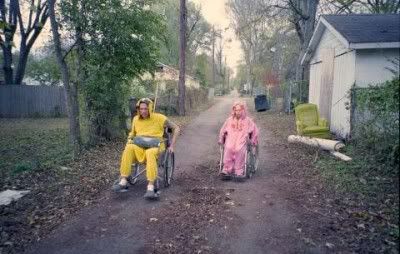
This marks the second film (technically it's a short) that I have watched from the truly absurd Harmony Korine. Despite the paltry run time this story explores some heavy material, though at its core the movie exists as a desperate display of two clinging to a lifestyle. In a few short minutes we watch as these characters lives unravel, as they are built again. It all comes across as a semi-nihilistic -a state of being that likely does not exist - middle finger to the established conventionality of the world, a celebration of counter culture. A shrill scream. Though given the film's title, a call for revolution during apartheid movements, the film gains an extra layer as it urges the characters and audience alike to grab your machine gun.
4. The Sunset Limited
I admit in my review that I have a strong love for the Cormac McCarthy play, but I am honestly so impressed with how much staying power this film adaptation has had for me. I suppose a lot of it has to do with the two performances that anchor the movie, Samuel L. Jackson is still in strong contention for my Best Actor slot in the young year. But beyond the actors I find the thematic implications striking. Who doesn't want to philosophize about the world, to meditate on the intricacies of faith and logic? But damn it, while we talk is that ever going to stop the Sunset Limited from coming? No, and it's that haunting realization that gives the film the punch it needs to survive.
3. Poetry
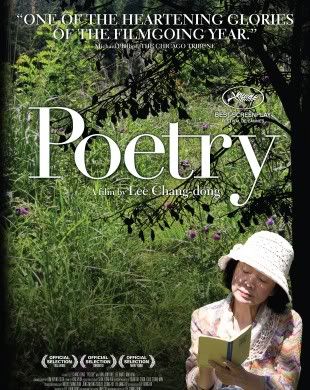
Korea has provided me with some of my favorite films of the past ten years, but most of those are also products of the minds of Bong Joon-ho and Chan Wook Park, two filmmakers more known for their style. So this quieter film had me entering with a bit of hesitation, but from the opening sequence of a dead body floating face down in the water to the final shot the film had me riveted. Few products of society can said to be more beautiful than a well constructed poem, and juxtaposing that with the film's heavier plot elements of rape and murder, filtered through the eyes of an older woman slowly being taken over by Alzheimer syndrome results in one of the more striking movies of the year.
2. Jane Eyre
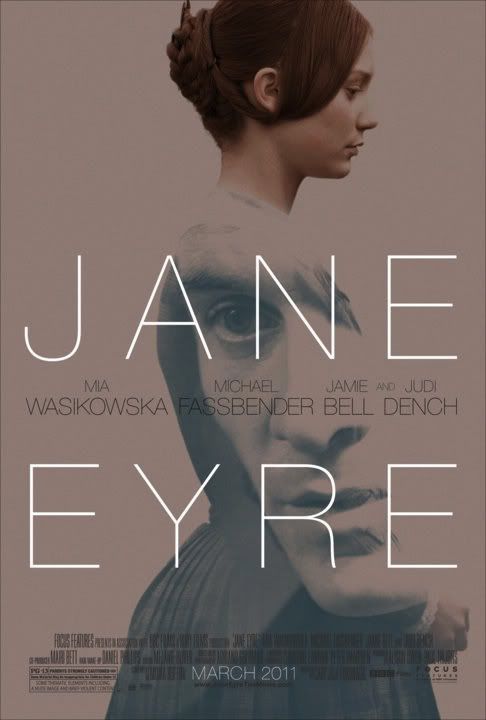
The latest adaptation of Charlotte Bronte's classic novel is a visual feast, composed of striking shots of a hostile country that houses a disturbing number of individuals. The film, naturally, loses a bit in translation, but Bronte's words come to life thanks to the lead performances. Mia Wasikowska and Michael Fassbender set a chilling back and forth between their two characters that propels the film forward. It avoids, at times, some of the more complex themes that the film briefly touches on, namely the repugnance of the Rochester character and the individual desires of Jane, but the film is a technical marvel that stands out as the best period piece released in a good number of years.
1. Uncle Boonmee Who Can Recall His Past Lives
The winner of the 2010 Cannes Palme d'Or is a masterpiece of fluidity. At times so culturally specific that one may think that it's impossible to penetrate, Uncle Boonmee succeeds by reflecting on the very construction of history and the universality of human experience. We cope with the living and dying process, the way memory is constructed and lost, the myths and legends that propel every culture. These myths, they define our place just as our place defines the myth. I don't think I realized just how wonderful this film was until I started typing a bit about it right now. I need to watch this again, and that's all I can ask from a film.
Below, I think it's only fair, to include my Unabridged List that contains the films with limited releases in 2010 that I will be counting, at the year's end, as 2011 films.
This marks the second film (technically it's a short) that I have watched from the truly absurd Harmony Korine. Despite the paltry run time this story explores some heavy material, though at its core the movie exists as a desperate display of two clinging to a lifestyle. In a few short minutes we watch as these characters lives unravel, as they are built again. It all comes across as a semi-nihilistic -a state of being that likely does not exist - middle finger to the established conventionality of the world, a celebration of counter culture. A shrill scream. Though given the film's title, a call for revolution during apartheid movements, the film gains an extra layer as it urges the characters and audience alike to grab your machine gun.
I admit in my review that I have a strong love for the Cormac McCarthy play, but I am honestly so impressed with how much staying power this film adaptation has had for me. I suppose a lot of it has to do with the two performances that anchor the movie, Samuel L. Jackson is still in strong contention for my Best Actor slot in the young year. But beyond the actors I find the thematic implications striking. Who doesn't want to philosophize about the world, to meditate on the intricacies of faith and logic? But damn it, while we talk is that ever going to stop the Sunset Limited from coming? No, and it's that haunting realization that gives the film the punch it needs to survive.
Korea has provided me with some of my favorite films of the past ten years, but most of those are also products of the minds of Bong Joon-ho and Chan Wook Park, two filmmakers more known for their style. So this quieter film had me entering with a bit of hesitation, but from the opening sequence of a dead body floating face down in the water to the final shot the film had me riveted. Few products of society can said to be more beautiful than a well constructed poem, and juxtaposing that with the film's heavier plot elements of rape and murder, filtered through the eyes of an older woman slowly being taken over by Alzheimer syndrome results in one of the more striking movies of the year.
The latest adaptation of Charlotte Bronte's classic novel is a visual feast, composed of striking shots of a hostile country that houses a disturbing number of individuals. The film, naturally, loses a bit in translation, but Bronte's words come to life thanks to the lead performances. Mia Wasikowska and Michael Fassbender set a chilling back and forth between their two characters that propels the film forward. It avoids, at times, some of the more complex themes that the film briefly touches on, namely the repugnance of the Rochester character and the individual desires of Jane, but the film is a technical marvel that stands out as the best period piece released in a good number of years.
The winner of the 2010 Cannes Palme d'Or is a masterpiece of fluidity. At times so culturally specific that one may think that it's impossible to penetrate, Uncle Boonmee succeeds by reflecting on the very construction of history and the universality of human experience. We cope with the living and dying process, the way memory is constructed and lost, the myths and legends that propel every culture. These myths, they define our place just as our place defines the myth. I don't think I realized just how wonderful this film was until I started typing a bit about it right now. I need to watch this again, and that's all I can ask from a film.
Below, I think it's only fair, to include my Unabridged List that contains the films with limited releases in 2010 that I will be counting, at the year's end, as 2011 films.
1. Summer Wars
2. Somewhere
3. Uncle Boonmee Who Can Recall His Past Lives
4. Jane Eyre
5. Poetry
6. The Sunset Limited
7. My Dog Tulip
8. Rabbit Hole
9. Another Year
10. 4.3.2.1
11. Umshini Wam
12. Source Code
13. Paul
14. The Green Hornet
15. Your Highness
16. The Suite Life Movie
17. Fish Tank
18. Take Me Home Tonight
19. Best Player
2. Somewhere
3. Uncle Boonmee Who Can Recall His Past Lives
4. Jane Eyre
5. Poetry
6. The Sunset Limited
7. My Dog Tulip
8. Rabbit Hole
9. Another Year
10. 4.3.2.1
11. Umshini Wam
12. Source Code
13. Paul
14. The Green Hornet
15. Your Highness
16. The Suite Life Movie
17. Fish Tank
18. Take Me Home Tonight
19. Best Player
Rich
Comments are welcome and, for anyone with a literary mind, I encourage checking out my poetry blog filled with all original works for your reading pleasure.
Also I am on the old Twitter thing so I guess you can follow me at twitter.com/FLYmeatwad.
Comments are welcome and, for anyone with a literary mind, I encourage checking out my poetry blog filled with all original works for your reading pleasure.
Also I am on the old Twitter thing so I guess you can follow me at twitter.com/FLYmeatwad.
Saturday, February 12, 2011
Though His Mind Is Not For Rent, Don't Put Him Down As Arrogant
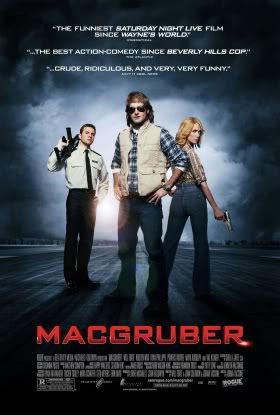
MacGruber (Taccone, 2010)
Saturday Night Live has lately been in a state of flux, hovering between relevance and trite for the past few years, perhaps even longer. The current crop of comedians have found successes, albeit small ones, by filling bit roles in semi-successful comedies. And then there's Andy Samberg, a man who is probably better left undiscussed. The point is that, even in the subjective world of comedy, the current Saturday Night Live crowd barely carries the weight of a The Ladies Man, much less The Blues Brothers. However, this contextualizing, I would argue, is in all likelihood irrelevant when discussing the latest SNL skit turned film. When it comes down to it, MacGruber is just damn hysterical.
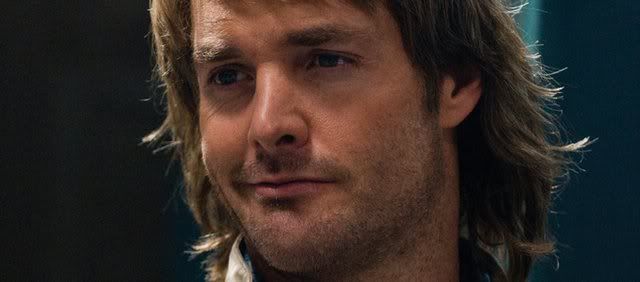
MacGruber is a standard action comedy that follows the titular protagonist, portrayed by the insanely charismatic Will Forte (seriously, just the way he contorts his face is insane), as he attempts to prevent a stolen nuclear missile from being used to threaten the lives of innocent Americans. Lost to the world for ten years MacGruber retreated to Ecuador, but when the opportunity to take down the man who killed his wife, Cunth, presents itself he returns to the front lines for some throat ripping action. In his return to the States he is partnered, unwillingly, with a rookie prodigy, Lt. Piper, and former teammate, Vicki St. Elmo. The three attempt to work their way through Cunth's dream team of killers in order to stop the nuclear threat, and along the way we watch MacGruber deal with the loss of his fiance in an attempt to reconcile his past.
To be honest the plot is basically lifted out of any Sylvester Stallone film, and for the most part MacGruber does little to challenge the construction of these higher concept action movies. Where this film succeeds is found in the integration of the comedy in to the hyper-serious action genre. While most of the other actors play their roles perfectly straight, Forte puts in an over the top turn as MacGruber to create a tension that elevates the comedy beyond simple sight gags and one liners. MacGruber walks a fine line between action and comedy, rarely tipping the scales in any one direction for very long. The jokes are self aware, they are over-the-top, and for the most part they are insane and completely unrealistic, but in the world the film creates they are also believable. The action film is a genre that mostly exists in absurdity, MacGruber embraces this quality a presses the boundaries between absurdity and believability to create a comedy that is bold, if not a bit uneven.
Even in the comedic construction the film is structured like an action film, moving quickly and rapidly from one set piece to another with little time to breathe between any of them. But the set pieces are not the usual explosions and car chases; instead, we are given Kristen Wiig being talked through a coffee shop in a misguided attempt to pass herself off as MacGruber. Or we get Forte assembling his crack team of killer killers. Along with more surprising jokes that are better experienced in the film than through my review, if only for the shock value of the larger gags. Despite these situations all being presented as set pieces none of them feel disconnected from the larger narrative either, keeping the film from feeling like a series of mini-skits inside of an elongated sketch.
I can easily see MacGruber as an alienating experience, the comedy achieves a quality of mindlessness and wit practically at the same time which makes watching the film confusing and aimless at times. It is also a comedy, which means that if you are not on board with its comedic sensibilities there are few aspects beyond the jokes and the technical construction of the film to latch on to, for the most part the film is devoid of subtext. However, even if most of the laughs do not land I have a hard time calling MacGruber a bad film. Much like the character itself the content is presented with a boldness matched only by MacGruber himself, and it is hard to get down on such a display of self assuredness.
Comments are encouraged and, for anyone with a literary mind, I encourage checking out my poetry blog filled with all original works for your reading pleasure.
Also I am on the old Twitter thing so I guess you can follow me at twitter.com/FLYmeatwad.
Tuesday, July 27, 2010
But It Grieves My Heart, Love, To See You Tryin' To Be A Part Of A World That Just Don't Exist
Ramona and Beezus (Allen, 2010)
In our world technology moves at a break neck pace, you practically buy the latest gadget and the device has already been outclassed by the next technology on the horizon. I turn on the news and hear the horrors of the world, I see the Datelines, the rehabs, the violence, the predators, and the beaters. So amidst all these horrors is it possible to find solace in a film that acts as a pure artifice, in a world that technology and horror has seemingly left in the past, the America of yesteryear, an America that perhaps has always been idealized but has never purely existed? Standing on the outskirts of these horrors is Ramona and Beezus, a little light of hope, a town where trouble exists, but is veiled by the wonder. I have little knowledge of the source material which has spawned the latest G Rated family film, yet even without this affinity I found it near impossible not to be captivated by this film's charm.
Detailing the journey of titular protagonist Ramona Quimby as she struggles to come to terms with her existence on Klickitat Street. While she confronts standard conflicts such as fitting in at school and dealing with a home life where she also stands out from her seemingly perfect sister, the film adds a compelling layer by having Ramona cope with the loss of loved ones, feelings of isolation, and the conflict of a completely changing home environment. And in this layer is a beautiful sincerity and respect for the audience, regardless of age, that is not afraid to explore the darker side of childhood and stray from the beautiful hand made day-dream sequences for incredibly effective dramatic segments.
These aspects create such a wonderful tone throughout much of the film, and the central performance from Joey King goes a long way in selling these scenes, but it helps that she is surrounding by a surprisingly talented cast. The actors who play the adults in the film all do believable jobs of handling their lines, and as the film continued on I found myself taken by the turn that John Corbett makes as the father; however, the stand out of the adults has to be the repentant egotist Hobart, played by Josh Duhamell. And then, of course, there is the most recognizable face in the film, Selena Gomez portraying the eldest girl in the core family, Beatrice "Beezus" Quimby. Selena possesses such a glowing and infection charm that it seems near impossible not to be taken by her acting, but despite her character being mostly irrelevant considering she is a titular character Selena's big scenes show an impressive range that she has demonstrated before, but not in such a concentrated capacity. One scene has Beezus walking home with her childhood friend Henry, and Selena turns in such an impressive performance in this specific scene that she appears to be set for much future success. King gives the better performance overall, though a good amount of that has to do with the character's role in the film and Selena's wise choice to play Beezus as human rather than an over the top vehicle to showcase her range.
But underlining all of the performances, the conflict, and even the wonder is the portrayal of an idealized America. What struck me while watching the film was the relative absence of technology, especially in relation to one incredibly contemporary problem that plays a large part in the story. This absence creates such a tension in the film by juxtaposing timeless aspects of the narrative and world with the contemporary concerns. And the more I consider the film I also notice an incredible absence of ethnicity, so much so that the only trace of African Americans came in the background in the final scene, and Sandra Oh, but even her role is minimal. Selena is even asked to pass as white. These aspects, perhaps even more than the ideas the film concerns itself with, offer a fascinating look at the Hollywood presentation of the ideal America, one that proves as uncomfortable as appealing. The simplicity of life, the wholesome concerns, and the importance of human bonding is all appealing and beautiful, but much like the wonder and charm in the films plot, a disturbing and dark side lurks underneath the surface.
Still, Ramona and Beezus does offer a celebration of nostalgia that, at the very least, constantly entertains and, at its best, proves to be enlightening. An America that has passed displayed in a genre of film that has apparently been all but forgotten in the wake of CGI extravaganzas and 3-D opuses. The film can likely be faulted for less than stellar comedy, but the film never seems incredibly concerned with generating laughs, just chuckles, the chief concern is the characters and the plot, letting these aspect develop naturally, and in that regard it succeeds. Ramona and Beezus is not a great film, perhaps it may even be mediocre, but is does offer a cinematic gust of fresh air that has only sat better and better with me since leaving the theater.
Comments are encouraged and, for anyone with a literary mind, I encourage checking out my poetry blog filled with all original works for your reading pleasure.
Also I am on the old Twitter thing so I guess you can follow me at twitter.com/FLYmeatwad.
Sunday, June 20, 2010
And The Ancient Empty Street's Too Dead For Dreaming
Toy Story 3 (Unkrich, 2010)
With Toy Story 3 Pixar has attempted to return to an incredibly successful universe years later and capture the same charm that made the originals so endearing to so many viewers. Flashes of Star Wars. But will Pixar be able to follow in Lucas's footsteps and effectively deepen their world and characters while improving in nearly every way over the original material? With years of mediocre films clogging up their studio in the past decade, yielding only two and a half films of any substantial value, I was skeptical that the studio would have success. While I certainly am not surprised with the results, I found myself a bit surprised at how well specific aspects of the film are handled.
First let us talk about the positives, my friends. We shall strip away all of the fat: throw the shoehorned in jokes away, toss aside the sight gags, forget about all the action and adventure, and focus squarely on the idea of transition. Whether transitioning from life at home to life alone, high school to college, teenager to adult, any change and the gray area between our own prescribed blacks and whites. Early on in the film we see Andy sit back in his chair and peer around his room for what will be one of the last times in his life, and he lets out a sigh. In this sigh the film captures more power than any of the dialogue can hope to ever encompass. Similarly, Woody's pleas with the toys to return to Andy after a mix up has them feeling cast aside, we see both humans and non-humans struggling to reconcile their old life with an unformed future. Later in the film an incredibly touching moment is shared between Andy and his mother. These brief glimpses at honest emotion, conveyed excellently in context, do what successful works of art accomplish: hit on aspects of humanity without feeling artificial. And for the most part, surprisingly, these moments are spread out instead of lumped together to simply 'get' the audience as they were in Up, or far too few as they were in Wall*E. The final scene goes on far too long and becomes a bit too manipulative, but the outline of honest humanity still shines through, at least mostly.
However, Toy Story 3 is hampered by all the fat around the edges, despite the film's attempts to conceal the weaker points that seemingly weave their way in to keep audiences entertained as a standard action/adventure film in the vein of Up and Wall*E's dreadful final 'chase' acts. Essentially, Toy Story 3 is Toy Story 2 except better paced. Remember the not so funny part in Toy Story 2 where the two Buzz Lightyears got mixed up and the one acted like Buzz did in at the start of the first film? That aspect is mostly back again, except now Buzz is back to acting like a 'real' spaceman while speaking Spanish! And dancing! Zany! And the whole lovable, elderly, fat guy who turns out to be controlling, manipulative, and downright despicable, remember that bit? Well that plot line is recycled in the form of Lotso, a bear abandoned by his former owner, making a nice foil for Jesse. Speaking of Jesse, recall how intolerable she was in the previous film? Well she is better in this one because her role is incredibly downsized. Since the film cuts between so many different areas so quickly, and has the characters constantly moving forward, Jesse, and really very few of the toys, ever get to take center stage, which results in some fairly underdeveloped characters. At one point Woody encounters three new toys, all of which seemed interesting, but these characters are on the screen for such a short time they feel more like joke devices than actual characters, resulting in really simplistic interpretations of these individuals. The same can be said of the figures in Lotso's 'family.'
The simplicity is the largest problem that I have with Toy Story. When you have such a complex and layered concept at the center of the film I imagine that the characters would not be so black and white. But with the exception of the giant baby, and I guess Ken, the film is packed with stagnant characters. None of the toys make any major changes, even Woody's supposed realization that they are better together with someone else than separated while he stays with Andy, is complicated by the way Woody essentially becomes a figure comparable to Lotso. But the film pays no attention to this idea, the toys are happy, so Woody is right.This aspect is one of many small bits of logic that break apart when one looks very deeply into the film. How does Lotso know the telephone is in league with Woody and gang? How does that kite get blown so far up in the sky? How can the aliens operate a crane? Why does Lotso need a cane if the spa area can fix even the oldest toys? Why can he run so quickly at the end? They just happen.
A number of the aspects of Toy Story 3 just happen, seemingly because that is what is supposed to happen. So we get an excruciatingly long heist sequence at the end. We have a confrontation with Lotso, an inexplicable grasp of Woody's leg to keep the 'action' sequence going. We also have a Dreamworks~esque back and forth with Barbie and Ken, complete with pitch perfect musical cues and slow motion that would fit right in during the lowest of Shrek films. And a costume changing montage that, if I recall correctly, makes use of "Kung-Fu Fighting." The only thing missing was "Barbie Girl" at some point. The back and forths are not funny, actually there are only a few occasions of legitimate humor in the film. What makes the movie tolerable, and oddly what prevents it from being very good, is how quickly it moves the plot forward and how little time we spend with each group of characters. Barbie and Ken are painful to watch, but these bits are fine because they do not go on incredibly long. Same with any bits involving Jesse. Sadly that means the portions with Andy and Woody are also short, but better these good parts be brief than the bad parts be too long.
As a refinement of Toy Story 2, Toy Story 3 works on just about every level. As a successor to Toy Story, this film falls incredibly short. As an entry in Pixar's catalog, Toy Story 3 is, like many of the studio's films, a middle of the road feature that contains flashes of enjoyment and even brilliance, but is held back by so many paint by numbers story telling techniques, irritating characters, and flat jokes that these features seem lesser by comparison. However, the greatest achievement of Toy Story 3 is the restraint in how emotion is handled. My largest problem with the first ten minutes of Up the obvious manipulation going on in that portion of the film, a trait that only became more apparent as the film tried to integrate emotion further in the run time, and the same can be said of Wall*E and even parts of the masterful Ratatouille. When Toy Story 3 attempts to create a specific mood it works so well, it is just a shame the rest of the film has to exist.
PS: The short before the film was pretty good, and watching Night and Day pal around was enjoyable. The short film genre works for Pixar so well because it allows them to take an incredibly simplistic concept, and the ultimate message of this film certainly is painfully obvious early on and incredibly generic, but through they can play with visuals in such inventive ways and break out that message in an interesting enough way that it makes the simplicity forgivable. I prefer more experimental short films because they allow for much more complex and ambiguous ideas to be explored while engaging me on a cerebral level, but for the opposite end of the spectrum, Day & Night does a pretty great job at being entertaining.
Comments are encouraged and, for anyone with a literary mind, I encourage checking out my poetry blog filled with all original works for your reading pleasure.
Also I am on the old Twitter thing so I guess you can follow me at twitter.com/FLYmeatwad.
First let us talk about the positives, my friends. We shall strip away all of the fat: throw the shoehorned in jokes away, toss aside the sight gags, forget about all the action and adventure, and focus squarely on the idea of transition. Whether transitioning from life at home to life alone, high school to college, teenager to adult, any change and the gray area between our own prescribed blacks and whites. Early on in the film we see Andy sit back in his chair and peer around his room for what will be one of the last times in his life, and he lets out a sigh. In this sigh the film captures more power than any of the dialogue can hope to ever encompass. Similarly, Woody's pleas with the toys to return to Andy after a mix up has them feeling cast aside, we see both humans and non-humans struggling to reconcile their old life with an unformed future. Later in the film an incredibly touching moment is shared between Andy and his mother. These brief glimpses at honest emotion, conveyed excellently in context, do what successful works of art accomplish: hit on aspects of humanity without feeling artificial. And for the most part, surprisingly, these moments are spread out instead of lumped together to simply 'get' the audience as they were in Up, or far too few as they were in Wall*E. The final scene goes on far too long and becomes a bit too manipulative, but the outline of honest humanity still shines through, at least mostly.
However, Toy Story 3 is hampered by all the fat around the edges, despite the film's attempts to conceal the weaker points that seemingly weave their way in to keep audiences entertained as a standard action/adventure film in the vein of Up and Wall*E's dreadful final 'chase' acts. Essentially, Toy Story 3 is Toy Story 2 except better paced. Remember the not so funny part in Toy Story 2 where the two Buzz Lightyears got mixed up and the one acted like Buzz did in at the start of the first film? That aspect is mostly back again, except now Buzz is back to acting like a 'real' spaceman while speaking Spanish! And dancing! Zany! And the whole lovable, elderly, fat guy who turns out to be controlling, manipulative, and downright despicable, remember that bit? Well that plot line is recycled in the form of Lotso, a bear abandoned by his former owner, making a nice foil for Jesse. Speaking of Jesse, recall how intolerable she was in the previous film? Well she is better in this one because her role is incredibly downsized. Since the film cuts between so many different areas so quickly, and has the characters constantly moving forward, Jesse, and really very few of the toys, ever get to take center stage, which results in some fairly underdeveloped characters. At one point Woody encounters three new toys, all of which seemed interesting, but these characters are on the screen for such a short time they feel more like joke devices than actual characters, resulting in really simplistic interpretations of these individuals. The same can be said of the figures in Lotso's 'family.'The simplicity is the largest problem that I have with Toy Story. When you have such a complex and layered concept at the center of the film I imagine that the characters would not be so black and white. But with the exception of the giant baby, and I guess Ken, the film is packed with stagnant characters. None of the toys make any major changes, even Woody's supposed realization that they are better together with someone else than separated while he stays with Andy, is complicated by the way Woody essentially becomes a figure comparable to Lotso. But the film pays no attention to this idea, the toys are happy, so Woody is right.This aspect is one of many small bits of logic that break apart when one looks very deeply into the film. How does Lotso know the telephone is in league with Woody and gang? How does that kite get blown so far up in the sky? How can the aliens operate a crane? Why does Lotso need a cane if the spa area can fix even the oldest toys? Why can he run so quickly at the end? They just happen.
A number of the aspects of Toy Story 3 just happen, seemingly because that is what is supposed to happen. So we get an excruciatingly long heist sequence at the end. We have a confrontation with Lotso, an inexplicable grasp of Woody's leg to keep the 'action' sequence going. We also have a Dreamworks~esque back and forth with Barbie and Ken, complete with pitch perfect musical cues and slow motion that would fit right in during the lowest of Shrek films. And a costume changing montage that, if I recall correctly, makes use of "Kung-Fu Fighting." The only thing missing was "Barbie Girl" at some point. The back and forths are not funny, actually there are only a few occasions of legitimate humor in the film. What makes the movie tolerable, and oddly what prevents it from being very good, is how quickly it moves the plot forward and how little time we spend with each group of characters. Barbie and Ken are painful to watch, but these bits are fine because they do not go on incredibly long. Same with any bits involving Jesse. Sadly that means the portions with Andy and Woody are also short, but better these good parts be brief than the bad parts be too long.
PS: The short before the film was pretty good, and watching Night and Day pal around was enjoyable. The short film genre works for Pixar so well because it allows them to take an incredibly simplistic concept, and the ultimate message of this film certainly is painfully obvious early on and incredibly generic, but through they can play with visuals in such inventive ways and break out that message in an interesting enough way that it makes the simplicity forgivable. I prefer more experimental short films because they allow for much more complex and ambiguous ideas to be explored while engaging me on a cerebral level, but for the opposite end of the spectrum, Day & Night does a pretty great job at being entertaining.
Comments are encouraged and, for anyone with a literary mind, I encourage checking out my poetry blog filled with all original works for your reading pleasure.
Also I am on the old Twitter thing so I guess you can follow me at twitter.com/FLYmeatwad.
Wednesday, May 12, 2010
Pause And Reflect With The Blade At Your Wrist
The Secret in Their Eyes (Campanella, 2009)
I walked into The Secret in Their Eyes with a number of reservations. I knew little about the film, but apparently it's a man's recollection, and eventual compilation into a novel, of a murder case that his law firm handled years back. Esposito is haunted by memories of this time in his life, seemingly without explanation, but he knows he has a story to tell and these recurring dreams only further compel him to write. Along the way we learn about lost love, the strength of friendship, and the power of memory in an individual's life. The Argentine film won 2009's Best Foreign Language Film Oscar, besting Michael Haneke's brilliant The White Ribbon and the sleek French prison drama Un Prophete. I love the former and consider the latter to be one of this year's most enjoyable films, so saying this film would need to do a ton of things right in order to convince me that it deserved the victory over the two big name films. But I am getting ahead of myself, I suppose, as the film needs to first and foremost be examined by its own merit and then look at in a broader context. So let's get on with the reflection.
The Secret in Their Eyes is a perfect film. Well, not perfect in a traditional sense, but certainly at a technical level the film is in the upper echelon of movie making. Each and every angle, each cut, every frame. They are all so well timed, so fully realized, so exact and calculated, so beautiful. The film kind of stumbles a bit in the pacing, but that problem is more found in the script rather than in the way the camera is used or how the film is edited together. I suppose the score could have been a bit less imposing, but even that aspect is used fairly well without ever being too distracting. Actually, much like the film itself, the movie never knocks you over on a technical level with sweeping shots of majesty, but taken as a whole it washes over you and prides itself on consistency and precision, producing a wonderful blend that adds to the tension and helps establish more of an investment in the characters on screen.
Despite the script dragging on a bit, The Secret in Their Eyes does a spectacular job of combining comedy with drama, a task that many films have failed at in the past. What this film does is not keep the two worlds separated, in its attempt to capture the reality of life, a trait that is crucial to the overall impact of the film's themes, it lets these two worlds intermingle naturally. The comedy plays off the drama, the jokes don't always land, the characters don't just talk, they actually speak. While the film does tend to stray into the realm of unbelievability with one character in particular, his larger role in the film, as explained by the movie's protagonist, makes these earlier lapses much easier to forgive and adds a layer to this supporting character. The movie actually employs this device a number of times, adding minor details to develop smaller characters slowly in order to make them more complete. But where the script truly succeeds, aside from the thematic material that I will get to shortly, is in the framing device used. As the film plays out it becomes more and more clear that the film is using a framing device within a framing device. The novel frames the murder, the story frames the exploration of Esposito's life, Esposito's life serves as a microcosm for humanity on a grand scale. But how, you may ask. He's just a damn lawman. I'm a rebel!
Well, so is Esposito. He doesn't have time for regulations, these rules, he needs to know the truth behind this murder. And in this examination of obsession and memory the film hits a stride that
As I walked out of the film I still was not sure if this was the best foreign language film from the previous year, but I found myself considering the way life is lived, by myself and the world around me. I am obsessed, obsessed with so many different aspects, and these obsessions, whether great or small, do govern my life. Or perhaps not, perhaps obsessed is not the correct word. Interested works better most of the time, I suppose, but what this film does is examine the point where interest becomes obsession, and what we as people lose when we obsess. But the film never completely paints this quality as negative either; instead we see self fulfillment, therapy, human connection, and justice achieved, partially, through this obsession.
At least until the end of the film when the movie becomes a bit generic, and slightly plodding, as it springs twists, mostly masterfully handled, on the viewer in order to reach a more upbeat ending than I would have expected. But in this ending time is lost, life has gone on, and obsession yields consequence alongside the self fulfillment. For the most part The Secret in Their Eyes is a beautiful and enjoyable film. It blends comedy wonderfully into the drama and is told in a remarkably interesting manner that allows the larger ideas on display to be engaged with by the audience. Is this the best foreign language film of 2009? I would doubt it, and I doubt I will ever truly know, but this film is fantastic.
Oh yes, and as a disclaimer, scores are finished. I'm not using them any more, nor am I using grades. I'll let the words do the talking in order to better focus my thoughts. So yeah, that's that, no more of this stuff. I'll probably keep them, somewhere, for my personal records and year end lists (I should make a 2009 one of these), but otherwise they are gone.
Additionally, I find joy in this title as the connection is not as direct as lyrics I have used to title a few of the more previous entries, so if you get the connection you kick ass, I suppose.
Comments are welcome and, for anyone with a literary mind, I encourage checking out my poetry blog filled with all original works for your reading pleasure.
Also I am on the old Twitter thing so I guess you can follow me at twitter.com/FLYmeatwad.
Friday, April 16, 2010
All Roads Lead Toward The Same Blocked Intersection
Kick-Ass (Vaughn, 2010)
Christopher Nolan. David Fincher. Quentin Tarantino. Zach Snyder. And now, I suppose, Matthew Vaughn is a name to add to the list of directors who can be charged of crafting films that ooze style while skimping on the substance. While I would debate the grounds of many of these claims, as most of the directors have crafted at least one film that would serve as an effective counter point, whether found in the strong subtext present in Fincher's Fight Club, the sprawling narrative in Snyder's take on Watchmen, and just about all of Tarantino's library, (though I suppose that does leave Nolan out in the cold), Vaughn's latest effort (following up his 2007 sophomore film Stardust) may justify such a claim being leveled at the filmmaker. Though I haven't seen either of his two previous pictures, meaning I shall concentrate mostly on my reaction to the man's latest creation, Kick-Ass, an adaptation of Mark Millar's series of graphic novels by the same name, Vaughn has created an interestingly diverse set of films. But sometimes I need more than interesting to keep me going, or maybe I don't, or maybe Vaughn just doesn't want me to know what I want at all.
If the director does, in fact, want to keep me feeling off kilter throughout the entire film he has successfully accomplished his initial mission because, for all intents and purposes, Kick-Ass is a messy and inconsistent film in just about every regard. The score ranges from overbearing to needlessly quiet, yet this pairs with such a delightfully scattershot soundtrack that features a hodgepodge of styles and sounds with each cue seeming almost too perfect for the current scene, practically mirroring the construction of the film as a whole. The three act structure is followed incredibly strictly, so much so that, unlike just about every other successful film based on a graphic novel, no twists or turns at all occur in the narrative. It remains entertaining, but devolves incredibly quickly into predictability, which also mimics the camera tricks that Vaughn employs throughout the film where, during each and every tense scene, we are expected to wait until the a character is placed in a deadly situation before, at the very last second, the tables turn. For a film that is so intent on taking risks with its content the tale is told in a mighty generic manner, and I know I don't go for generic. Even stylized generic, so despite using all those wonderful long shots and top down angles, and starting off by using comic book cues such as text boxes reading "Meanwhile" and other descriptors before eventually abandoning that idea completely, I don't know if the minimal technical flourishes are enough to keep the film afloat by my traditional standards.
But this is an actor's film damn it! Or maybe not. Sure Nicolas Cage follows up one of 2009's best performances in The Bad Lieutenant: Port of Call New Orleans with a smash up performance that succeeds where the film tends to stumble, blending comedy seamlessly with action. And even Chloe Moretz does a decent job of that as well, but I got the feeling while watching her that the character, the disturbingly ruthless preteen Hit-Girl who cares just as much about dropping the C-Nuke as she cares about slicing apart one of the many nameless goons she confronts in the film, is more interesting than her performance. I guess between this and her annoying turn in (500) Days of Summer that means I have even more reason to be concerned about the upcoming remake of Let the Right One In. Anyhow, what seemed so odd was not the actors in the film, but the fact that none of the characters ever seemed fully developed, and nearly all the secondary characters were reduced to caricatures nearly by default. Thankfully the smaller lead roles were anchored by two of the best performances in the film. I do not know if the public as a whole is still unable to separate Christopher Mintz-Plasse from his McLovin character, but I have little problem doing so, and he brings such a presence to the screen each time he is on camera that believing him in the role of Red Mist is a simple task. And then there is Clark 'Bar' Duke as one of Kick-Ass's best friends, allowing for him to generate the funniest moments in the film. Yeah he's doing a similar shtick to what he did in Clark and Michael, but he pulls off that undeservedly cocky, overly hip, self aware comedy that it doesn't matter. Speaking of Michael Cera this is the part where I start to bash lead actor Aaron Johnson. Johnson is supposed to be playing this socially outcast high school student who doesn't communicate well with the opposite sex, yet we still need to be able to identify with him and root for him for the film to work. However, what we get are a few fleeting glimpses of the types of characters that Cera and Eisenberg have perfected with none of the chemistry that Cera could bring to those Clark Duke and Mintz-Plasse scenes. Hell, even Anton Yelchin could have worked better than the emotional sinkhole that is Aaron Johnson.
But now I'll take a page out of Vaughn's book and switch this shit up at the drop of a dime without any warning or sense.
Up until this point I feel as if I have been deceptively negative, perhaps betraying just how much I enjoyed this film. It seems ever since Avatar that action scenes are becoming much more tolerable as traditional editing is used to keep pace while directors intelligently color code each side to make these fast paced sequences simple to follow. And boy damn are the action scenes on display here a rush and a half, they are, for lack of a better term, the definition of bad ass. In fact, some may say they kick ass (how can I pass something like that up?). But even the action scenes are off kilter as Vaughn crafts the world in such a way that the viewer is constantly questioning the purpose of this gratuitous violence. Early on in the film he establishes these make shift superheroes as incredibly human and capable of dying, yet like a lamb to the slaughter this realism is sacrificed without explanation when it would enhance the cool factor. And don't get me wrong, it does, and maybe the desensitization that goes along with the violence is part of the satire, but for that to be the case it would make more sense to not include those scenes that show the gruesomeness of violence, and, really, watching a young girl get punched in the face or gun down a ton of different guys is going to get a reaction no matter how desensitized we may be.
And with that I ask, among the separate realms of action and comedy, in a film that seems to go out of its way to not establish a consistent tone, for a movie that succeeds so well at entertaining but is so stiff and calculated that outside of the shock any traces of heart are severely minimalized, does Kick-Ass have a point? Perhaps not, but maybe that's okay? At one point the film seems ready to begin exploring the idea of escapism and the futility of this exercise, and then all the pieces are set to look into the creation of celebrity in relation to the physical toll this takes on individuals, but none of these ideas are followed through in any substantial manner. But in not probing these ideas am I being asked to simply watch, to be a hog in the mud and revel in the ultra-violence while not looking any deeper into this film? I cannot do that. The obvious point of comparison for this film, I assume, is Watchmen, but while that film suffered from having too much going on outside of the action sequences Kick-Ass is concerned with accomplishing too little outside of its action. Yes, it appears to be a love letter to the comic book lover. Yes the dialogue is fun, and the film is a blast, but it is also just so problematic and personally distressful. I take no offense to the content, in fact I wish that more films would take the risks that Kick-Ass takes, but with those risks there needs to be a purpose outside of simple entertainment.
This reflection has been more rambling than I had intended, but I firmly believe that, as a writer, my obligation is to best convey my experience and response to a piece of culture, and without getting into spoilers that add a few more specifics to my reaction I think that is what I have done here. Films like Kick-Ass only serve to further negate the meaning of rating systems. At the end what I have learned is that the film is fun, it is stylish, and despite all its faults key members of the cast increase the enjoyment to be had. But those inconsistencies, the lack of purpose, the absence of themes outside of the most basic type, I should be ripping this film apart, not considering seeing it again on DVD. Either way, a film like this one does, in retrospect, make me appreciate something like Speed Racer all the more, a stylized tent pole film (though the origins of Vaughn's film hardly qualify as traditional studio fare as it effectively straddles the line between perceptions of independent and mainstream cinema) that blends the humor with the action, that gives purpose to the events, that may not be perfect but provides all the fun of an event movie with the cerebral simulation of more 'serious' films. Or even a Sin City that uses hyper violence and a unique visual style that weaves seamlessly with a consistent and intriguing narrative. I'm going in circles now. Kick-Ass is fantastic and fun. Kick-Ass is terrible and pointless. Kick-Ass is a thrill ride that challenges conventions while being cliche ridden and trite. The film is a riddle, wrapped in a mystery, inside an enigma. Is it August yet? I need Scott Pilgrim vs. the World to show me what a great director can do with similar material.
B or 3.656247572394862375832657932
Comments are welcome and, for anyone with a literary mind, I encourage checking out my poetry blog filled with all original works for your reading pleasure.
Also I am on the old Twitter thing so I guess you can follow me at twitter.com/FLYmeatwad.
Monday, March 22, 2010
I Want Your Everything As Long As It's Free
Bandslam (Graff, 2009)
With The Secret of Kells I watched a stunningly beautiful and utterly captivating re-telling regarding the creation of a famed Irish manuscript. With Un Prophete I was sucked in to a tense prison drama ripe with thematic depth and engrossing characters. Likewise, Shutter Island and Alice in Wonderland are two insanely enjoyable entries from what I consider to be two of my favorite director's best fictional films in impressive filmographies. Hell, I even finally had a chance to watch the stunning 2001: A Space Odyssey, likely cementing the third of three Kubrick films I have seen that will appear on my Top 97, and the mildly amusing In the Mood for Love from Wong Kar Wai. And of all these films, during this far too long hiatus, is it any surprise the that film that inspired me to log back in and share my thoughts would be Bandslam?
Let us make one thing abundantly clear before going much farther in to this reflection: Bandslam is not a complex film, it does not take twists or turns, you know where this film is going right from the cliche voice over beginning to the puzzling cameo at the end. So what, you may ask, has this film done to make me want to start writing again? One scene, that's it, one magical, beautiful, reserved, fascinating, charming, wonderful scene. One scene that, after I get the boring majority of the film out of the way first, I will devote a full paragraph to later in the reflection.
Basically what we have with Bandslam is the love child of Adventureland and 17 Again without all the complexity or hilarity of the Greg Motolla film or all the charm and charisma of any non-High School Musical film headed by Zac Efron. Speaking of High School Musical, series alumni Vanessa Hudgens has a prominent role in this film, and for the most part she turns in a solid performance. Actually, performances are solid across the board, which I suppose is part of the problem. Nothing really stands out. Even Lisa Kudrow, who had a decent enough turn in Hotel for Dogs, does nothing of merit in a role that she probably could have taken a couple of liberties with here and there. Much like a majority of the humor, the actors are all so bland.
But what is not bland, at least not as much as most other aspects of the film, is the direction. I am always puzzled when films like this, mainstream affairs that tend to bomb at the box office, consistently surprise me on a technical level. In recent years many more directors have been making wonderful use of the wide shot, one of my favorite ways to frame a scene, and the use of symmetry, or at the very least the positioning of actors in a frame, is generally used to great success. A shot of Hudgens' Sa5m (the 5 is silent) and lead actor Gaelan Connell's Will Burton sitting on an overlook is absolutely stunning, quiet, and reserved. All of these aspects add to selling the romance between the two, but they sell it not in the bombastic kiss me in the rain manner that so many mainstream romances impress upon the viewer; instead it's calm, it's quiet, it's beautiful, and it's a bit awkward, and a bit natural. And this tone, when present in the film, is mind blowing.
Unfortunately, this tone is not in the film very often. The main premise of Bandslam is that a band from across the country wins a big battle and gets a record deal. And while the film is quick to tout its rock and roll knowledge and name drop The Velvet Underground, Led Zeppelin, The Who, and countless other classic acts with little regards for the target demographic, the desire to cater to a PG crowd and the notions that casting Vanessa Hudgens forces the audience to bring to a film result in such figures being placed alongside the modern notions of the genre has progressed in the modern era. For so many kids who claim to be inspired by Bowie and Lou Reed it certainly does not come through in the type of music they play. Not to say the music is bad, just that the maths don't really add up.
But who cares? You know why? Because this film could be 18 hours of trite, humorless, monotonous bullshit and still get a pass from me. Remember when I talked about tone and mood? Well here come some spoilers as I attempt to accurately convey my reaction to that majestic occurrence that happens a little more than halfway through the film. We are in class, presenting on the Who Is Your Partner (my title not the film's) Project. Last weekend Will totally blew off his first official date with Sa5m, unintentionally, to scope out the competition from one of the rival bands. So a vindictive same, in a stunningly effective reserved turn from Hudgens, is armed with a mirror as she, word by word, tears Will apart. She is vicious, you know Will deserves it and so does she, as she works in a wonderful extended metaphor about how he will casually reflect upon anyone exactly what they want to hear, obliging anyone except his nonexistent self. As my mouth is agape at the intensity of what is transpiring the teacher injects some throw away comedy about how it is mean. And I feel bad, bad for Sa5m, and bad for Will, who I had completely bought in to by that point in the film. And then it's his turn. He takes a DVD and places it in the projector. I assume it's of Sa5m singing as a child, a DVD shown to Will a few scenes early that Sa5m told her mom never to show anyone. But it's not. It's a Will Burton film featuring the director and a cardboard cutout of Sa5m sitting on a blanket, drinking Coca-Cola from Twizlers, one can, two straws. And the music plays, and the montage within the film happens. We need no words, it's teenage infatuation, it's fleeting feelings and an eternal magic that lies dormant, or perhaps awakened, in myself, likely in any adult watching the film. And the juxtaposition. I do not do my scene, nor my reaction, justice, but it's one of the most emotional reactions I've had to a film in quite some time. Why can't more films do this?
What more can I say? Bandslam is generic, it is bland, it is puzzling, contradictory, and all types of other adjectives that make it not even half as entertaining as 17 Again and barely a fraction as profound as Adventureland. But it has one of the most spectacular scenes in any film I have ever seen, and God damn is that impressive.
C+ or 3.182376218462178946239845623
And with that, at least for now, I am finally finished with 2009, I think. What a year. I need to do a complete re-cap in the near future.
Comments are welcome and, for anyone with a literary mind, I encourage checking out my poetry blog filled with all original works for your reading pleasure.
Also I am on the old Twitter thing so I guess you can follow me at twitter.com/FLYmeatwad.
Thursday, February 18, 2010
Photograph My Mind And Whatever Else You'd Like To Shoot, You Decide
Been a while since I have posted anything, let alone a film review, but I am currently, and slowly, engaging in a process where I examine the career of the world's best actor, Daniel Day Lewis. In no particular order I hope to watch all the films he has been featured in, with the exception of the ones I have already seen (just There Will Be Blood). So Last of the Mohicans, The Ballad of Jack and Rose, My Left Foot, Gangs of New York. All of those films. So, since I am still apparently not finished with 2009 yet, let's start with Daniel Day Lewis' latest film

Nine (Marshall, 2009)
So this is how you follow up the second best film ever crafted, huh Daniel? You're an interesting character, and boy damn is that aspect on display throughout the film, especially since the original actor to play the Guido character in Fellini's classic 8 1/2 was so spectacular that I thought displaying an equally great performance to be near impossible. The Italian accent is not always perfect, but Daniel Day Lewis is a force on the screen throughout this film. Each and every movement is so perfect, so accentuated, so completely realized. Hell, there's a scene towards the end where he says nothing, absolutely nothing, and his face speaks more than anyone else in the film. Now that is not to say that the cast is bad in the least, Hudson, Cruz, Marion, and Dench are all almost equally spectacular in their roles, and even the other minor characters are never weak in the parts they play. The cast truly is one of the films strongest points.
Also strong, as one would imagine, are mostly all of the musical numbers. Generally when the film goes for 'big' numbers they all succeed, and sadly the mostly reserved numbers, with the notable exception of "Guido's Song," are not as memorable. But between "Be Italian," "Cinema Italiano," "Take it All," and a number of the other tracks we have one Hell of a collection of tracks that really help keep the narrative focused and the themes mostly apparent, which is incredibly important in a film of this variety. I want to be Christ, Mohammad, and Buddha, but not have to believe in God!
Nine attempts to walk a very delicate line, existing as an adaptation of Fellini's 8 1/2 but also existing as a stand alone effort. For the most part much of the narrative structure of the film is similar, and even during the "Be Italian" sequence it seems as if the black and white footage is directly lifted from 8 1/2, but the film definitely explores different themes than the original film, which culminates in a radically different ending, but it certainly works in the context of the film and, despite initially disappointing me, is an incredibly fulfilling and suitable stopping point. However, had the film had a couple of more hours to add in a few more tracks and flesh out more of the plot lines the film would likely have been closer to a truly fantastic film.
When it comes down to it, Nine delivers as a truly enjoyable and never slow ride through a fairly fascinating musical. The film is paced excellently, looks great early on, though a good deal of that director's specific vision is lost in the second half, and tells an engaging narrative that really does bleed a style that seems lost in the modern age. What Rob Marshall does with the film is truly impressive and I do wish we had more time to spend in this world because, just like the original, Nine is a layered and complex film, one that would not initially appear so given its genre. Oh yeah, and it helps that Penelope Cruz is not only the best female actor working today, but also the prettiest. And Daniel Day Lewis. What a damn powerhouse. Without a doubt the best actor still starring in films. He has a natural talent and presence, one I was not sure I would be able to find since my only exposure to him thus far has come in the form of There Will Be Blood, a performance I feared would be inseparable from the actor, that is comparable to the once in a lifetime greats. There's Paul Thomas Anderson making movies, John Darnielle writing songs, and Daniel Day Lewis acting. I can't wait to continue with this marathon.

B+ or 4.0189243y782146213789462378
Comments are welcome and, for anyone with a literary mind, I encourage checking out my poetry blog filled with all original works for your reading pleasure.
Also I am on the old Twitter thing so I guess you can follow me at twitter.com/FLYmeatwad.
B+ or 4.0189243y782146213789462378
Comments are welcome and, for anyone with a literary mind, I encourage checking out my poetry blog filled with all original works for your reading pleasure.
Also I am on the old Twitter thing so I guess you can follow me at twitter.com/FLYmeatwad.
Wednesday, November 18, 2009
Screw Rehab, I Love My Addiction. No Sleep. No Sleep. I Am Always On A Mission
Spread (Mackenzie, 2009)
It seems almost universally American to, at some point or another, fantasize about an easy life out in Hollywood. Perhaps as an actor, a writer, a director, a singer. It's your fantasy, not mine, any aspirations I had to venture out west dissipated many years ago. However, the life of Ashton Kutcher's Nikki in Spread is almost enough to place the stars back in my eyes, drop any cynicism, and try out a life filled with great meals, beautiful women, and no work. Of course this, rather predictably, does not completely work out according to Nikki's plan, which is where much of the tension can be found in David Mackenzie's fourth feature film is found.
Mackenzie works a wonderful camera as the Kutch lights up the screen as the disengaged playboy, Nikki. Similar to Josh Peck in The Wackness, Kutcher is sometimes a bit too detached for his own good, but he brings a compelling personality to a figure who is easy to play solely for laughs. Nikki is humorous, by nature, but he is also a self destructive force who has too much ego for his own good. He's a fascinating central figure to begin with, but Kutcher's spin on the character makes the film even more compelling. No other supporting actor is worth mentioning though, even Heche does not make the most of her screen time. Thankfully none of the supporters hurt the film either, so I find any specific complaints too minor to worth mentioning.
Spread is nowhere close to a flawless film and I can see it alienating many audiences, but the film glorifies the fast life and tears it apart, all with an underlying darkness that one would not expect to encounter in a film starring Ashton Kutcher. Helped along by a noticeable technical precision, Spread is at worst an interesting character study, though given the final scene and the thematic development throughout the film I am certainly willing to call it one of the year's most overlooked films.
B+ or 4.0112839216742642973
Comments are welcome and, for anyone with a literary mind, I encourage checking out my poetry blog filled with all original works for your reading pleasure.
Also I am on the old Twitter thing so I guess you can follow me at twitter.com/FLYmeatwad.
Mackenzie works a wonderful camera as the Kutch lights up the screen as the disengaged playboy, Nikki. Similar to Josh Peck in The Wackness, Kutcher is sometimes a bit too detached for his own good, but he brings a compelling personality to a figure who is easy to play solely for laughs. Nikki is humorous, by nature, but he is also a self destructive force who has too much ego for his own good. He's a fascinating central figure to begin with, but Kutcher's spin on the character makes the film even more compelling. No other supporting actor is worth mentioning though, even Heche does not make the most of her screen time. Thankfully none of the supporters hurt the film either, so I find any specific complaints too minor to worth mentioning.
Spread is nowhere close to a flawless film and I can see it alienating many audiences, but the film glorifies the fast life and tears it apart, all with an underlying darkness that one would not expect to encounter in a film starring Ashton Kutcher. Helped along by a noticeable technical precision, Spread is at worst an interesting character study, though given the final scene and the thematic development throughout the film I am certainly willing to call it one of the year's most overlooked films.
B+ or 4.0112839216742642973
Comments are welcome and, for anyone with a literary mind, I encourage checking out my poetry blog filled with all original works for your reading pleasure.
Also I am on the old Twitter thing so I guess you can follow me at twitter.com/FLYmeatwad.
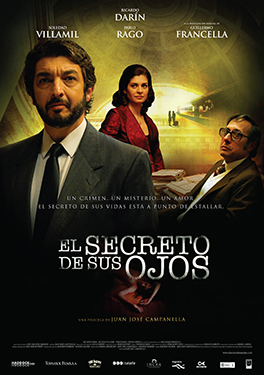
Monday, November 16, 2009
Baby, Who Turned The Temperature Hotter?
Fired Up! (Gluck, 2009)
Let's get this out of the way right here, right now. I have a soft spot for coming of age films, I have a soft spot for high school films, I am a 20 year old male and I am naturally inclined to like grotesque jokes about sexuality because I'm an immature prick. There, we have it. Mercy street! Despite all of those affections, even I have a hard time calling Will Gluck's Fired Up! anything resembling a solid comedy. Covering territory that other 'should have been rated R' teen comedies such as Accepted have tread upon before, the film is a hodge-podge of solid ideas that are kept in check by a studio's desire to market to as large an audience as possible.
Anchored by Nicholas D'Agosto and Eric Christian Olsen playing two high school super stud football players, Shawn and Nick, we watch them sign up for cheer leading camp in an attempt to hook up with as many girls as possible in two weeks. We have seen this story before, and before that, and probably even before that. Thankfully at least half the time D'Agosto and Olsen actually do the comedy thing really well, especially individually, and when there is noticeable chemistry between the two the film gets fairly funny quicker than it takes the blood to rush to these oversexed teenagers' sperm poles. Wow, a lot of phallic references in this post.
The supporting cast here is really interesting as well, and they all play to the material they are given as well as they can considering how devoid of humor some of the gags are. It was interesting to see Margo Harshman who played Tawny on Even Stevens show up, but she is mostly wasted because her running joke makes little sense in context. John Michael Higgins has a few funny bits as well, but the standout is obviously David Walton as Dr. Rick, the generic frat boy tool bag who slides nicely into the role of antagonist. Not only does he nail the part perfectly, he is given the best recurring jokes. Hearing him proclaim how "Tubthumpin'" by Chumbawumba is part of the soundtrack of his life is simply hysterical. He is a breath of fresh air in a sea of generic, age appropriate, semi-edgy teen humor.
Yes, the film is mostly mediocre, but I have to admire the film for instituting a number of running jokes that it never gives up on, whether they are funny or not. The narrative takes no turns, the direction is sub-par at best, and the script is not deep or anything of the sort, but the film is as funny as the rating will allow and all of the pieces of a great comedy are present. Hopefully in the future projects like this can get an R rating and be phenomenal, because seeing all of this potential go to waste is simply frustrating.
C+ or 2.989473825467328516
Comments are welcome and, for anyone with a literary mind, I encourage checking out my poetry blog filled with all original works for your reading pleasure.
Also I am on the old Twitter thing so I guess you can follow me at twitter.com/FLYmeatwad.
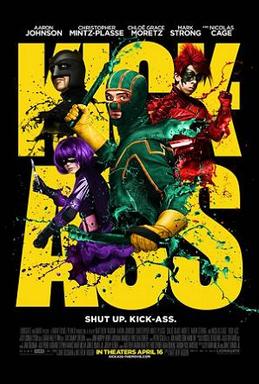
You Say My Kisses Are Not Like His, But This Time I'm Not Gonna Tell You Why That Is
Whatever Works (Allen, 2009)
I've only seen two Woody Allen films, Annie Hall and Vicky Christina Barcelona. The first gets better with each viewing while Allen's first film in Spain had me rather enchanted upon an initial viewing. I have seen every episode of Curb Your Enthusiasm, so the inclusion of Larry David had me ready to partake in some of the year's best comedy courtesy of one of my favorite funny men currently working. The inclusion of what I hoped would be trademark Allen dialogue only strengthened my determination to enjoy the film.
Luckily, I was not disappointed as the laughs are plentiful and David proves to be almost as capable of handling Woody's dialogue as Mr. Allen himself. The inherent cynicism that Allen displays in Annie Hall is all here, perhaps even more so, and is delivered pitch perfect by David, who even puts his own comedic spin on the character to keep him unique and interesting. The supporting cast is decent as well, though no one brings the laughs quite like the leading man, so when David is not on screen the film usually falls flat. However, Evan Rachel Wood is great as Melody, though she's also a blonde from the South who spouts off depressing, mostly nihilistic musings about life, so I may just be in love with the character.
The story here does not take many twists or turns, and the end is rather generic, but the real surprise for me was that Allen's camerawork, which was fantastic in VCB, is not only standard here, but mostly as generic as the script. The visual aesthetic was so bland and lifeless that I can see this aspect being the alienating factor capable of keeping people from enjoying what is otherwise a pleasant comedy that does not outstay its welcome. Allen's camera does not enhance any themes found in the film, it does not humanize or dehumanize any of the characters, it simply exists, which is odd when one factors in the idea that each of the characters here do have a unique story. I can see people having problems with the fourth wall breaking, but unlike the camera those portions of the film are usually used to enhance the comedy or to provide some insight into Boris' character.
While Larry David is great, the real star of the film is the dialogue. Personally, I think the writing here is just as sharp as what is found in Annie Hall and I think as a pure comedy there are more laughs to be found in Whatever Works than there are in either VCB or Hall. The film is not much more than a pleasant distraction, and neither the comedy nor the narrative are fleshed out enough to sustain even the lean 90 minute run time, but David knows how to handle Woody's words and the laughs are plentiful, so there is definitely enjoyment to be had here, even if the insight of Allen's earlier films is not as present.
B+ or 3.89437248132752389156182
Comments are welcome and, for anyone with a literary mind, I encourage checking out my poetry blog filled with all original works for your reading pleasure.
Also I am on the old Twitter thing so I guess you can follow me at twitter.com/FLYmeatwad.
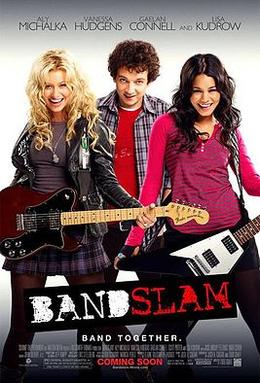
Luckily, I was not disappointed as the laughs are plentiful and David proves to be almost as capable of handling Woody's dialogue as Mr. Allen himself. The inherent cynicism that Allen displays in Annie Hall is all here, perhaps even more so, and is delivered pitch perfect by David, who even puts his own comedic spin on the character to keep him unique and interesting. The supporting cast is decent as well, though no one brings the laughs quite like the leading man, so when David is not on screen the film usually falls flat. However, Evan Rachel Wood is great as Melody, though she's also a blonde from the South who spouts off depressing, mostly nihilistic musings about life, so I may just be in love with the character.
The story here does not take many twists or turns, and the end is rather generic, but the real surprise for me was that Allen's camerawork, which was fantastic in VCB, is not only standard here, but mostly as generic as the script. The visual aesthetic was so bland and lifeless that I can see this aspect being the alienating factor capable of keeping people from enjoying what is otherwise a pleasant comedy that does not outstay its welcome. Allen's camera does not enhance any themes found in the film, it does not humanize or dehumanize any of the characters, it simply exists, which is odd when one factors in the idea that each of the characters here do have a unique story. I can see people having problems with the fourth wall breaking, but unlike the camera those portions of the film are usually used to enhance the comedy or to provide some insight into Boris' character.
While Larry David is great, the real star of the film is the dialogue. Personally, I think the writing here is just as sharp as what is found in Annie Hall and I think as a pure comedy there are more laughs to be found in Whatever Works than there are in either VCB or Hall. The film is not much more than a pleasant distraction, and neither the comedy nor the narrative are fleshed out enough to sustain even the lean 90 minute run time, but David knows how to handle Woody's words and the laughs are plentiful, so there is definitely enjoyment to be had here, even if the insight of Allen's earlier films is not as present.
B+ or 3.89437248132752389156182
Comments are welcome and, for anyone with a literary mind, I encourage checking out my poetry blog filled with all original works for your reading pleasure.
Also I am on the old Twitter thing so I guess you can follow me at twitter.com/FLYmeatwad.
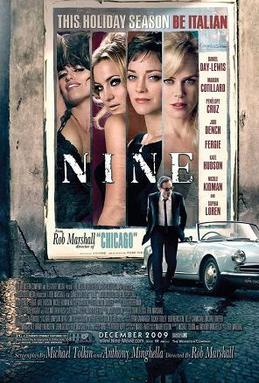
Monday, October 19, 2009
Your Head Will Collapse When There's Nothing In It, And You'll Ask Yourself: Where Is My Mind?
Where The Wild Things Are (Jonze, 2009)
The PG rating tacked on to Spike Jonze's latest film, Where The Wild Things Are, may make you think that this film is intended for children, but I can almost assure you that more adults will enjoy this movie than children will, which is to be expected when you have a director who has only handled adult films focusing on the philosophical plight of man. I am mostly unfamiliar with Jonze's previous work, though I have seen and rather enjoyed Adaptation, and Where The Wild Things Are was set to be my first Jonze film on the big screen. Since I had the pleasure of seeing the film in IMAX the screen certainly was large, perhaps even as large as the Wild Things that young Max encounters. Much like my lack of knowledge about most of Jonze's career with a camera, I have also never read the book this film is based on, so I went in without the years upon years of nostaliga that most viewers will likely enter with. Also, I basically thought the trailers were unimpressive. Still, I was hoping that Jonze could produce one of the year's best films, and I knew if there was a director capable of elevating what could easily have become a simple morality tale for families, Spike Jonze is that man.
In many ways Jonze does deliver a film that is so much more than a simple film made for family friendly audiences, we have a movie that is essentially a trip into the psyche of a vulnerable child as he apparently attempts to come to terms with all of the turmoil in his life. Jonze does, for better and worse, capture the idea of childhood with this film, in each and every regard. Unfortunately, that freedom also shines through in the narrative, or in many cases the lack thereof. The majority of the film when we spend time where the wild things are, the viewer is given only minor references to what portion of Max these creatures are supposed to represent or what the point of him being here is, other than to make things looks pretty for the viewer. But the film is a character study, we don't really need a plot, right? Right. Sadly, the character we are studying is developing constantly, but he is doing it through six or seven lesser portions that simply do not stand alone as compelling enough characters to warrant all the conflict and emotion that Jonze forces on the viewer. In many ways this film is like Antichrist, you know the symbolism is going on because the film pushes the viewer in that direction, but in neither film are we given enough to completely let these symbols exist naturally in the film, but with Antichrist the entire film is overtly allegorical, where as this film is all over the place because we need to believe the reality of the reality as well as the reality of the fantasy in this world. Perhaps I am over-analyzing the film, but I cannot help but I do feel safe in asserting that the film is more rewarding to contemplate afterward than it is to watch during. But that contemplation is the mark of a great film, I am so torn.
You know what else is the mark of a great film? Technical prowess. Jonze has this prowess in spades. Everything about the film up to the point where Max first encounters the wild things is absolutely brilliant. Not only are all of the actors near flawless, a trait that does carry throughout the entire film, but the camera is used so intimately that the intended emotion of each scene practically oozes from the screen. Pair that with the wonderful use soundtrack, the fantastic editing, and the intense art direction and we could have one fantastic film. Actually, all of those things mostly do run throughout the entire film. Why do I not love this film more? Anyhow, Jonze miraculously loses all of this emotion as the film continues, only capturing flashes of the initial greatness about ever 15 minutes or so. Thankfully the film is God damned beautiful, so despite the narrative and character development not being too engaging during the run the visuals are more than enough to keep the film afloat.
Minor spoilers in this next paragraph I suppose, but really it's only the first 15 minutes...
But I think things need to stay more than just afloat, in such a personal yet apparently universal film each and every viewer needs to be able to both sympathize and judge Max all at once. Perhaps that is what is missing in the middle. Early on, when we are still in the real world, everything Max does and each different scene not only reveals more and more about his character, though hardly in overt manners, while conveying different emotions. So much so that I imagine each and every viewer can, to some extent or another, connect with at least one of the things that Max experiences. Rebellion, isolation, joy, freedom, imagination, everything. Jonze displays it all, and he does it wonderfully. Hell, the film nearly had me in tears, which would have easily been a record, about fifteen minutes in when Max is lying on the ground under his mother's desk and she stresses out over work. I spent most of my adolescence in a single parent household and I completely connected with what Jonze had on display, but as a viewer I was also able to see the tragic beauty. And then we get the gut-wrenching scene where Max's mother has her boyfriend over. The way events transpire, it's devastatingly brilliant. But then that emotion disappears and we are given a pretty film to look at for a while.
Much like a child telling a story, the narrative offers basic symbols and moments of genius, but it just does not give enough during the film to truly showcase its brilliance. Yet after the credits rolled it's all mostly there, it just takes looking closer at the subtext. It's so confusing. I really do not know where I stand on the film, whether I love it, dislike it, respect it, admire it, adore it. I do not know. I honestly considered giving the film two ratings, but I can't do that, mostly because scores are meaningless. I'm certain this is not one of my favorite films of the year, yet aside from my top two or three there are no other films I have seen this year that I am more eager to revisit. I'll have to see if I can find someone to go with in the near future and hopefully get a fresh interpretation, maybe that will help me figure things out more. Let's just say it's pretty good, and pretty bad, and pretty fantastic.
B+/A- or 4.23234273847325462371895
Minor spoilers in this next paragraph I suppose, but really it's only the first 15 minutes...
B+/A- or 4.23234273847325462371895
We Were Once A Fairytale (Jonze, 2009)
Wow! A double dose of 2009 Spike Jonze! While I am still mostly confused about the Wild Things, I do know this short film is the best Spike Jonze directed film of 2009. Starring Kanye West in a role that is kind of like what I imagine John Malkovich did in the Jonze film about him, we experience a brief night in the club where Kanye struggles with identity, fame, rejection, and perhaps even the human condition. Jonze continues to show why he is magical with a camera, and he even gets a fairly decent performance out of Mr. West, though I have to wonder if Kanye always sounds so odd when he talks/yells. The film is a bit difficult to hear sometimes because it never drops the club atmosphere, so loud music is always playing, but that is nothing more than a minor complaint. While it is probably safe to give away the ending since Jonze has the film up online and it is only 11 minutes long, I will just talk about it in a round about manner. It's a fantastic ending point that, if I am interpreting it anywhere close to correct, and that may not be since the analytical portion of my brain had a good deal of trouble even formulating a decent idea of what was happening, essentially is delightfully bleak yet strikingly lovely. A great effort from Jonze and an excellent follow up to his messy Where The Wild Things Are.
A-/B+ or 4.278721462356239563279
And just like that I have hit 60 2009 films watched so far this year! I have roughly 4 months to hit 100, which I think is completely doable.
Feel free to watch We Were Once A Fairytale right here
Comments are welcome and, for anyone with a literary mind, I encourage checking out my poetry blog filled with all original works for your reading pleasure.
Also I am on the old Twitter thing so I guess you can follow me at twitter.com/FLYmeatwad.
A-/B+ or 4.278721462356239563279
And just like that I have hit 60 2009 films watched so far this year! I have roughly 4 months to hit 100, which I think is completely doable.
Feel free to watch We Were Once A Fairytale right here
Comments are welcome and, for anyone with a literary mind, I encourage checking out my poetry blog filled with all original works for your reading pleasure.
Also I am on the old Twitter thing so I guess you can follow me at twitter.com/FLYmeatwad.
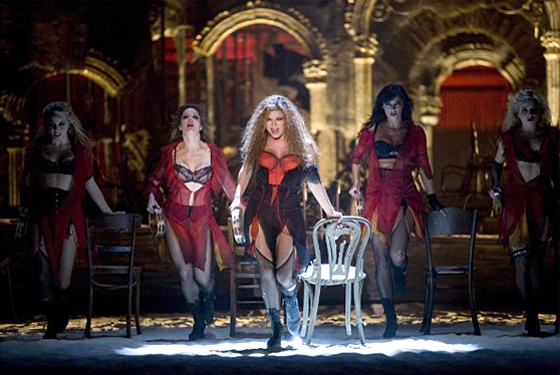
There's More Like Me Where I Come From, So Mark Our Shapes. Go Down To The Netherworld, Plant Grapes
Drag Me To Hell (Raimi, 2009)
You may notice that this entry jumps around a lot. We can say that, like Raimi, I like to make your mind jump, but that doesn't really work. Essentially, I need a post because this is for the marathon, but I am devoting most of my writing tonight to my Where the Wild Things Are review.
I have not seen the Evil Dead films, I really do not know what other non-Spiderman stuff Raimi has done, but after seeing how terrible Spider Man 2 was I had some reservations going into this film, As this little horror marathon continues I veer away slightly from the fun times found in Trick 'r Treat and actually sit down with a horror film that seems to be designed to scare. Raimi creates tension wonderfully and effectively delivers just about every jump scare he sets out to offer the audience, though that is not to say that the film is engaging simply because it can make the viewer jump. The tale is quite compelling, centering around Alison Lohman's character attempting to rid herself of a curse, and the camera work is damn near top notch. Not to mention that the visual effects are both rather stylized and great at setting the film's tone.
Lohman gives one Hell of a performance in the lead role, in fact I would probably list her as my second favorite actress of the year behind Charlotte in Antichrist and just ahead of Emma Roberts in Hotel for Dogs. As much as I like Justin Long, and that is a good deal, he does not really do all that much with his role. I suppose if there is a surprise it would come in the form of Dileep Rao, but I do not consider him among my favorite supporting performances of the year so it does not appear that he is worth mentioning in any detail. Really the film is Lohman's story and she does everything in her power to make sure that she keeps the viewer engaged.
While I am very inexperienced when it comes to horror films, it is also apparent during the film that Raimi is playing with genre convention, which adds a nice layer of underlying humor to the whole affair. There are some scenes that remind me of my time with Poltergeist 3 (no, I don't know why, of all the Poltergeist films, I watched the third one, but whatever), while a number of other scenes had me thinking of what I have heard about other genre staples. The whole dual horror/comedy thing comes to a bursting point when the seance scene occurs though, and what a fantastic scene Raimi has constructed. Without giving away too much information, a goat is involved, as is an old woman and a man servant. The humor is there, but the film never lets the viewer forget the severity of the situation. It's really genius construction, and similar scenes are found scattered throughout the film.
I do not know if I can all Drag Me To Hell one of the best films of the year, and I do not think I can say that it is better than Trick 'r Treat, but Raimi presents me with a film that does get significantly more frightening than Trick 'r Treat while still being at least as entertaining to watch. In hindsight I probably respect the film more than I enjoyed it, but maybe it is the other way around. I'm still not entirely sure. That will likely be a theme tonight as I get to my Wild Things review. I likely would have benefited from knowing more about the genre, but the genius of the film is that is can be enjoyed without all the viewer needing to get all the winks and nods to past films that Raimi has, I believe, inserted here. Anchored by a stellar performance from Lohman, some excellent camera work from Raimi, and a story that is as frightening as it is entertaining, Drag Me To Hell is a blast. I should probably buckle down and watch The Orphanage now though to prepare me for potentially seeing Paranormal Activity in a theater. Maybe.
Result: Lights Off!
B+ or 3.97848237480932753829065
Comments are welcome and, for anyone with a literary mind, I encourage checking out my poetry blog filled with all original works for your reading pleasure.
Also I am on the old Twitter thing so I guess you can follow me at twitter.com/FLYmeatwad.
I have not seen the Evil Dead films, I really do not know what other non-Spiderman stuff Raimi has done, but after seeing how terrible Spider Man 2 was I had some reservations going into this film, As this little horror marathon continues I veer away slightly from the fun times found in Trick 'r Treat and actually sit down with a horror film that seems to be designed to scare. Raimi creates tension wonderfully and effectively delivers just about every jump scare he sets out to offer the audience, though that is not to say that the film is engaging simply because it can make the viewer jump. The tale is quite compelling, centering around Alison Lohman's character attempting to rid herself of a curse, and the camera work is damn near top notch. Not to mention that the visual effects are both rather stylized and great at setting the film's tone.
Result: Lights Off!
B+ or 3.97848237480932753829065
Comments are welcome and, for anyone with a literary mind, I encourage checking out my poetry blog filled with all original works for your reading pleasure.
Also I am on the old Twitter thing so I guess you can follow me at twitter.com/FLYmeatwad.
Subscribe to:
Posts (Atom)