Showing posts with label Japan. Show all posts

Monday, February 20, 2012

Smash Cuts: The Secret World Of Arrietty


The Secret World Of Arrietty (Yonebayashi, 2012)

Cultures clash, worlds collide, while the trivial takes on the weight of the universe. Assuming it has a weight and we all aren't just floating along. But perhaps we do float along, movies carry us away into these worlds where the magic becomes real. Where we can forget the grim reality lurking in the backdrop. Our rats are only possible threats, we worry for naught when there are adventures to be shared. Or perhaps just borrowed. It's hard to gaze upon the foreign without interacting, for the imagination to build up a reality that just cannot be true, but these moments of hesitation are truly the ones that reveal who we really are, the fleeting glimpses stretched out until the reality is washed away by the dream.

Friday, September 23, 2011

Endless Dreams: A Tribute to Satoshi Kon

Back when I did a short stint on WordPress I typed this up. About a year has gone by since Satoshi Kon, one of my favorite directors, passed away. I think it's a poignant time to take a look back at this entry for all the readers who may have missed it. Let us never forget the works of a man who truly was a master and innovator of his craft.


Early today it seemed the Twitter world - who would have guessed- was all about about Satoshi Kon, revered anime director of Perfect Blue and Paprika fame. Reports started cropping up that on August 23rd, one day ago, the director passed away suddenly at the age of 47. I had the chance to see Kon's Paprika during its 2007 theatrical run, my first film from the director, and was instantly floored not only by the sensory overload but also by the intricate plot and essential love letter to cinema that had been sent. After seeing this film I made it a point to check out the rest of the man's work, and much to my surprise I had already previously fallen in love with the visionary's creation without even being aware. Kon's series Paranoia Agent ran on [adultswim] and had initially turned me on to the power of anime as a storytelling medium. Kon existed as a storyteller in the purest sense of the word.

Thursday, April 21, 2011

Your Hair Is Brown. Your Eyes Are Hazel, And Soft As Clouds


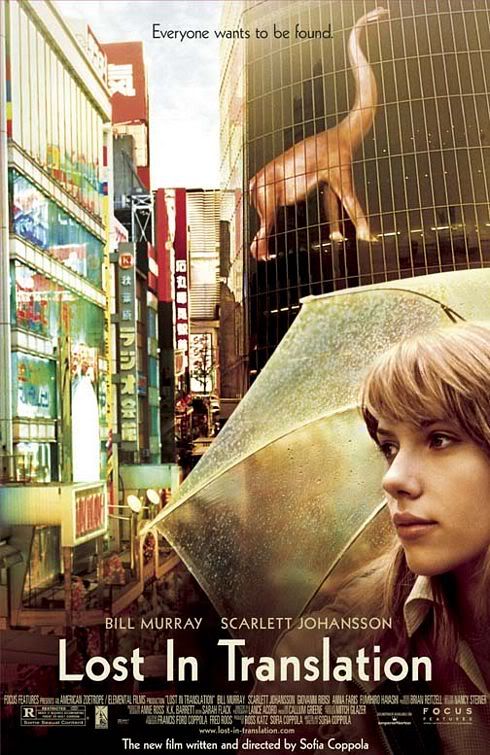
Lost in Translation (Coppola, 2003)

At the heart of what is likely Sophia Coppola's most iconic film, Lost in Translation, is the idea of two lost individuals finding themselves in a land where reality mingles with artifice. Obviously this does not imply that Japan is some stand in for society at large, but the location should not be trivialized as it is in a film like Before Sunrise, where the location is tangential to the overall romance. No, here Tokyo is almost essential to the central relationship because it exists as just far enough away, displaced enough to ensure that Charlotte (Scarlett Johansson) and Bob (Bill Murray) are going to have to spend some time together if only to pass the time, to have someone else who will listen. The film champions the most basic of human connections, and from there it continues to grow.

Coppola is known for being able to set moods in her films thanks to strings of visually evocative images that are interwoven with fairly simplistic stories. Lost in Translation proves to be no exception, especially for much of the first half of the film. Sure Murray is able to make the viewer empathize with a man who has apparently been beaten down by life. Despite being a once successful actor he is not passing on passion projects in order to cash in on his likeness. Johansson's Scarlett is just as aimless, being trapped in a relationship that keeps her locked away during the days and nights, simply passing the time in this high quality hotel. What is a philosophy major to do? Contemplate. These are two people who may not be lost, so much as stagnant. And despite the beautiful construction of scenes the film sort of stagnates with a couple half laughs and some passing interest in the singular lives of these two characters, but it never really picks up until they both begin leaving the hotel behind.

Shedding the confines lifts a type of oppression from the film, and the the vibrant streets of Tokyo make for an excellent retreat from the retreat when paired with the energy between the two leads and Coppola's wonderful camera. A run through a Japanese pachinko parlor, basically a slot house/arcade hybrid if my American interpretation of the game is reliable, stands out as one of the early sequences where we can begin to see the bonds between the two developing. While it would not be difficult to put a decidedly sexual undertone to the whole relationship, it seems more to me that each are simply learning from one another. Charlotte seeks affirmation that her life will get better than Bob's, and he seeks reaffirmation that there's still reason to continue with his life. As the film continues to build it becomes stark, beautiful, and utterly heartbreaking because the script takes the initial simplicity and, seemingly naturally, stumbles upon some of the most honest and truthful dialogue ever written.

Some films thrive on flash, and while there are plenty of visceral thrills and pleasures to be had with Lost in Translation it really is the minimalism that makes the film work so perfectly, especially towards the end. You can dig in to the film and find a complexity that is as wide open as the final encounter between Charlotte and Bob. People don't live or die, people just float. And in many ways, this film is a beautiful exercise in people floating along before encountering another individual. Having that chance to be free, to bare your soul to another, to learn and interact. It's this sense of freedom that the film captures, juxtaposing with with the newness and construction of the travel experience. We can't hold on to these feelings, but it makes us wonder why we hold this freedom back from others, how we perform for the world, and what it means to not perform. Eventually we will go on floating again, how permanent is any relationship? Maybe everyone has the answer, Lost in Translation certain appears to, but maybe we just don't want to hear it, we want to never know.

Netflix Rating: ****/*****

Rich

Comments are welcome and, for anyone with a literary mind, I encourage checking out my poetry blog filled with all original works for your reading pleasure.

Also I am on the old Twitter thing so I guess you can follow me at twitter.com/FLYmeatwad.

Tuesday, June 22, 2010

The FOXHOUND Chronicles - Metal Gear Marathon Introduction

In the 1960's Bob Dylan recorded three records that collectively have come to be recognized as one of the era's greatest cultural triumphs. Years later George Lucas's Star Wars films built a universe that captivated a nation. Even after that literature is revolutionized by the release of Twilight! All culture, good and bad, uses the series format to create worlds, explore complex themes, and even uncover a bit about humanity. I propose that, since Bob Dylan released his records all those years ago, no single individual has crafted as important a cultural touchstone as Hideo Kojima. In the form of the Metal Gear Solid series (and, I suppose I will soon discover, the Metal Gear series) Kojima displays a brilliant awareness of the world surrounding us all, traditional story telling techniques, and the uniqueness of the medium he uses to tell his stories.

I hope to apply a closer inspection of each game individually and in a larger context, discussing the artistic merits of Kojima's universe with a specific focus on the aspects that distinguish Kojima's games from those of his contemporaries and the similarities his works bear to other storytelling mediums. Combined with the man's one of a kind perspective these games not only transcend the medium, but also demand inclusion in the cultural cannon. Even more impressive is Kojima's future prospects, as he clearly is showing few signs of slowing down in his output, even if his time int he Metal Gear Solid universe is finally drawing to a slow close. Through weekly, or more depending on time, blog entries I will track my progress in these games (though mostly all are replays) and record my observations. At the conclusion of each game I will post a lengthy entry that is more focused on specific aspects of each game in relation to my larger goals.

Sunday, September 20, 2009

I Hear What You're Not Saying...


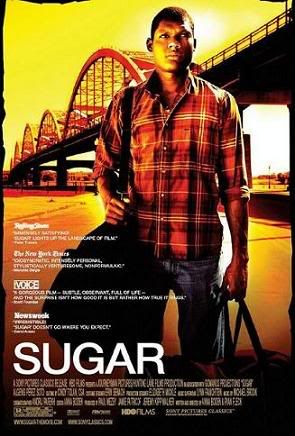
Sugar (Boden and Fleck, 2009)

While I missed the theatrical run of Sugar, I had heard nothing but good things about the baseball biopic focusing on a young Dominican player as he makes the journey over to America for a chance to play in the majors. From the opening preparations to the first minor league game, Sugar chronicles the progression of the titular character wonderfully and humanly, always respecting the game and the player. The rise and (spoilers coming) eventual fall of Sugar is portrayed without embellishment or splendor, the tale is simply told. The film is deceptive in nature though, as one may expect the film to mostly center on Sugar, but a good amount of time is given to the politics of baseball and how these imported players are mostly left by the wayside from the next prospect. The film is marked with a fairly distinctive visual style courtesy of the two directors, and the film is obviously helped by a stunningly strong turn from lead actor Algenis Soto.

The film does, admittedly drag on a bit in the middle portion, as the story drifts over to New York City for a seemingly meaningless portion. The politics of the game are left out, the language barrier complications that made the start of the film so endearing was mostly forgotten, and Sugar simply did not develop much more as a character. However, the film sets up a devastatingly beautiful ending that packs the viewer so full of hope but forces the audience to also look at reality. Sugar has a number of high points, and as far as entertainment is concerned the film certainly delivers, but as a whole the film does not feel like much more than a fairly standard story mixed with enough interesting concepts to add up to a worthwhile way to spend about two hours.

B/B+ or 3.98927483274083271583275


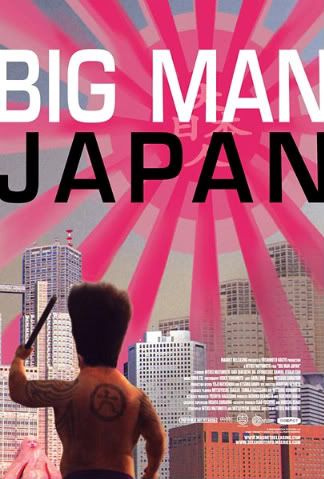
Big Man Japan (Matsumoto, 2009)

Easily presenting one of the most exciting trailers of the year, I have had the desire to watch Big Man Japan for quite a while, so stumbling across the title on Netflix Instant Watch was a welcome discovery. My expectations entering the film were for a rag tag, tongue-in-cheek Power Rangers~esque romp. Perhaps a Japanese take on The Host where the genre is poked fun at while a nice story is told. Well, that did not happen. Through a very diligent documentary look, Big Man Japan follows writer, director, and lead actor Hitoshi Matsumoto's character Daisato through the mundane life of Japan's protector from the numerous monsters that plague Japan. Matsumoto gives a wonderfully straight performance, capturing the run down depression of a man who has seemingly outlived his use both in the eyes of the public and his family. Mix that with near perfect comedic timing, and Matsumoto turns in one of the year's best performances.

The film also does mix in a few bigger fights, making use of CGI as best it could and making up for the less than perfect images by having an incredibly stylized group of monsters terrorizing Japan. And then there is the whole social commentary/existence struggle themes through run throughout the film, both of which are handled masterfully. And then the film ends, and what a finale Matsumoto presents. Hysterical to the extreme and incredibly poignant, the film's final fight sequence speaks volumes on American culture in Japanese society, media sensationalism, and one's struggle with humanity. The film is far from flawless, though I do think that the pacing is excellent, but Big Man Japan is a unique ride that is open to a plethora of readings. Any film that provides that is great in my book.

B+/A- or 4.172814962146231645923


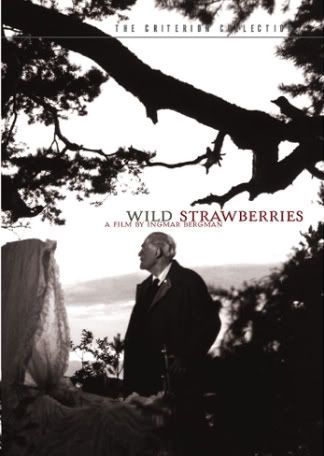
Wild Strawberries (Bergman, 1957)

Speaking of films that are ripe for interpretation, Wild Strawberries is my second Ingmar Bergman film. A meditation on life, looking back upon the existence of a professor who has seemingly alienated his family and friends over the years, Bergman presents a quiet and compelling narrative with an incredibly compelling character at the center of the flash back filled affair. As Dr. Borg revisits his memories, the viewer is presented with a brilliantly structured film flowing to the brim with imagery and symbolism. Of course that is a blanket statement that requires a bit more thought. One scene has a cradle placed out in the woods, standing far enough away from the house to give the viewer some hint about something or another. This is all very vague, though with good reason, I was confused. Bergman creates a film here that is rewatchable, I am sure, but for some reason I was never completely hooked either. This film is odd. I should watch it again. Would have not put this entry up, but I love the poster.

B+ or 3.9892374032754235703?

Comments are welcome and, for anyone with a literary mind, I encourage checking out my poetry blog filled with all original works for your reading pleasure.

Also I am on the old Twitter thing so I guess you can follow me at twitter.com/FLYmeatwad.

Monday, August 17, 2009

What A Gas It Was To See Him Walk Her Every Day Into A Shady Place

Planned on doing a double shot review, but I just do not feel that I have much to say about the second film, so I'm just going to tack on a little bit at the end to give it some attention.


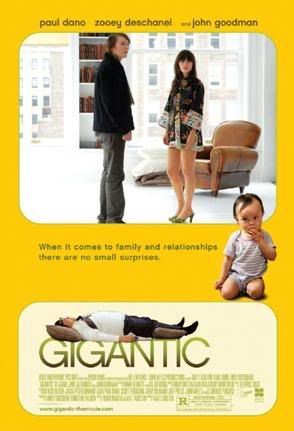
Gigantic (Aselton, 2009)

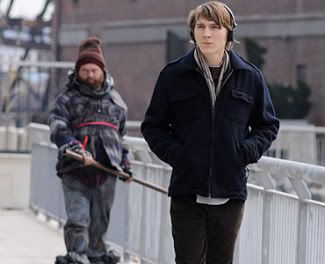
In many ways, Gigantic is a wonderful experiment that ends up, somehow to its benefit, less than the sum of its parts. Anchored by a wonderful cast, featuring Zooey Deschanel in her second, and more impressive, performance of the year, first time director Matt Aselton comes out firing on all cylinders, but has a good deal of trouble putting everything together for a transcendental film. However, this does not prove to be the detriment that it would immediately seem to imply. Gigantic constantly walks a fine technical line, shifting from beautifully disciplined camera movement, albeit a bit too contained at the film's start, to wonderfully beautiful hand held shots that showcase a striking freedom, such as the scene where the camera drifts in and out of trees in the woods. Unquestionably, the film is a visual powerhouse. The cinematography is some of the best of the year so far and Aselton shows a ton of potential for any future films he will hopefully involve himself in. Whether in the city or out in the forest, he has a way with presenting scenes in visually striking manners. The film is technically brilliant.

The ideas presented in the film are mighty interesting as well, though the movie could have likely used another ten minutes or so to give the viewer a push in some sort of general direction. I am all about ambiguity, and the way the film is constructed the ambiguous nature of the plot lines proves to be crucial to the entire experience, but the idea does not completely pay off at the end. However, I find myself incredibly interested to take a look back and see if I over looked any tiny details that may help give me something more to latch onto and ponder even more in depth. The humor, surprisingly, lands when it is used, but the film is hardly a laugh a minute. Thankfully, the film also crafts some pretty fascinating characters to make up for the fact that that plot is a little lean. But the film is also fairly complex and, much to my delight, only hints instead of coming out and actually revealing things, which I love in films. It makes the audience work, and I can respect the script for taking that chance.

Of course a lot of the writing could easily go to waste with a cast that is not capable of handling the roles. As I said, Deschanel is brilliant, and beautiful, and just about everything the role needs. Of course placing Dano opposite her, and having him turn in a performance that is both human and genuine, capturing the struggles of what appears to be a troubled man attempting to exist in 'normal' society, is a choice that pays off in droves. Goodman is mighty great as well, and Asner turns in a performance that is certainly at least five steps above his voice work in the underwhelming, and incredibly overrated, Pixar film Up from earlier this year. Other highlights of Gigantic include a soundtrack that rivals Adventureland and Lymelife for the year's best, a fantastic supporting cast, and a highly stylized world that all add up to one Hell of a debut for Matt Aselton.


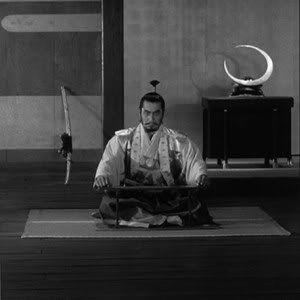
Throne of Blood (Kurosawa, 1957)

The film is visually gorgeous, the score is pretty great, the acting is good, and the film is another great effort from Akira Kurosawa. Sadly, this film felt much slower than the two previous Kurosawa films that I have watched and I really think that the silent portions here, unlike in Rashomon, detracted instead of added to the film. Basically the film is a standard retelling of Macbeth, and I've always been of the mind that Macbeth is much better material to be discussed than to be watched or read. Not surprisingly, that transfers over to Throne of Blood mostly. It's a pretty great adaptation I suppose, despite leaving out a few things from the play, I believe. But he also injects his own themes and visual symbols, which adds more to the film, I reckon. Can't say I was blown away though or that I have much to say about the film. It's really solid and a technically great film, but it just never really grabbed me.

B+ or 3.898213472146702381645823

Comments are welcome and, for anyone with a literary mind, I encourage checking out my poetry blog filled with all original works for your reading pleasure.

Also I am on the old Twitter thing so I guess you can follow me at twitter.com/FLYmeatwad.

Saturday, August 8, 2009

I Wish You Could Swim Like The Dolphins, Like Dolphins Can Swim


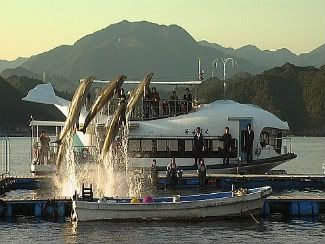
The Cove (Psihoyos, 2009)

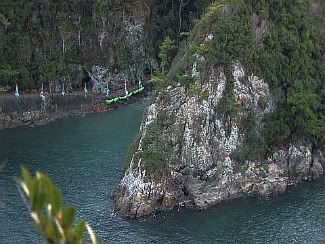
While I would not consider myself very well versed in documentary film making, I do have an interest in these types of films and, when one builds buzz like The Cove, I feel compelled to do everything in my power to check out these types of films. Luckily, The Cove opened at a local theatre this week and I did not have to go incredibly far out of my way to see the film. The power of a documentary is something that few other films, or even many other artistic mediums, can effectively wield because, quite obviously, a documentary has the advantage of, at least to an extent, presenting life in its purest form. I knew little of the material that would be covered, only that dolphins in Japan were a focus, so I was hardly prepared for what I was about to witness.

About a year after the mesmerizing, and Academy Award Winning, doc, Man on Wire, The Cove begins to set up as a documentary that draws influence from various styles of film, most notably espionage films. While The Cove has far fewer constructed sequences than Man on Wire, the comparisons to these genre films are still incredibly warranted because, even without the construction, the entire film is practically an adrenaline rush of social and political intrigue that had me riveted from beginning until end. The action sequences here, and by action I mean the car tailings, the cop stuff, and the actual infiltration, are all nicely handled and enhanced by one of the best scores of the year. The film is surprisingly suspenseful for the type of film that it is and, quite masterfully, never skips a beat in terms of narrative, which is and of itself an impressive characteristic in any type of film, let alone a documentary.

Of course the film also succeeds as a standard documentary as well. The interviews all serve the film's purpose, the examination is immediately identified and builds throughout, and the whole thing advertises a payoff that, unlike in other docs, hits incredibly hard. For example, the film goes about humanizing the dolphins incredibly effectively. However, to say that the film is simply about dolphins is misleading, as Food, Inc, as well as other older documentaries, has chronicled an abusive industry. No, the tragedy of The Cove is elevated by the dolphin trade, but the actual sadness is in the exposure of government policy, the corruption of power, and the countless victims that will result in the future, all of which the film covers nicely. These aspects are all universal, and I would argue that every individual a part of at least once, usually for extended portions of time. The struggle is tragically heartbreaking and seems to be overlooked in favor of the film's more overt material.

SPOILERS FROM HERE ON OUT...I reckon. I mean the trailer kind of spoils it, and I have made references earlier. Still, spoilers.

Still, I do not mean to lessen the effect of the dolphin killings on screen, as the film serves wonderfully as a call to arms for that particular cause as well. The entire film's intrigue is built on seeing the inside of this cove, and once the film really starts to drive at that things start to pick up immensely. And of course that all leads to the hidden cameras in the cove, and the final fifteen minutes of the film, which also happen to be the best fifteen minutes or so of the year in cinema thus far. Soul shatteringly gruesome, the massacre of these dolphins is shown in full force, capped off by the greatest shot of the year, a cove where the water has gone completely red. The film then starts to wrap things up in grandiose fashion. One interview we have been seeing throughout the entire film is revealed to have taken place after the discovery of the footage, as O'Barry, after just being shot down with "I told you, we are not going to talk about what ifs," pulls out a camera and asks the man to take a look at some footage. Sure it's not very professional, I guess, but it's such a satisfying conclusion, you just want the man to be confronted with this evidence. And his reaction is priceless. Cue the reveal at the IWC, the final monologue, the obligatory call to arms, and then the mesmerizing introduction of David Bowie's "Heroes" as the credits start to roll.

It started during that hidden camera sequence, but by this point I had been effectively bowled over. I recall getting upset over films, I recall weeping after seeing George Washington, but until watching The Cove I had never broken down in tears in a movie theater. The political implications I talked about earlier, mixed with the chilling score and the scenes of the red water left me practically immobile. Does the film have some flaws as a documentary? Probably, as there are one or two points that really do not go very far. Does The Cove present all the facts? I don't really know. However, as I finally worked up the strength to leave the theater and began stumbling my way to the car before breaking down again, I was practically positive that The Cove is nothing short of one of, if not definitively, the best films of the year so far.

A+ or 4.9128934721842374230174

Comments are welcome and, for anyone with a literary mind, I encourage checking out my poetry blog filled with all original works for your reading pleasure.

Also I am on the old Twitter thing so I guess you can follow me at twitter.com/FLYmeatwad.

Wednesday, July 15, 2009

Meet The New Boss, Same As The Old Boss


Ikiru (To Live) (Kurosawa, 1952)

The Kurosawa marathon continues with the 1952 film Ikiru (To Live). Now because I know little about Kurosawa outside of what I saw in Rashomon I have to wonder if this film is any indication of what types of films are to come in the future from the acclaimed director. Sure Rashomon started getting all philosophical at the end, but Ikiru starts things off with a metaphoric bang as we quickly learn the circumstances and are introduced to our protagonist. Given the film's description on the Netflix packet I had little idea of what the film would consist of aside from a man trying to build a park, but little did I know just how deceptive such a description is in the film's larger context.

Speaking of larger context let's start pretty broad and begin narrowing things down from there. Kurosawa turns in another fantastic effort behind the camera and, in some ways even more than Rashomon, makes for a visually compelling film. Seeing how differently he handles shots in a larger and congested city as opposed to the tangled forests was interesting and really gave the film its own stylistic feel while keeping with elements that are quickly becoming Kurosawa trademarks. Once again seeing the influence that the man has had on future films is near unmistakable when watching Ikiru, but in some ways I almost felt that, as far as direction is concerned, Rashomon is just slightly stronger. However, every time I thought this we would get sequences like the playground one or the one in the bar early on. In other words, the film looks pretty damn beautiful.

So now we'll get a little more concise and focus on the acting. While the film is littered with a ton of really good performances throughout, the anchor, as the script demands, must be Watanabe. Thankfully, Takashi Shimura turns in a top notch performance that hits all of the right notes. Even if the script was horrible, the direction terrible, and the other actors particularly dreadful, I am completely confident that Shimura's performance alone would make for compelling cinema. Obviously none of that is the case though and all the surrounding elements only help to enhance his job on screen. He captures the mentality of man perfectly and seeing him develop in the face of certain death and a crumbling family life is handled masterfully, both by Shimura and Kurosawa. The performance is truly incredible and certainly had me impressed throughout the hefty two and a half hour run time.

Now the run time could have easily been a flaw, and there were one or two scenes where things slowed down a noticeable bit, but for the most part the film was paced excellently. It clearly followed a very direct Three Act structure, but age old tales have always been told about how life is, at its core, three different parts all making up a whole. I do not think it is by coincidence that Kurosawa structured the film in such a manner, and taken in context it's a truly remarkable technique. Actually, most of the artistic value of the film is handled wonderfully and just about all of the philosophical stuff is given ample attention.

The one problem I had with the film was in the bureaucratic commentary. The film starts off with a whole round about sequence of going from department to department that is used incredibly, and most of the stuff in the third act, especially the final returning to work portion, is flawlessly executed, but the theme feels a bit underdeveloped during the middle portion. Now I know this theme was not supposed to act as the backbone of this portion, but having a little more there could have really pushed the film over the top for me. When the number of successes in a film are so plentiful, as is the case with Ikiru, the one flaw tends to stand out, but as I evaluate it I am able to realize that it does not hurt the film all that much. The only other potential problem I can think of, as was the case with Rashomon, is how direct the ending is, though thankfully nothing feels rushed or forced here, so the problem here is more personal and less technical, so my supporting evidence is limited.

Ultimately, my second experience with Akira Kurosawa was similar to my first. Things start off fairly simple, but as the film builds it picks up momentum at an astounding rate and makes for an incredibly compelling film. I think the sheer amount of material here, extraneous ideas given to each individual viewer I mean, is so numerous that I need at least one more viewing to process everything, but I can say without a doubt that Ikiru demonstrates Kurosawa's versatility as a storyteller and as a director while still existing wonderfully as a narrative. Ikiru hits every note pitch perfect and has me, once again, excited to see more Kurosawa.

A[/A+?] or 4.672348239143679563159783

Comments are welcome and, for anyone with a literary mind, I encourage checking out my poetry blog filled with all original works for your reading pleasure.

Also I am on the old Twitter thing so I guess you can follow me at twitter.com/FLYmeatwad.

Friday, July 10, 2009

What I Read Between The Lines: Your Lies

Rashomon (Kurosawa, 1950)

It has taken me needlessly long to get started with Akria Kurosawa's films. Finally, the Filmspotting marathon that Adam and Matty are doing on the podcast has allowed me the chance to really start watching films from a man who is considered to be a master filmmaker. I'm going to skip all of the historical background and things of that nature, not that I would likely be able to offer much insight in the way of correctly placing him in his time period or alongside his contemporaries anyhow, in order to focus on my reaction to my first venture into Kurosawa's robust library of films.

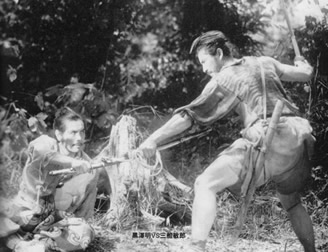
Rashomon has a pretty interesting structure, following a recurring narrative that offers four different occurrences of the same event as a man is put on trial. However, these narrations are narrated by two men at a temple, so really we are hearing a story of a story, and if you take into account the fact that the film is apparently based on another story it adds another fun little layer into the mix. As for the style, it is used much to the film's benefit. Paired with meandering shots through a dreamlike, or perhaps nightmare would be more fitting, forest, the viewer is made to be swept away with each narrative as the idea of fact versus fallacy is constantly in one's mind, but hardly ever able to be discerned in any tangible fashion. Really all we know is what is shown at the Rashomon temple and that the one man is dead, everything else is open to interpretation.

Of course even the way the audience is asked to be engaged and how any individual viewer should interpret the scenario is enhanced by having a faceless inquisitor prod each of the characters to make direct appeals to the camera. The technique is really brilliant and is sure to never give away any details that may place more fact in the hands of a viewer. In a sense, the character that is being told the story by the axeman and the priest is placed in the same situation as a viewer and, towards the end, begins piecing things together on his own as any viewer of the film likely would as well. The film's construction is pretty damn masterful and thought provoking all the way up to a mostly beautiful finale.

Now I have talked all about the construction and have yet to mention the direction and the cinematography. Both are beautifully in the purest sense of the word, Kurosawa's control of the camera paired with Miyagawa's beautifully constructed scenes makes for an experience that is phenomenally striking purely from a visual level, but also one that allows the film to exist almost silently. The dialogue at points is minimal, but none of the tension is ever lost nor does the narrative ever slow down. Dialogue becomes an equal with the images, breaking the barrier between story and painting and doing it wonderfully.

Of course the film's ability to work even in elongated silent sequences, especially when most of the film is so concerned with narrating stories, is also largely thanks to the actors involved. All of the actors give spectacular performances and nothing less than a solid performance can be found. However, mixed in with a slew of really good performances, two particular ones stand out as incredibly impressive. Toshiro Mifune turns in a wonderfully maniacal effort as the bandit Tajomaru, categorized by a signature cackle that embodies the best and the worst of the human experience, while Machiko Kyo is phenomenal as Masako Kanazawa, the wife of the murdered man. Both show an impressive range and turn in riveting performances in their respective roles, but the one scene that really sold it for me is how both act in the axe man's tale. Both interact with each other wonderfully without Mifune or Kyo losing anything to the other.

I have very few gripes with the film. The picture is perfectly paced and sustains its running time nicely, clocking in around 88 minutes. The one part that struck me as odd, though not really a flaw in the film I would say, was the conclusion. I did question the priest's reaction at a pivotal point, and his change actions seemed a little forced, though they worked nicely with what Kurosawa was trying to do, which is the trade off when using characters as representations, as the case appears in the final scene. I am also still wrestling with the film's concluding message, I believe it is rather obvious and if that is true then I suppose I have a bit of a personal problem with what the film is saying rather than a technical problem. To have things end how they do after a wonderfully human and pretty nihilistic speech is delivered seems to undercut what just occurred rather than provide a juxtaposition. Still, I am aware that this problem is purely personal and not a flaw of the film.

Ultimately, I found my first experience with Kurosawa particularly impressive and I cannot wait to delve deeper into the man's body of work. Rashomon takes a seemingly simple tale, shoots it beautifully, tells a story, and then unloads a shotgun shell's worth of philosophy upon the viewer towards the end. The results are hardly painful though, the experience proves mentally stimulating and utterly flooring, capturing the mentality of a lone bowling pin in the ninth frame. I look forward to hearing Adam and Matty discuss the film on the podcast this week and am positive that this marathon is going to be spectacular.

A/A+ or 4.76827914623149236452397856

Comments are welcome and, for anyone with a literary mind, I encourage checking out my poetry blog filled with all original works for your reading pleasure.

Also I am on the old Twitter thing so I guess you can follow me at twitter.com/FLYmeatwad.

Tuesday, July 7, 2009

Come Along With Me, And Let's Head Out To Sea


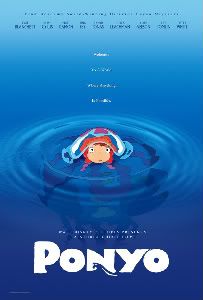
Ponyo on the Cliff by the Sea (Miyazaki, 2009)

Miyazaki is a director and an animator who I tend to have an off and on relationship with in regard to how much praise he has rightfully garnered over the years. Now I am not going to claim to be an expert on Miyazaki, I have seen about six of his films but have yet to see Mononoke or Nausicaä, but I do believe that I have a decent enough grasp on what I have seen to say he is a very talented animator and filmmaker, but certainly not one of the best currently making films. Much like Pixar, the love for Studio Ghibli, and more specifically Miyazaki himself, strikes me as irrational and far too over the top. Unlike his American counter part, Miyazaki does make, usually, decent to good films and not the mediocre product that Pixar pushes out, but it is not like Miyazaki is Satoshi Kon or anything.

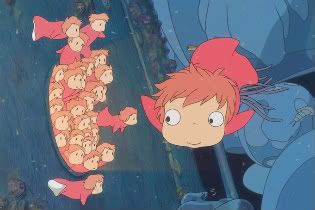
Either way, I went into Ponyo with very little knowledge about the film but also cautiously optimistic that I was about to bear witness to something great. After about a minute or so of watching numerous aquatic creatures swim around an oceanic area, reminding me of Nemo a little bit I guess, I was pretty sure that I had become swept up in the world that Miyazaki was putting on display. The animation, despite appearing fairly mundane on the surface, is absolutely stunning when in motion and the way that Miyazaki handles the water and the aquatic life in the film is nearly unrivaled in terms of technical quality. Top to bottom the film is mostly gorgeous, though I was never too much on the animation of Sosuke, but the way Ponyo is handled makes up for that complaint. Not surprisingly, when the world becomes surreal everything is turned up a notch and the film transforms into something beautiful. Combined with all the details that are put in the world the film certainly succeeds an animated picture in many ways that American films have simply lost over the years as CGI became common place.

All of the voice acting is really good and the person playing Ponyo brought such a sense of wonder to the character that the character became instantly believable. However, the two surprising performances come from Lisa, Sosuke's mother, and Fujimoto. Lisa is such a well developed character, having all the traits of a loving mother mixed in with a fiery rage that makes each time she is on screen an absolute delight. Her relationship with her son is handled nicely, but the strength is found in the way Miyazaki frames her as the family's anchor. On the other hand, Fujimoto is reserved enough to give off the slightly evil feeling without being laughably bad or overly soft. He's a pretty complex character who changes a decent amount during the story, but he never abandons all the qualities that make for a good villain. He's a menacing force, but Miyazaki also has more going on under the surface with him, and the voice actor portrays this beautifully.


Speaking of beautiful things in the film, of which there are several, the action scenes are a thrilling ride that far surpass any action set pieces throughout the year thus far. There is one chase sequence that proves to be incredibly riveting while also being touching at the same time, and all without abandoning any of the tension that such a scene demands. The way the shots are all framed during this sequence help enhance the film as well, keeping the action squarely focused on the screen and never letting thing mesh together or losing the audience during the film's faster parts. Of course all the slower parts are shot masterfully too, and the film does showcase Miyazaki's prowess as a director. Visually the film is stunning, but not simply due to the animation, the technical craft on display in Ponyo is top quality film making no matter how things are sliced.

I must now take time to pause from my gushing and begin wrapping things up with the complaints I have about the film. For a film that deals with such a cataclysmic event, I shall not spoil what said event is, the film lacks a distinct sense of dread. Perhaps the reason for this is to better highlight the relationship between Ponyo and Sosuke, but if that is the case then there had to be a better way of getting the two of them to the script's end without tossing in some underdeveloped conflict that really ups the films stakes incredibly.

On top of that, there are a few parts that seem to drag. Sure they are pretty to look at, but they never feel like they are driving toward anything, just nice little breaks in the plot that are needed to be there because advancing from point A to point B with a cut would leave things far too short. The film works spectacularly in building relationships and when all of the film's themes are fleshed out completely, but the narrative just feels tacked on and I do think that the film would have been a good deal stronger if it had not rushed the plot and just expanded its run time by twenty minutes.

Still, my time with Ponyo was incredibly enjoyable and I would call it my third favorite Miyazaki film behind Totoro at the two spot and Porco Rosso on top. Actually, I was not incredibly surprised to find out after watching that others had made the same connection that I did: the film feels a lot like My Neighbor Totoro. While I could go into a few of the major similarities between the films, I feel that I have done a good job keeping this review just about spoiler free and drawing specific comparisons would begin to give away too many plot elements. Probably best to just wrap things up.

Miyazaki is a master when it comes to expressing and idea on film and Ponyo is no exception. He handles all of the themes with the care of the best novelist; however, Miyazaki overlooks simple narrative decisions that ultimately hold the film back from being a masterpiece. Ponyo is, for me, tier two Miyazaki, sitting side by side with Howl's Moving Castle in an area that is a step below masterworks like Totoro and Porco, but a noticeable cut above a film like Spirited Away. I look forward to seeing this on the big screen when it hits American cinemas, plus it will be interesting to see how all the big name voice actors (Damon, Blanchett, Neeson, and Fey) approach the characters and if they are able to bring the same level of skill that the original voice actors posses. Plus I am interested to see how newcomers, and siblings of some very talented people, Frankie Jonas and Noah Cyrus do in the roles of Sosuke and Ponyo respectively.

B+/A- or 4.28918243702814723105471

Comments are welcome and, for anyone with a literary mind, I encourage checking out my poetry blog filled with all original works for your reading pleasure.

Also I am on the old Twitter thing so I guess you can follow me at twitter.com/FLYmeatwad.