Showing posts with label life. Show all posts

Thursday, April 21, 2011

Your Hair Is Brown. Your Eyes Are Hazel, And Soft As Clouds


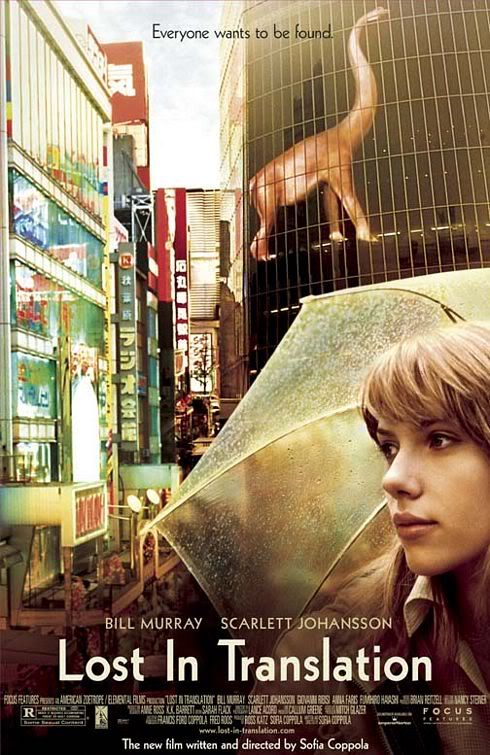
Lost in Translation (Coppola, 2003)

At the heart of what is likely Sophia Coppola's most iconic film, Lost in Translation, is the idea of two lost individuals finding themselves in a land where reality mingles with artifice. Obviously this does not imply that Japan is some stand in for society at large, but the location should not be trivialized as it is in a film like Before Sunrise, where the location is tangential to the overall romance. No, here Tokyo is almost essential to the central relationship because it exists as just far enough away, displaced enough to ensure that Charlotte (Scarlett Johansson) and Bob (Bill Murray) are going to have to spend some time together if only to pass the time, to have someone else who will listen. The film champions the most basic of human connections, and from there it continues to grow.

Coppola is known for being able to set moods in her films thanks to strings of visually evocative images that are interwoven with fairly simplistic stories. Lost in Translation proves to be no exception, especially for much of the first half of the film. Sure Murray is able to make the viewer empathize with a man who has apparently been beaten down by life. Despite being a once successful actor he is not passing on passion projects in order to cash in on his likeness. Johansson's Scarlett is just as aimless, being trapped in a relationship that keeps her locked away during the days and nights, simply passing the time in this high quality hotel. What is a philosophy major to do? Contemplate. These are two people who may not be lost, so much as stagnant. And despite the beautiful construction of scenes the film sort of stagnates with a couple half laughs and some passing interest in the singular lives of these two characters, but it never really picks up until they both begin leaving the hotel behind.

Shedding the confines lifts a type of oppression from the film, and the the vibrant streets of Tokyo make for an excellent retreat from the retreat when paired with the energy between the two leads and Coppola's wonderful camera. A run through a Japanese pachinko parlor, basically a slot house/arcade hybrid if my American interpretation of the game is reliable, stands out as one of the early sequences where we can begin to see the bonds between the two developing. While it would not be difficult to put a decidedly sexual undertone to the whole relationship, it seems more to me that each are simply learning from one another. Charlotte seeks affirmation that her life will get better than Bob's, and he seeks reaffirmation that there's still reason to continue with his life. As the film continues to build it becomes stark, beautiful, and utterly heartbreaking because the script takes the initial simplicity and, seemingly naturally, stumbles upon some of the most honest and truthful dialogue ever written.

Some films thrive on flash, and while there are plenty of visceral thrills and pleasures to be had with Lost in Translation it really is the minimalism that makes the film work so perfectly, especially towards the end. You can dig in to the film and find a complexity that is as wide open as the final encounter between Charlotte and Bob. People don't live or die, people just float. And in many ways, this film is a beautiful exercise in people floating along before encountering another individual. Having that chance to be free, to bare your soul to another, to learn and interact. It's this sense of freedom that the film captures, juxtaposing with with the newness and construction of the travel experience. We can't hold on to these feelings, but it makes us wonder why we hold this freedom back from others, how we perform for the world, and what it means to not perform. Eventually we will go on floating again, how permanent is any relationship? Maybe everyone has the answer, Lost in Translation certain appears to, but maybe we just don't want to hear it, we want to never know.

Netflix Rating: ****/*****

Rich

Comments are welcome and, for anyone with a literary mind, I encourage checking out my poetry blog filled with all original works for your reading pleasure.

Also I am on the old Twitter thing so I guess you can follow me at twitter.com/FLYmeatwad.

Sunday, September 20, 2009

I Hear What You're Not Saying...


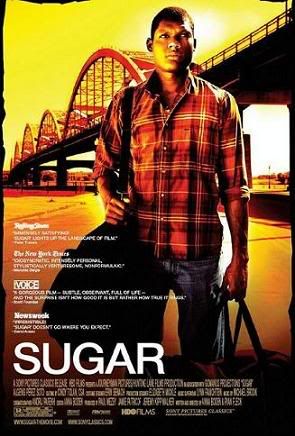
Sugar (Boden and Fleck, 2009)

While I missed the theatrical run of Sugar, I had heard nothing but good things about the baseball biopic focusing on a young Dominican player as he makes the journey over to America for a chance to play in the majors. From the opening preparations to the first minor league game, Sugar chronicles the progression of the titular character wonderfully and humanly, always respecting the game and the player. The rise and (spoilers coming) eventual fall of Sugar is portrayed without embellishment or splendor, the tale is simply told. The film is deceptive in nature though, as one may expect the film to mostly center on Sugar, but a good amount of time is given to the politics of baseball and how these imported players are mostly left by the wayside from the next prospect. The film is marked with a fairly distinctive visual style courtesy of the two directors, and the film is obviously helped by a stunningly strong turn from lead actor Algenis Soto.

The film does, admittedly drag on a bit in the middle portion, as the story drifts over to New York City for a seemingly meaningless portion. The politics of the game are left out, the language barrier complications that made the start of the film so endearing was mostly forgotten, and Sugar simply did not develop much more as a character. However, the film sets up a devastatingly beautiful ending that packs the viewer so full of hope but forces the audience to also look at reality. Sugar has a number of high points, and as far as entertainment is concerned the film certainly delivers, but as a whole the film does not feel like much more than a fairly standard story mixed with enough interesting concepts to add up to a worthwhile way to spend about two hours.

B/B+ or 3.98927483274083271583275


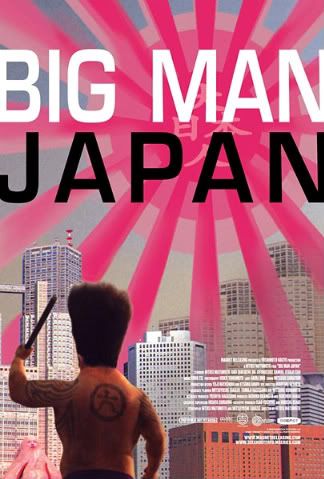
Big Man Japan (Matsumoto, 2009)

Easily presenting one of the most exciting trailers of the year, I have had the desire to watch Big Man Japan for quite a while, so stumbling across the title on Netflix Instant Watch was a welcome discovery. My expectations entering the film were for a rag tag, tongue-in-cheek Power Rangers~esque romp. Perhaps a Japanese take on The Host where the genre is poked fun at while a nice story is told. Well, that did not happen. Through a very diligent documentary look, Big Man Japan follows writer, director, and lead actor Hitoshi Matsumoto's character Daisato through the mundane life of Japan's protector from the numerous monsters that plague Japan. Matsumoto gives a wonderfully straight performance, capturing the run down depression of a man who has seemingly outlived his use both in the eyes of the public and his family. Mix that with near perfect comedic timing, and Matsumoto turns in one of the year's best performances.

The film also does mix in a few bigger fights, making use of CGI as best it could and making up for the less than perfect images by having an incredibly stylized group of monsters terrorizing Japan. And then there is the whole social commentary/existence struggle themes through run throughout the film, both of which are handled masterfully. And then the film ends, and what a finale Matsumoto presents. Hysterical to the extreme and incredibly poignant, the film's final fight sequence speaks volumes on American culture in Japanese society, media sensationalism, and one's struggle with humanity. The film is far from flawless, though I do think that the pacing is excellent, but Big Man Japan is a unique ride that is open to a plethora of readings. Any film that provides that is great in my book.

B+/A- or 4.172814962146231645923


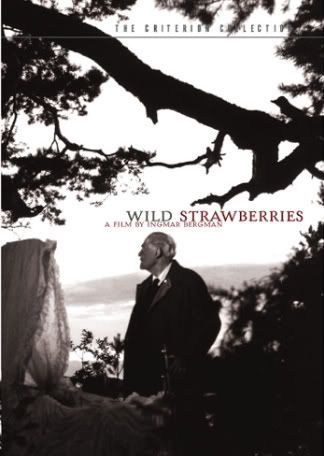
Wild Strawberries (Bergman, 1957)

Speaking of films that are ripe for interpretation, Wild Strawberries is my second Ingmar Bergman film. A meditation on life, looking back upon the existence of a professor who has seemingly alienated his family and friends over the years, Bergman presents a quiet and compelling narrative with an incredibly compelling character at the center of the flash back filled affair. As Dr. Borg revisits his memories, the viewer is presented with a brilliantly structured film flowing to the brim with imagery and symbolism. Of course that is a blanket statement that requires a bit more thought. One scene has a cradle placed out in the woods, standing far enough away from the house to give the viewer some hint about something or another. This is all very vague, though with good reason, I was confused. Bergman creates a film here that is rewatchable, I am sure, but for some reason I was never completely hooked either. This film is odd. I should watch it again. Would have not put this entry up, but I love the poster.

B+ or 3.9892374032754235703?

Comments are welcome and, for anyone with a literary mind, I encourage checking out my poetry blog filled with all original works for your reading pleasure.

Also I am on the old Twitter thing so I guess you can follow me at twitter.com/FLYmeatwad.
Monday, August 17, 2009

What A Gas It Was To See Him Walk Her Every Day Into A Shady Place

Planned on doing a double shot review, but I just do not feel that I have much to say about the second film, so I'm just going to tack on a little bit at the end to give it some attention.


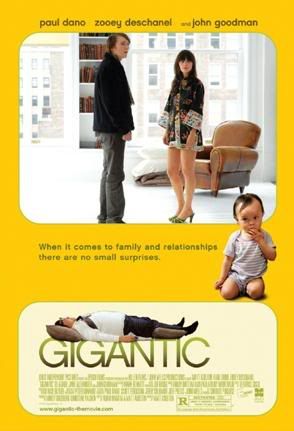
Gigantic (Aselton, 2009)

In many ways, Gigantic is a wonderful experiment that ends up, somehow to its benefit, less than the sum of its parts. Anchored by a wonderful cast, featuring Zooey Deschanel in her second, and more impressive, performance of the year, first time director Matt Aselton comes out firing on all cylinders, but has a good deal of trouble putting everything together for a transcendental film. However, this does not prove to be the detriment that it would immediately seem to imply. Gigantic constantly walks a fine technical line, shifting from beautifully disciplined camera movement, albeit a bit too contained at the film's start, to wonderfully beautiful hand held shots that showcase a striking freedom, such as the scene where the camera drifts in and out of trees in the woods. Unquestionably, the film is a visual powerhouse. The cinematography is some of the best of the year so far and Aselton shows a ton of potential for any future films he will hopefully involve himself in. Whether in the city or out in the forest, he has a way with presenting scenes in visually striking manners. The film is technically brilliant.

The ideas presented in the film are mighty interesting as well, though the movie could have likely used another ten minutes or so to give the viewer a push in some sort of general direction. I am all about ambiguity, and the way the film is constructed the ambiguous nature of the plot lines proves to be crucial to the entire experience, but the idea does not completely pay off at the end. However, I find myself incredibly interested to take a look back and see if I over looked any tiny details that may help give me something more to latch onto and ponder even more in depth. The humor, surprisingly, lands when it is used, but the film is hardly a laugh a minute. Thankfully, the film also crafts some pretty fascinating characters to make up for the fact that that plot is a little lean. But the film is also fairly complex and, much to my delight, only hints instead of coming out and actually revealing things, which I love in films. It makes the audience work, and I can respect the script for taking that chance.

Of course a lot of the writing could easily go to waste with a cast that is not capable of handling the roles. As I said, Deschanel is brilliant, and beautiful, and just about everything the role needs. Of course placing Dano opposite her, and having him turn in a performance that is both human and genuine, capturing the struggles of what appears to be a troubled man attempting to exist in 'normal' society, is a choice that pays off in droves. Goodman is mighty great as well, and Asner turns in a performance that is certainly at least five steps above his voice work in the underwhelming, and incredibly overrated, Pixar film Up from earlier this year. Other highlights of Gigantic include a soundtrack that rivals Adventureland and Lymelife for the year's best, a fantastic supporting cast, and a highly stylized world that all add up to one Hell of a debut for Matt Aselton.


Throne of Blood (Kurosawa, 1957)

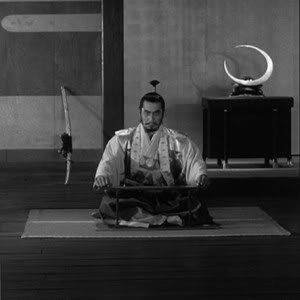
The film is visually gorgeous, the score is pretty great, the acting is good, and the film is another great effort from Akira Kurosawa. Sadly, this film felt much slower than the two previous Kurosawa films that I have watched and I really think that the silent portions here, unlike in Rashomon, detracted instead of added to the film. Basically the film is a standard retelling of Macbeth, and I've always been of the mind that Macbeth is much better material to be discussed than to be watched or read. Not surprisingly, that transfers over to Throne of Blood mostly. It's a pretty great adaptation I suppose, despite leaving out a few things from the play, I believe. But he also injects his own themes and visual symbols, which adds more to the film, I reckon. Can't say I was blown away though or that I have much to say about the film. It's really solid and a technically great film, but it just never really grabbed me.

B+ or 3.898213472146702381645823

Comments are welcome and, for anyone with a literary mind, I encourage checking out my poetry blog filled with all original works for your reading pleasure.

Also I am on the old Twitter thing so I guess you can follow me at twitter.com/FLYmeatwad.

Thursday, August 13, 2009

And The Sun's So Hot I Think I'll Catch Fire And Burn Up In The Summer Air So Moist And Sweet


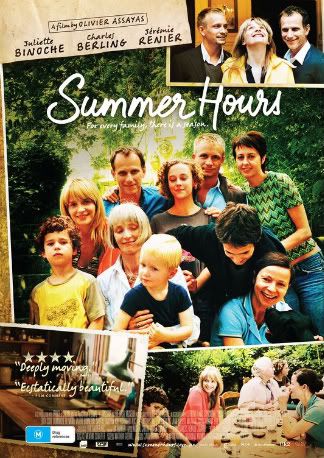
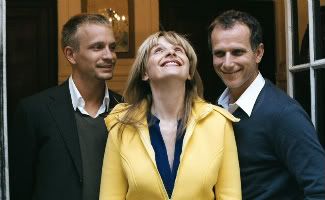
Summer Hours (Assayas, 2009)

So I reckon I should get this out of the way right now, I have not yet seen the French film from last year that is apparently part of this series, The Flight of the Red Balloon. Actually, my exposure to French cinema, both modern and the New Wave movement, is rather limited. However, as of this writing the only other French film I have seen this year, The Class, currently sits as my sixth best film released in 2009, so I found myself fairly excited as I sat down and went into Olivier Assayas' latest film, Summer Hours. Focusing on the surviving family of some French artist, I don't really get into these details because I do not know a damn thing about paintings and sculptures and stuff like that, in about a 100 minute run time, Summer Hours explores different concepts about loss and memory, along with the economic extension of real world circumstances that are important to more affluent families. While I knew little of the film upon entering, the first scene at the estate is a stylistic bang that really cements what proves to be an incredibly visually striking film. The first fifteen minutes or so set up the film and the characters so wonderfully that I found myself mostly swept up in the world being presented.

Being swept up, as I have said, is probably caused by, in no small part, the beautiful cinematography and masterful direction. Assayas does not employ the traditional handheld camera style that would seem like the obvious choice for this type of film, but he also does not make extensive use of a traditional camera style either. At numerous times the scenes feel a little contained, but the idea that these decisions were anything but intentional seems insane simply because the film just looks so professionally constructed. Not to mention that, when using more traditional wide shots, the film looks beautiful. Maybe the way it is shot is supposed to mirror the audience's expectations that these people are supposed to be free because of their social status and money, but in actuality they are just as trapped as 'average' people, yet there is still a noticeable beauty in the human experience. Either way, the film is also anchored by performances that range from really good to great. The standouts are obviously Juliette Binoche and Charles Berling, with Berling really delivering a stellar performance, but all of the supporters are pretty damn fantastic. The younger actors who play the children are also mighty impressive. However, the true mastery is only shown for a very short time, in the form of Edith Scob. She brings an elegant grace and knowledge to her role, despite it mostly being contained to the first portion of the film.

On the whole, Summer Hours is a pretty interesting experience. The film is almost deceptively complex, touching on numerous themes despite presenting them in seemingly simple circumstances. The film is both broad and specific, taking a brush and painting a portrait of both beauty and melancholy, blending the best of emotions at any given time. I should also mention that the final three scenes in the film are some of the most effective of any film so far this year. I find pinpointing a single reason for their success rather difficult, but I almost believe that part of the intention is that nothing in the film is as simple as one would imagine. Summer Hours is a truly touching film that, even for someone with my disposition, works on both an emotional level and actually builds up my faith in the human condition, however minor that construction may seem.

A- or 4.1984892174238015472385320157

Comments are welcome and, for anyone with a literary mind, I encourage checking out my poetry blog filled with all original works for your reading pleasure.

Also I am on the old Twitter thing so I guess you can follow me at twitter.com/FLYmeatwad.
Tuesday, August 4, 2009

There'll Always Be A Few Things, Maybe Several Things, That Your Gonna Find Really Difficult To Forgive


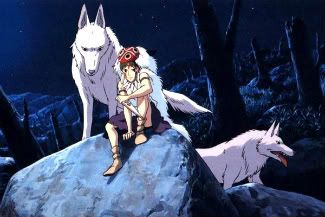
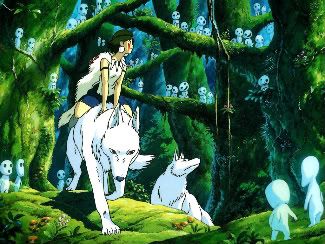
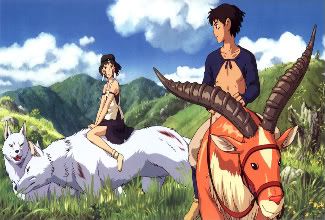
Princess Mononoke (Miyazaki, 1997)

Well, I suppose it is about time that I get to Miyazaki's crown gem, or what I assume is his crown gem considering that Spirited Away is not nearly that great. Going into Princess Mononoke I had only the film's reputation to go on as I did not know anything of the film's plot. Of course as I gazed down at my Netflix sleeve to see that the run time was listed as two hours and fourteen minutes I found myself pretty worried that this film was going to be a bit too long for its own good, after all, the best Miyazaki films are the shorter ones. Oh yes, I was also pretty sure that I heard this film dealt with some environmentalism crap, and since I have made it my mission in life to personally see my own carbon footprint before I die I was pretty sure that any overtly environmentally friendly themes would end up pissing me off. But hey, I'm an open minded kind of guy, so bring on the Mononoke!

The first striking characteristic the film possesses, well aside from the visual aesthetic, is found in the form of the story. Now I do not use the word story in the sense that the word refers to plot, but rather I mean to say in the way the story is told. In many ways Princess Mononoke is a fairy tale, not unlike classic Disney films that focus on Princesses, albeit with much more characterization, as it possesses all the whimsy of a magical world existing in a mostly realistic setting. The world is really well established. The story is simple enough that it feels like it is being told instead of watched, a characteristic that is captured perfectly in the film, but I do not think designating Mononoke as a simple fairy tale completely does the film justice. In many ways Princess Mononoke feels more like a myth, lore passed down from generation to generation and being refined through each progressive telling of the tale. Now I'm sure I got this feeling because of the film's context, it does take place in historical Japan, I think, so the fact that it feels like a myth rather than a fairy tale is expected. However, what I found particularly fascinating was how it felt so culturally specific yet works so well for an audience member who is not a part of this culture. I think part of Miyazaki's ability is to craft and play with this universal magic without sacrificing the Japanese element of the film. In short, the way the story is presented is pretty wonderful.

Of course that is not to say that the film is all whimsy and child friendly. The content is rather mature, limbs fly all over the place and blood plays a hefty part in Mononoke, but it is all handled so gracefully. And there is that little environmental aspect, but the film handles it more as a reverence that is nicely disguised to work with the time instead of being something that hits the viewer over the head. Plus the film does not take the whole 'all technology is terrible' route either, so I can definitely appreciate that given the way Miyazaki openly says that both sides can coexist peacefully. The film works as an allegory alright, but as a straight up film it works as well. The opening sequence is riveting and really all of the action sequences are high energy filled thrill rides. On top of that the film mostly nails all of the sombre moments as well, so I am mostly confident when I say that the run time, despite being a little lengthy, is not a detriment to the film at all, though I did need to take a break during the run time for what that is worth. Actually though it is refreshing to see an animated film willing to stretch out the run to over two hours, as most great animated films I generally want to see more of, so having Mononoke take on a lengthier feel, which also enhances the mythological epic feeling, was a wise choice.

Speaking of animated films, all the technical aspects on display here are top notch. From character animation to the way scenes are drawn, the film is a visual power house. Obviously the imagination in the fantastic characters is going to stand out, Miyazaki has a way with designing these larger creatures that oozes originality, but the real strength is the way that he designs the worlds. The forests, the mountains, and the towns all have a believable beauty to them, not to mention that the traditionally drawn animals are incredible. However, to enhance these creatures, the ones that actually speak are voiced with an insane intensity that makes for numerous great voicing performances. Now I watched the film with subtitles so really all I could go on was how the lines were delivered, but even with this I found myself mostly swept away with the characters. A lot of effort apparently went into the dub as well, so I watched a few scenes with the American voice cast and I can mostly say that the quality of the voice acting there is at least on the level of the Japanese voices. The film, all around, sounds spectacular. Mix that with a brilliant score and the film records high marks in terms of technical quality as well.

So by now it should be pretty obvious that I loved my time with Princess Mononoke. The film is mature, complex, and pretty much a master piece. It avoids the pitfalls that plague some of Miyazaki's lesser works like Spirited Away and Howl's Moving Castle, and I would have to say that it rivals My Neighbor Totoro and possibly even Porco Rosso as the best Miyazaki film that I have seen. Okay, well maybe not Porco Rosso, but I certainly love it as much as Totoro. Any minor problems that I found with Princess Mononoke have quickly been forgotten in one night's time and I am left remembering all of the breath taking positives. On the whole, the film seems to capture what is great about animation, both Eastern and Western, and I think for that alone Princess Mononoke deserves to be championed as an artistic accomplishment. Truly one of the best films ever made.

A+ or 4.83748324623954163596159

Comments are welcome and, for anyone with a literary mind, I encourage checking out my poetry blog filled with all original works for your reading pleasure.

Also I am on the old Twitter thing so I guess you can follow me at twitter.com/FLYmeatwad.

Monday, August 3, 2009

Companionship Is Where You Find It, So I Take What I Can Get


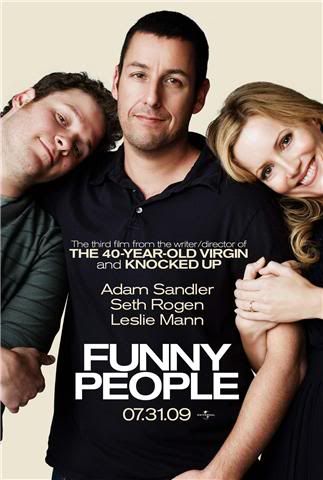
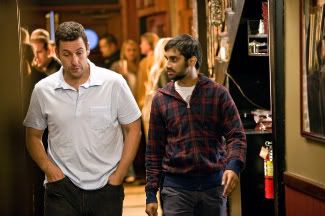
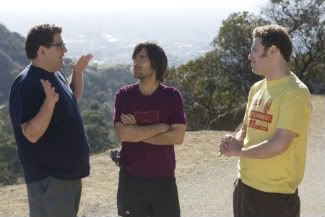
Funny People (Apatow, 2009)

After two major successes where he spent time at the helm, and what seems like a million 'Produced By' attachments to the end of trailers, Judd Apatow returns with the Adam Sandler and Seth Rogen vehicle Funny People. After seeing the trailer it seemed to be another formulaic Apatow film that was going to present the audience with a standard situation, heighten it up a bit, throw in some laughs, make things a little depressing, get a romance going on most of the time, and then wrap up nicely. Well, taking a page out of the Adventureland book to non-success, the trailer does not do the film much justice. The romance aspect of the film is but a footnote to the story of Ira and George, Rogen and Sandler respectively, and how these two men bond during the course of the film. Think I Love You, Man except better. The movie is about characters and comedy, not love and loss.

Clearly the film's greatest strength comes in the form of the lead actors. Both Rogen and Sandler are fantastically funny yet emotionally sound. Sandler has already shown his ability as an actor in Punch Drunk Love, but seeing Rogen be a bit more than what he was in Knocked Up was a nice change of pace. Sandler is the obvious stand out in the film, but Rogen mostly matches him blow for blow, as the comedian mindset the film explores makes necessary. As for the supporting cast, things are a little lack luster. Mann plays her same type of role, which is nice, Bana is pretty damn funny, Hill is mostly good is limited time, but Jason Schwartzman is clearly the best of the supporters. He plays his role of the gloating and arrogant friend realistically and perfectly, capturing what is so disgustingly human about, well, humans. As for Apatow's kids, they have worn out their welcome and really slow the film down when it has already lost steam. The two are not really funny, they are not really cute, and they do not do anything to enhance the film.

Speaking of losing steam, the film is phenomenally strong for the majority of the first hour and a half. Then the narrative decides it wants to take a prolonged stop in romantic comedy territory. For something that is so focused on how Seth and Sandler interact with each other, which is clearly the point of the film as the ending so clearly implies, the amount of time that Sandler spends needlessly wooing Mann is both sloppily integrated and pretty dull. Sure it adds in some laughs, but at the expense of a more complete narrative. The film is dark and comedic early on, it even seems to have the perfect opportunity to end when a line is delivered from an unexpected face, "Then what are you celebrating?" The film would have been a masterpiece if it just stopped. The script could have been altered slightly to tie up the Rogen/Sandler plot line and the film's tone would not have been undercut, but for some reason Apatow cannot do that. The 40 Year Old Virgin has similar problems, and Knocked Up has similar problems. Apatow just cannot write endings.

Thankfully he can work a camera. While the direction is not mind blowing, it does range from solid to really good on numerous occasions. Early on the opening scenes following Sandler are really great, the one wide shot where there are a few pineapple shaped trees on the lawn is pretty great, and the dinner scene is cool as well. Still, Apatow does not prove himself to be one of the best men working with a camera, but at the same time he also never does anything really bad with the camera, so I suppose that means this is mostly a wash. Probably not though because he has some really great parts, right? Sure, let's go with that. Okay, the direction is pretty good, I guess Judd can work a camera. Still, it's not his strong point, but the film still works fine without all that technical flair, mostly because of the first hour and a half. Mostly everything before the rom-com bits.

Damn romantic comedies. Damn advertising. Damn mismarketing. Damn it all. You want to laugh? Well then you're probably better off watching Judd's previous two films, of which The 40 Year Old Virgin is the funniest, but if you want to see Apatow's best film then you should probably see Funny People and just pretend that the bit after the celebration scene doesn't exist. Despite the film's failures, it proves to be the most complex of Apatow's films because it departs most radically from the common Apatow formula that the trailer implies. Funny People examines comedy, it examines humanity, and it tosses in enough penis jokes to appeal to the people who could care less about these two previous explorations. Is the film a transcendental comedy? No. But any film that presses the fourth wall like this while showing the potential to be a masterpiece is good in my book. Plus the bits where Adam Sandler just about openly mocks his career and almost admits that the majority of the films he acts in are shit is pretty great. Keep up the good work Judd, and just learn to write a little less generic.

B+/A- or 4.18213907214746123784691

Comments are welcome and, for anyone with a literary mind, I encourage checking out my poetry blog filled with all original works for your reading pleasure.

Also I am on the old Twitter thing so I guess you can follow me at twitter.com/FLYmeatwad.
Wednesday, July 29, 2009

I Know What My Weaknesses Are, Probably Better Than You Do


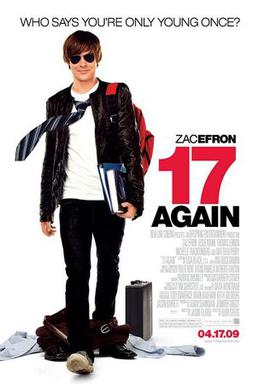
17 Again (Steers, 2009)

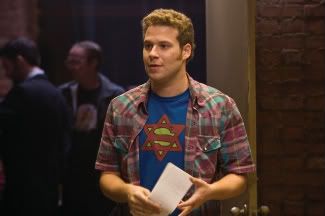
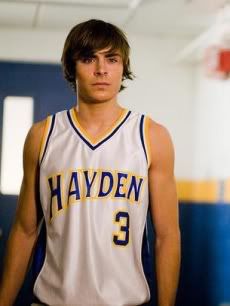
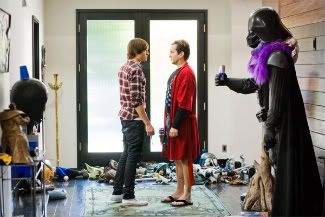
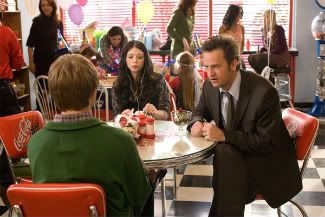
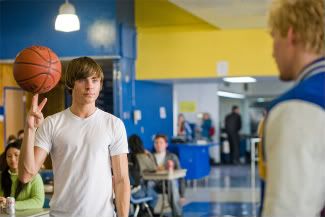
Going into this film I found myself rather skeptical. Zac Efron headlined those High School Musical films which were, to be slightly positive, rather underwhelming and mostly dull musicals. He also left me really alienated and I was not really impressed with the performances that he gave in any of the three films. So when this movie opens up with Mr. Efron clad in a sports uniform taking basketball shots I was ready to write the film off as a shameless attempt to back pack off the High School Musical success. But then Jim Gaffigan shows up and things start to get weird. The movie starts getting kind of funny, but then a big college scout is coming to check out Zac's character Mike, yet he just can't get his head in the game because his girlfriend told him something that upset him. What is it though? Well, it does not take a long time to find out. She is pregnant. Cue Matthew Perry as older, depressed, soon to be divorced Michael. And meet his rich, nerdy, Star Wars loving best buddy Ned. But don't get used to Perry because we are given just enough time to get to know the situation before things get all crazy and Zac Efron is back on screen. The plot is pretty basic.

Thankfully, the film is anchored by a ton of interesting aspects that distance the film from obvious comparisons that are to be drawn. 17 Again is not another Freak Friday clone, it is not a High School Musical rip off, it is not the poor man's Mean Girls; 17 Again is a better film than any of those three could ever hope to be for a variety of reasons. However, the most noticeable reason for this film's success comes, surprisingly, in the form of Zac Efron. Not only does he convey an incredibly striking slick and collected demeanor during the majority of the film, a swagger of impressive ability, but the role asks that he be able to show a range of believable emotion that would challenge the most accomplished of actors. The fact that he handles the role with such care, humanity, and brilliance cements him as one of the year's best performers so far. To say that I was floored with what Efron does in the role is an understatement, he hits every note in the film pitch perfectly.

Of course the supporting cast all are pretty solid as well and help Efron transition seamlessly in and out of the straight man/funny man role depending on whom he interacts with at any point in the film. Leslie Mann is charming as Mike's wife, Scarlett, and she is likely the strongest of the supporting actors. Seeing Thomas Lennon, following up a small but funny bit in I Love You, Man, as the eccentric best friend Ned was great and just about all of his comedic parts hit. He is pretty hysterical in the film and has the most memorable lines.

Well, at least in quantity because nothing beats Sterling Knight's "Yeah, I'd shake your hand, but it's taped to my ass," line. Actually, seeing Sterling Knight here kind of caught me off guard because he looks so different from how he looks in other recent works, despite this being a 2009 film. For those unaware, Knight is a co-star on Demi Lovato's Disney Channel series Sonny With A Chance where he plays the arrogant Chad Dylan Cooper, quite brilliantly I may add. Seeing Knight here in a completely different role, giving a Michael Cera~esque performance, shows that he is a versatile young actor and has me interested to see what else he does in the future. His performance here is slightly erratic, but seeing him branch out slightly is reassuring. However, the final major supporting cast member, Michelle Trachtenberg, looks pretty enough in her limited screen time to keep the viewer from noticing that she really does not do all that much, well aside from a funny quasi-incest scene.

Speaking of humor, that aspect is another of the film's strong points. The comedic scope is broad, the previously mentioned scene also features Trachtenberg slightly breaking the fourth wall as she question's Mike's, and by extension addresses the questions about Efron's, sexuality in regard to his appearance. But the film also has a fair amount of slap stick, a ton of pop culture references, some witty one lines, and just generic jokes scattered about to keep the film fresh. Which is good because, aside from the acting and the script, the film does not have too much else going on to make the experience compelling. The direction, despite having a few really great shots, is standard and hardly distinctive. From a technical perspective the film falls flat. Still, the script and cast are strong enough to easily transcend this technical mediocrity, much like Hannah Montana: The Movie.

In fact, 17 Again possesses many of the same charms that a film like Hannah Montana possesses*. Substitute Miley's music for Zac's dancing and dribbling, add in a bit more humor but less drama, and keep both film's standard in most technical aspects and, much like Hannah Montana: The Movie, 17 Again proves to be the high point of escapist entertainment. Marked by a surprisingly great performance by Zac Efron, 17 Again has to be one of my most overlooked films in recent memory, echoing a lot of things found in Mean Girls but lost upon my second viewing. I do think this film actually has enough to it that would allow it to hold up during a second viewing though, and I hope I am able to revisit 17 Again in the future. More proof that entertainment of this nature should not be needlessly dismissed and actually can provide a ton of entertainment to viewers of any age. The film also has put Efron on my radar of actors to keep an eye on in the future. I cannot believe I dismissed this film earlier in the year.

B+ or 3.8918249027148723015673156

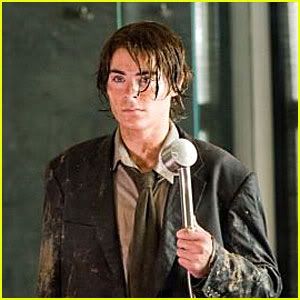
*side note on the connections I draw between Hannah Montana: The Movie and 17 Again: Melora Hardin, who plays the principal here, also plays Lorelai in Hannah Montana: The Movie. Also, I couldn't find a place to insert this screen shot, but I really wanted to, so I'm going to put it down here before my usual ending. It is from one of the film's great confrontation scenes.

Comments are welcome and, for anyone with a literary mind, I encourage checking out my poetry blog filled with all original works for your reading pleasure.

Also I am on the old Twitter thing so I guess you can follow me at twitter.com/FLYmeatwad.
Monday, July 20, 2009

Down Here Where The Heat's So Fine, I'll Drink To Your Health And You Drink To Mine


Ratcatcher (Ramsay, 1999)

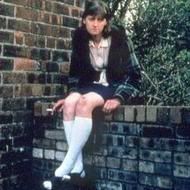
My excitement to watch Ratcatcher, a look at a youth's life during the Glasgow Garbage Strike, was enormously high because I had heard it compared to David Gordon Green's wonderful film George Washington. After finishing Ratcatcher I found the film to be a bit more similar to 2006's film This Is England than it was to Green's masterpiece, but unlike This Is England I am positive that I had an overwhelmingly positive response to Lynne Ramsay's film. The film is constructed beautifully and provides an insightful look at the construction of a child's identity without ever hitting the audience over the head with explanations for why James is the way he is, the boy just exists and grows in response to the people he is connected with and the time in which he lives, nothing more, nothing less. It is with this strength that the film carries itself during the hour and a half run time and really establishes itself as one of the greatest films ever made.

The film immediately starts out by showcasing Ramsay's directorial prowess, a trait that never lets up once during the film. The movie overflows with stunning shots and sequences that high light the atmosphere at the time and showcase some of the most spectacular cinematography I have ever witnessed in a film. At the start of the film, for about the first twenty minutes or so, it is actually very fortunate that the camera is used in such a wondrous manner because without such technical prowess I think it may have easy to lose interest in the hurried narrative; however, the reason the interest in the story is not there immediately is likely a result of how Ramsay opens the film and what expectations she works into the viewer's mind. When a film opens with a character we are generally led to believe that this figure will be the central character, and then Ramsay flips that entire notion on its head. It's a really impressive technique that adds to the film's meticulous construction in just about every aspect. Of course the film picks up immensely after the twenty minute mark when James goes on his first bus ride, so the prowess then begins to elevate the film instead of simply sustaining the movie.

Of course all the technical accomplishment a film may possess can easily be undermined by poor acting, but thankfully all of the actors in the film are really great and handle their roles with similar care to how Ramsay handles the script and the camera. In the role of James, William Eadie turns in an incredibly heartfelt performance that completely captures the mentality of a youth both in and out of place. He shows a spectacular range and is pretty phenomenal. Tommy Flanagan is pretty great as the Da, but of the secondary characters the obvious stand out comes in the form of Lynne Ramsay Jr. in the role of Anne Marie. She hits all of her notes pitch perfectly and always makes the audience want to hate her, but she possess some sort of mysterious charm that really prevents that, until the film begins to close and we see just how perfectly she played the part and how much respect she seemingly had for her character. It's mighty impressive that such a young girl can turn in such a powerful performance.

While it seems that this review is a bit shorter than my other looks at films, admittedly it is pretty rushed, I believe the reason for this is because the film covers so much ground that I am fairly sure that I was unable to completely grasp everything on a first viewing so I figured I would just discuss the highlights until I inevitably revisit the movie in a few years. I would also like to discuss, not at length or give any specifics, the fact that I'm pretty sure the film was designed specifically with my interests in mind. Never has another film gotten an ending so right nor with such mastery, beauty, and naturalism. It really is fantastic. Ratcatcher really nails just about everything in terms of quality and value while managing to turn in a compelling and complex film that takes great care to give the viewer just enough information to make the experience unique and rewarding. Sure it's no George Washington, the movies focus on two completely different topics and George Washington really covers much more territory, but who cares? Ratcatcher is still one Hell of a film that I can fully endorse.

A or 4.39239473285716843591263501236508

Comments are welcome and, for anyone with a literary mind, I encourage checking out my poetry blog filled with all original works for your reading pleasure.

Also I am on the old Twitter thing so I guess you can follow me at twitter.com/FLYmeatwad.
Friday, July 17, 2009

Surrenderin' For What? No Wavin' The Bandanna. Tell The Tool Man How I Handle The Damn Hammer


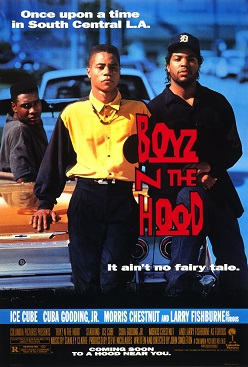
Boyz N the Hood (Singleton, 1991)

I was glancing over my other reviews and I noticed that, with the possible exception of The Adventures of Ichabod and Mr. Toad, I have yet to write a definitively negative review for a film. Going into Boyz N The Hood I was aware that director John Singleton is the only African American to ever be nominated for Best Director and, I learned this later, he is also the youngest nominee for the category. Now add that into the fact that I knew the film had a reputation for being a really great and insightful look at urban violence that neither glorifies or condemns the lifestyle, though that proves to be a misleading notion, while telling a compelling story with believable characters. I usually like films of this nature, the ones that ask questions and expose problems. So mix all of these things together with my fairly high expectations and what result is yielded? My first overtly negative reflection, of course.

Boyz N the Hood starts off wielding a ten ton hammer that is swung around with more violent rage than any act of brutality in the whole film, all in an attempt to hit the viewer over the head with some simplistic parallel that apparently is designed to be deep or insightful or something like that which hardly works. The scene which I refer to is, of course, the one where the children see that blood is turning yellow and one says "that's because of the plasmids separating," or a similar line. Oh boy, it's like the kids are learning the same thing as everyone except in a different way because of their living circumstances. The streets are just as educational as the classroom. Piss off, John Singleton, you think this is anything but a needlessly overt way to start off a film? Mix that in a few scenes later with Trey's arrival at his father's house depicting, after cleaning, a run down lawn shown alongside the neighbor's beautiful green grass. Lovely, everything is always greener on the other side. Good move.

Thankfully, Singleton backs off of these cliched and overly simplistic literary devices when the boys exit childhood and become high school seniors preparing for the end of school. Sadly, what replaces these tired devices proves to be just as detrimental to the film. Singleton essentially trades in his run down Toyota for a tractor with two wheels. The script takes an odd turn to a very cliched Hollywood story telling sense where a love interest is needlessly thrown in, a wife and bastard child are added to set up for more emotional impact later in the film, and the story takes no turn from the first party until the credits. The film just feels like an independent film fighting with a Hollywood film and, much like Doughboy and Ricky earlier, the film just gets dingy and gives up. While there are the occasional sequences that do take a few risks, as a whole the film is so by the numbers that these small probes into meaningful territory are completely undermined.

What seemed so tough whilst watching the film though was not that the film simply kept inserting cliche after cliche, but that it needlessly heightened just about every circumstance and conflict. A scene towards the end where Ricky's SAT scores are revealed proves to be absolutely cringe worthy. Singleton forces stakes into the film and they really stick out as cheap and unnecessary when placed alongside what is supposed to be a tragically brutal and realistic portrayal of impoverished life. On top of that, Singleton's direction, while a few really great shots are used, such as the walk down the rail road tracks, is pretty erratic, ranging from terrible to incredible at any moment in the film. Toss in the score and many times the film started to feel less like an in depth look at urban life and more like an after school special.

Perhaps Singleton's most apparent crime in the film is not inserting needless drama, though that charge is mighty hefty, but rather the most glaring flaw is Singleton's refusal to let the film speak without dialogue. Despite having opportunities, and even using them at times, to imply things instead of directly speaking to the viewer, Singleton feels compelled to give elongated monologues where Larry Fishburne speaks to the audience about his message, and it really comes off as insincere and overly constructed. Then there are parts where someone talks about how things just keep happening "over and over again." It's all pretty painful to listen to and detracts from any impact the film hopes to make on a viewer. The film is not helped by the actors either. Fishburne is decent, but Cuba is pretty bad and Ice Cube is mostly tolerable.

And of course there is the fact that the film is going over territory already explored in much greater depth, in much more detail and with much more sophistication, in other films. The whole concept of being trapped and unable to escape, or the perceived mentality of being contained, is straight out of Charles Burnett's wonderful film Killer of Sheep. Aside from being a much more striking and emotionally engaging film, Killer of Sheep also exists in a much more reserved fashion and does not need to insult the viewer by spoon feeding ideas at each possible opportunity. On top of this, Spike Lee has explored the other territory this film masquerades as exploring in an attempt to appear complex and thought provoking. Despite it not being a tremendous film, Spike Lee's Do The Right Thing provides a more engaging and insightful look at urban life and the injustices of American society without resorting to the theatrics on display in Singleton's film, allowing for a more naturalistic film that enhances the message instead of detracts.

Much like Do The Right Thing, Boys N the Hood becomes incredibly overt at the end. Yet while Spike continues to call on reality, Boyz N the Hood continues to rely on its cheap theatrics to attempt and force a greater emotional impact on the viewer before proving to be an ultimately hollow experience. The follow up 'here's what these characters are doing now' lines that fade in and out, aside from reinforcing the After School Special feeling, continue to draw attention to the fact that everything on screen is artificially heightened and constructed; thus, any attempt to draw parallels between these characters and the reality is, for the umpteenth time, ground into a dust and blown away in the wind.

Ultimately, Boyz N the Hood is nothing more than a jumbled mishmash of ideas that are far too willing to conform to Hollywood convention to discover the sort of effective statement that the film so desperately attempts to find. Even without considering the fact that other films, and older films, have done what Singleton attempts, Boyz N the Hood still proves to be a joke of a film that struggles to ever find ground solid enough to stand on either as a high profile Hollywood film or as a thought provoking call to social action. I honestly would like to know if anyone, after seeing the Burnett film and the Lee film, can still make a case for Boyz N the Hood being worth much at all. Hell, I'd be interested in hearing this case made even from someone who has not seen either the Lee or Burnett films because it baffles me that this film can be considered anything except for glorified garbage. I imagine there is more entertainment and more insight to be gained from watching Don't Be a Menace to South Central While Drinkin' Your Juice in the Hood.

D/D+ or 1.718921742381742835723108

Comments are welcome and, for anyone with a literary mind, I encourage checking out my poetry blog filled with all original works for your reading pleasure.

Also I am on the old Twitter thing so I guess you can follow me at twitter.com/FLYmeatwad.

Wednesday, July 15, 2009

Meet The New Boss, Same As The Old Boss


Ikiru (To Live) (Kurosawa, 1952)

The Kurosawa marathon continues with the 1952 film Ikiru (To Live). Now because I know little about Kurosawa outside of what I saw in Rashomon I have to wonder if this film is any indication of what types of films are to come in the future from the acclaimed director. Sure Rashomon started getting all philosophical at the end, but Ikiru starts things off with a metaphoric bang as we quickly learn the circumstances and are introduced to our protagonist. Given the film's description on the Netflix packet I had little idea of what the film would consist of aside from a man trying to build a park, but little did I know just how deceptive such a description is in the film's larger context.

Speaking of larger context let's start pretty broad and begin narrowing things down from there. Kurosawa turns in another fantastic effort behind the camera and, in some ways even more than Rashomon, makes for a visually compelling film. Seeing how differently he handles shots in a larger and congested city as opposed to the tangled forests was interesting and really gave the film its own stylistic feel while keeping with elements that are quickly becoming Kurosawa trademarks. Once again seeing the influence that the man has had on future films is near unmistakable when watching Ikiru, but in some ways I almost felt that, as far as direction is concerned, Rashomon is just slightly stronger. However, every time I thought this we would get sequences like the playground one or the one in the bar early on. In other words, the film looks pretty damn beautiful.

So now we'll get a little more concise and focus on the acting. While the film is littered with a ton of really good performances throughout, the anchor, as the script demands, must be Watanabe. Thankfully, Takashi Shimura turns in a top notch performance that hits all of the right notes. Even if the script was horrible, the direction terrible, and the other actors particularly dreadful, I am completely confident that Shimura's performance alone would make for compelling cinema. Obviously none of that is the case though and all the surrounding elements only help to enhance his job on screen. He captures the mentality of man perfectly and seeing him develop in the face of certain death and a crumbling family life is handled masterfully, both by Shimura and Kurosawa. The performance is truly incredible and certainly had me impressed throughout the hefty two and a half hour run time.

Now the run time could have easily been a flaw, and there were one or two scenes where things slowed down a noticeable bit, but for the most part the film was paced excellently. It clearly followed a very direct Three Act structure, but age old tales have always been told about how life is, at its core, three different parts all making up a whole. I do not think it is by coincidence that Kurosawa structured the film in such a manner, and taken in context it's a truly remarkable technique. Actually, most of the artistic value of the film is handled wonderfully and just about all of the philosophical stuff is given ample attention.

The one problem I had with the film was in the bureaucratic commentary. The film starts off with a whole round about sequence of going from department to department that is used incredibly, and most of the stuff in the third act, especially the final returning to work portion, is flawlessly executed, but the theme feels a bit underdeveloped during the middle portion. Now I know this theme was not supposed to act as the backbone of this portion, but having a little more there could have really pushed the film over the top for me. When the number of successes in a film are so plentiful, as is the case with Ikiru, the one flaw tends to stand out, but as I evaluate it I am able to realize that it does not hurt the film all that much. The only other potential problem I can think of, as was the case with Rashomon, is how direct the ending is, though thankfully nothing feels rushed or forced here, so the problem here is more personal and less technical, so my supporting evidence is limited.

Ultimately, my second experience with Akira Kurosawa was similar to my first. Things start off fairly simple, but as the film builds it picks up momentum at an astounding rate and makes for an incredibly compelling film. I think the sheer amount of material here, extraneous ideas given to each individual viewer I mean, is so numerous that I need at least one more viewing to process everything, but I can say without a doubt that Ikiru demonstrates Kurosawa's versatility as a storyteller and as a director while still existing wonderfully as a narrative. Ikiru hits every note pitch perfect and has me, once again, excited to see more Kurosawa.

A[/A+?] or 4.672348239143679563159783

Comments are welcome and, for anyone with a literary mind, I encourage checking out my poetry blog filled with all original works for your reading pleasure.

Also I am on the old Twitter thing so I guess you can follow me at twitter.com/FLYmeatwad.
Wednesday, July 2, 2008

Time to Wake Up: The Darkness, Reflections on Comics and Games


So I'm a bit behind schedule, but also finished Lost and picked up Naruto today, and I have finally finished my reflection on the video game adaptation of the comic series The Darkness. For future reference, I will be using the comic series in Italics and the video game in Bold.

A long time ago, when I was just a sperm concerned with getting inside a vagina to bring forth new life, the comic book industry thrived along with the arcade industry. The two cultures began to mesh as the arcade industry died down and some of the steam of mainstream comics began catering to a more devoted crowd. Flashing forward a little more than 18 years, one will notice very few of the things previously mentioned have changed. The video game industry continues to grow each year, Comic-Con and other festivals expand audiences yearly, and I am still primarily concerned about spreading life. However, both cultures continue to share one trait in common: comics and video games are niche markets. On a mainstream level the fans are sterotypical nerds and geeks who dress up as imaginary characters and rarely leave the home, only for D&D night, to wait in line for the next Star Wars film, or to LARP all over someone's face. The problem is, as most gamers/comic readers will tell you, that these stereotypes are flawed and very wrong. The casual fan is just as important to each industry, and with the influence of comics in other mediums the pairing of these two previously intertwined cultures seems obvious.