Showing posts with label independent. Show all posts

Monday, July 12, 2010

When You Punish A Child For Dreaming His Dream Don't Expect Him To Thank Or Forgive You


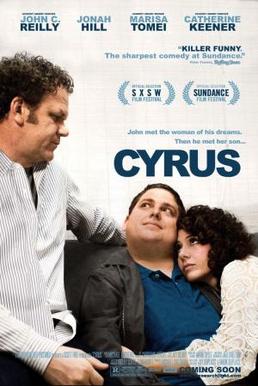
Cyrus (Duplass and Duplass, 2010)

In the past couple of years there seems to be one runaway indie comedy that is usually distributed by Fox Searchlight that reaches an unexpected amount of people and is met with surprise financial success. The most notable of these films are Juno and Little Miss Sunshine, both comedies that attempt to combine dramatic elements and complex characters to create genre hybrids offering more meat than the average romantic comedies that inundate theaters on a near weekly basis. In many ways Cyrus follows in the footsteps of these films, but unlike the other Searchlight features the new film from the Duplass Brothers seeks to bring an entirely new genre, mumblecore, to the masses. As a result the two have crafted one of the most interesting cinematic experiments in recent memory, creating a blend the likes of which your local coffee shop can only dream of concocting.

Cyrus takes so many conventions and places them directly at odds with the audience's expectations throughout the film, and from this aspect a portion of the film's genius is found. While I am no expert of mumblecore as a genre, of the films I have seen it appears that certain conventions of that genre are a heavily improvised script, generally lower key actors, and minimal camerawork to create a more 'realistic' film. So how do you do this when you have the queens of the indie scene, Catherine Keener and Marisa Tomei, Seth Rogen 2.0, Jonah Hill, and dramatist turned Tim and Eric vet, John C. Reily, headlining your film? Well you coax a magical performance from each and every one of these actors. In each performance is a brutally honest depiction of humanity, the complexities of love and the need for security. Stripped down to their basic elements we have a man seeking a major change clashing with an individual attempting to hold on not only to a life of security, but hoping to avoid being completely alone in the world around him. What Hill does with the Cyrus character is absolutely breathtaking, but not only is his turn completely stunning, the Duplass brothers have crafted such a wonderful character that he really deserves much more inspection.

The name Cyrus is, in many ways, completely fitting in regard to the film's themes and the character. While the source is questionable, the entomology section of the Wikipedia article states that the name means either "to bestow care" or "humiliator of the enemy in verbal contest," two traits completely attributed to the titular character. He has a need for nurture, and the film establishes his relationship with his mother as being the only fulfilling one in his life, so Cyrus's decision to act out against John is understandable. The stakes are so intense, but because Reily serves as the film's main character we are asked to also sympathize with him, and the character is incredibly easy to sympathize with throughout the film. At the very start of the film a party occurs, and the energy captured during this scene is so intense and well constructed that it absolutely gravitates throughout the rest of the film. This energy, paired with the sympathy that Cyrus does generate for himself, provides a beautifully engaging central conflict.

The construction of the film is also incredibly important when looking at Cyrus as well because the camerawork also plays against so many conventions. The most distinguishing trait of the film is the abundant use of zooms, giving the viewer a more intimate look at these characters, but even above that the zooms act as a way to work with the tension created between all the different aspects of convention playing against one another. The movie is a comedy as much as it is a drama, and because of the type of comedy, a much quieter and serious style, an underlying melancholy is found in the words, which generates an uneasiness throughout the film. The zooms don't allow the viewer much time to breathe or gain a sense of security, not only giving a layer of direct sympathy to our connection with Cyrus's grasp to hold on to what is comfortable at any cost, but also to heighten the uneasiness in each individual scene.

Cyrus is a film that finds complexity in its simplicity, but also does not allow the narrative to carry all the weight. The construction of the film, each zoom, each shot, each quietly creepy look from Hill, they all work simultaneously to enhance both the tone and themes. The film constantly builds to an ultimate clash of enormous forces until it crescendos beautifully as we see ideologies lashing out against each other. And I was left staggering back to my car after the credits started to flash by, and then I broke down in tears, and while I had a feeling during the film, after having a chance to mull it over more and see how perfectly all the elements work together, I knew Cyrus was not only a great film, but one of the year's best.

Comments are encouraged and, for anyone with a literary mind, I encourage checking out my poetry blog filled with all original works for your reading pleasure.

Also I am on the old Twitter thing so I guess you can follow me at twitter.com/FLYmeatwad.

Monday, August 17, 2009

What A Gas It Was To See Him Walk Her Every Day Into A Shady Place

Planned on doing a double shot review, but I just do not feel that I have much to say about the second film, so I'm just going to tack on a little bit at the end to give it some attention.


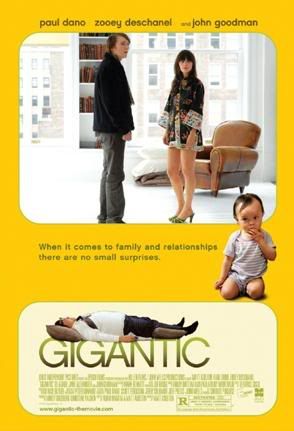
Gigantic (Aselton, 2009)

In many ways, Gigantic is a wonderful experiment that ends up, somehow to its benefit, less than the sum of its parts. Anchored by a wonderful cast, featuring Zooey Deschanel in her second, and more impressive, performance of the year, first time director Matt Aselton comes out firing on all cylinders, but has a good deal of trouble putting everything together for a transcendental film. However, this does not prove to be the detriment that it would immediately seem to imply. Gigantic constantly walks a fine technical line, shifting from beautifully disciplined camera movement, albeit a bit too contained at the film's start, to wonderfully beautiful hand held shots that showcase a striking freedom, such as the scene where the camera drifts in and out of trees in the woods. Unquestionably, the film is a visual powerhouse. The cinematography is some of the best of the year so far and Aselton shows a ton of potential for any future films he will hopefully involve himself in. Whether in the city or out in the forest, he has a way with presenting scenes in visually striking manners. The film is technically brilliant.

The ideas presented in the film are mighty interesting as well, though the movie could have likely used another ten minutes or so to give the viewer a push in some sort of general direction. I am all about ambiguity, and the way the film is constructed the ambiguous nature of the plot lines proves to be crucial to the entire experience, but the idea does not completely pay off at the end. However, I find myself incredibly interested to take a look back and see if I over looked any tiny details that may help give me something more to latch onto and ponder even more in depth. The humor, surprisingly, lands when it is used, but the film is hardly a laugh a minute. Thankfully, the film also crafts some pretty fascinating characters to make up for the fact that that plot is a little lean. But the film is also fairly complex and, much to my delight, only hints instead of coming out and actually revealing things, which I love in films. It makes the audience work, and I can respect the script for taking that chance.

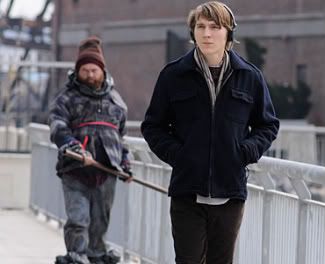
Of course a lot of the writing could easily go to waste with a cast that is not capable of handling the roles. As I said, Deschanel is brilliant, and beautiful, and just about everything the role needs. Of course placing Dano opposite her, and having him turn in a performance that is both human and genuine, capturing the struggles of what appears to be a troubled man attempting to exist in 'normal' society, is a choice that pays off in droves. Goodman is mighty great as well, and Asner turns in a performance that is certainly at least five steps above his voice work in the underwhelming, and incredibly overrated, Pixar film Up from earlier this year. Other highlights of Gigantic include a soundtrack that rivals Adventureland and Lymelife for the year's best, a fantastic supporting cast, and a highly stylized world that all add up to one Hell of a debut for Matt Aselton.


Throne of Blood (Kurosawa, 1957)

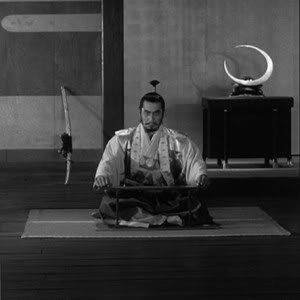
The film is visually gorgeous, the score is pretty great, the acting is good, and the film is another great effort from Akira Kurosawa. Sadly, this film felt much slower than the two previous Kurosawa films that I have watched and I really think that the silent portions here, unlike in Rashomon, detracted instead of added to the film. Basically the film is a standard retelling of Macbeth, and I've always been of the mind that Macbeth is much better material to be discussed than to be watched or read. Not surprisingly, that transfers over to Throne of Blood mostly. It's a pretty great adaptation I suppose, despite leaving out a few things from the play, I believe. But he also injects his own themes and visual symbols, which adds more to the film, I reckon. Can't say I was blown away though or that I have much to say about the film. It's really solid and a technically great film, but it just never really grabbed me.

B+ or 3.898213472146702381645823

Comments are welcome and, for anyone with a literary mind, I encourage checking out my poetry blog filled with all original works for your reading pleasure.

Also I am on the old Twitter thing so I guess you can follow me at twitter.com/FLYmeatwad.
Saturday, August 8, 2009

I Wish You Could Swim Like The Dolphins, Like Dolphins Can Swim


The Cove (Psihoyos, 2009)

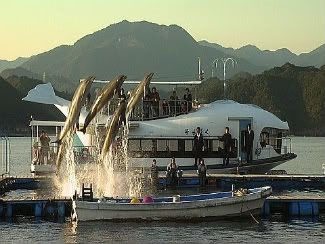
While I would not consider myself very well versed in documentary film making, I do have an interest in these types of films and, when one builds buzz like The Cove, I feel compelled to do everything in my power to check out these types of films. Luckily, The Cove opened at a local theatre this week and I did not have to go incredibly far out of my way to see the film. The power of a documentary is something that few other films, or even many other artistic mediums, can effectively wield because, quite obviously, a documentary has the advantage of, at least to an extent, presenting life in its purest form. I knew little of the material that would be covered, only that dolphins in Japan were a focus, so I was hardly prepared for what I was about to witness.

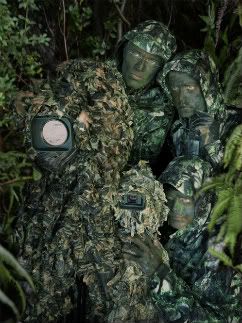
About a year after the mesmerizing, and Academy Award Winning, doc, Man on Wire, The Cove begins to set up as a documentary that draws influence from various styles of film, most notably espionage films. While The Cove has far fewer constructed sequences than Man on Wire, the comparisons to these genre films are still incredibly warranted because, even without the construction, the entire film is practically an adrenaline rush of social and political intrigue that had me riveted from beginning until end. The action sequences here, and by action I mean the car tailings, the cop stuff, and the actual infiltration, are all nicely handled and enhanced by one of the best scores of the year. The film is surprisingly suspenseful for the type of film that it is and, quite masterfully, never skips a beat in terms of narrative, which is and of itself an impressive characteristic in any type of film, let alone a documentary.

Of course the film also succeeds as a standard documentary as well. The interviews all serve the film's purpose, the examination is immediately identified and builds throughout, and the whole thing advertises a payoff that, unlike in other docs, hits incredibly hard. For example, the film goes about humanizing the dolphins incredibly effectively. However, to say that the film is simply about dolphins is misleading, as Food, Inc, as well as other older documentaries, has chronicled an abusive industry. No, the tragedy of The Cove is elevated by the dolphin trade, but the actual sadness is in the exposure of government policy, the corruption of power, and the countless victims that will result in the future, all of which the film covers nicely. These aspects are all universal, and I would argue that every individual a part of at least once, usually for extended portions of time. The struggle is tragically heartbreaking and seems to be overlooked in favor of the film's more overt material.

SPOILERS FROM HERE ON OUT...I reckon. I mean the trailer kind of spoils it, and I have made references earlier. Still, spoilers.

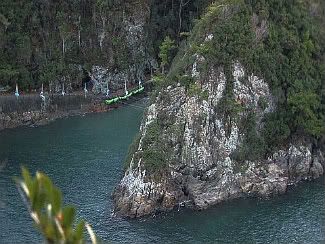
Still, I do not mean to lessen the effect of the dolphin killings on screen, as the film serves wonderfully as a call to arms for that particular cause as well. The entire film's intrigue is built on seeing the inside of this cove, and once the film really starts to drive at that things start to pick up immensely. And of course that all leads to the hidden cameras in the cove, and the final fifteen minutes of the film, which also happen to be the best fifteen minutes or so of the year in cinema thus far. Soul shatteringly gruesome, the massacre of these dolphins is shown in full force, capped off by the greatest shot of the year, a cove where the water has gone completely red. The film then starts to wrap things up in grandiose fashion. One interview we have been seeing throughout the entire film is revealed to have taken place after the discovery of the footage, as O'Barry, after just being shot down with "I told you, we are not going to talk about what ifs," pulls out a camera and asks the man to take a look at some footage. Sure it's not very professional, I guess, but it's such a satisfying conclusion, you just want the man to be confronted with this evidence. And his reaction is priceless. Cue the reveal at the IWC, the final monologue, the obligatory call to arms, and then the mesmerizing introduction of David Bowie's "Heroes" as the credits start to roll.

It started during that hidden camera sequence, but by this point I had been effectively bowled over. I recall getting upset over films, I recall weeping after seeing George Washington, but until watching The Cove I had never broken down in tears in a movie theater. The political implications I talked about earlier, mixed with the chilling score and the scenes of the red water left me practically immobile. Does the film have some flaws as a documentary? Probably, as there are one or two points that really do not go very far. Does The Cove present all the facts? I don't really know. However, as I finally worked up the strength to leave the theater and began stumbling my way to the car before breaking down again, I was practically positive that The Cove is nothing short of one of, if not definitively, the best films of the year so far.

A+ or 4.9128934721842374230174

Comments are welcome and, for anyone with a literary mind, I encourage checking out my poetry blog filled with all original works for your reading pleasure.

Also I am on the old Twitter thing so I guess you can follow me at twitter.com/FLYmeatwad.
Monday, July 20, 2009

Down Here Where The Heat's So Fine, I'll Drink To Your Health And You Drink To Mine


Ratcatcher (Ramsay, 1999)

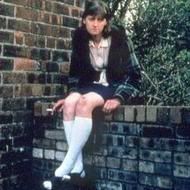
My excitement to watch Ratcatcher, a look at a youth's life during the Glasgow Garbage Strike, was enormously high because I had heard it compared to David Gordon Green's wonderful film George Washington. After finishing Ratcatcher I found the film to be a bit more similar to 2006's film This Is England than it was to Green's masterpiece, but unlike This Is England I am positive that I had an overwhelmingly positive response to Lynne Ramsay's film. The film is constructed beautifully and provides an insightful look at the construction of a child's identity without ever hitting the audience over the head with explanations for why James is the way he is, the boy just exists and grows in response to the people he is connected with and the time in which he lives, nothing more, nothing less. It is with this strength that the film carries itself during the hour and a half run time and really establishes itself as one of the greatest films ever made.

The film immediately starts out by showcasing Ramsay's directorial prowess, a trait that never lets up once during the film. The movie overflows with stunning shots and sequences that high light the atmosphere at the time and showcase some of the most spectacular cinematography I have ever witnessed in a film. At the start of the film, for about the first twenty minutes or so, it is actually very fortunate that the camera is used in such a wondrous manner because without such technical prowess I think it may have easy to lose interest in the hurried narrative; however, the reason the interest in the story is not there immediately is likely a result of how Ramsay opens the film and what expectations she works into the viewer's mind. When a film opens with a character we are generally led to believe that this figure will be the central character, and then Ramsay flips that entire notion on its head. It's a really impressive technique that adds to the film's meticulous construction in just about every aspect. Of course the film picks up immensely after the twenty minute mark when James goes on his first bus ride, so the prowess then begins to elevate the film instead of simply sustaining the movie.

Of course all the technical accomplishment a film may possess can easily be undermined by poor acting, but thankfully all of the actors in the film are really great and handle their roles with similar care to how Ramsay handles the script and the camera. In the role of James, William Eadie turns in an incredibly heartfelt performance that completely captures the mentality of a youth both in and out of place. He shows a spectacular range and is pretty phenomenal. Tommy Flanagan is pretty great as the Da, but of the secondary characters the obvious stand out comes in the form of Lynne Ramsay Jr. in the role of Anne Marie. She hits all of her notes pitch perfectly and always makes the audience want to hate her, but she possess some sort of mysterious charm that really prevents that, until the film begins to close and we see just how perfectly she played the part and how much respect she seemingly had for her character. It's mighty impressive that such a young girl can turn in such a powerful performance.

While it seems that this review is a bit shorter than my other looks at films, admittedly it is pretty rushed, I believe the reason for this is because the film covers so much ground that I am fairly sure that I was unable to completely grasp everything on a first viewing so I figured I would just discuss the highlights until I inevitably revisit the movie in a few years. I would also like to discuss, not at length or give any specifics, the fact that I'm pretty sure the film was designed specifically with my interests in mind. Never has another film gotten an ending so right nor with such mastery, beauty, and naturalism. It really is fantastic. Ratcatcher really nails just about everything in terms of quality and value while managing to turn in a compelling and complex film that takes great care to give the viewer just enough information to make the experience unique and rewarding. Sure it's no George Washington, the movies focus on two completely different topics and George Washington really covers much more territory, but who cares? Ratcatcher is still one Hell of a film that I can fully endorse.

A or 4.39239473285716843591263501236508

Comments are welcome and, for anyone with a literary mind, I encourage checking out my poetry blog filled with all original works for your reading pleasure.

Also I am on the old Twitter thing so I guess you can follow me at twitter.com/FLYmeatwad.