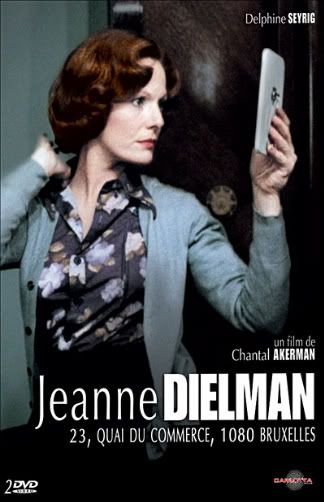
Jeanne Dielman 23, Quai du Commerce, 1080 Bruxelles (Akerman, 1975)
I had, for much of the month of August, avoided watching Jeanne Dielman. Part of the reasoning behind this avoidance was due to the Criterion release not being issued until the end of the month, so I clearly could not have Netflix send me a film that has yet to be released, but the other reason, the incredibly obvious one, is that the film is three and a half hours long of a Belgian woman doing stuff. At the time I was not sure what that stuff was, all I knew what that she cooked potatoes. Now I can get behind watching a Belgian woman cook potatoes in silence for about two hours, but you nearly double that and I just do not know if I am on board. As I opened up the Netflix case to see the new release sitting there, I figured I'd read the short description on the case and check out the Criterion website. Apparently the film was not only a feminist yarn, but also one of the earliest films from a 25 year old director, Chantal Akerman. Obviously, this behemoth draws immediate comparisons to the American classic Citizen Kane. My excitement for this film had effectively gone from mild to incredible. And so the tale of Jeanne Dielman started.
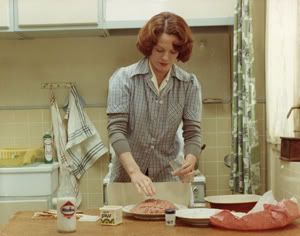
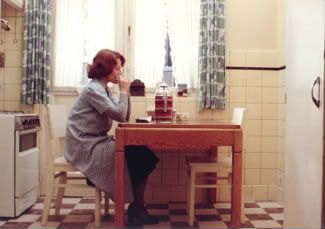 So, minimalist is probably not a good enough word to describe this film, the elongated sequences of Jeanne going through her daily routine in usual silence run throughout the entire film. When Jeanne prepares dinner, she goes through each and every action of preparing the food, never skipping any step. Filmed fantastically, Akerman makes effective use of long shots, congested scenes, and, much to my delight, the constant use of the same exact positioning of the camera outside the kitchen and leading to her bedroom, day in and day out, make for scenes that I shall not forget. The entire film is marked with the visual accomplishment of a seasoned filmmaker, so discovering that she was so young when making the film had me feeling rather shocked. Perhaps equally surprising is that I cannot recall any scene that looked amateurish, or even seemed out of place with the visual look of the rest of the film. Given that the film runs for such a lengthy time, and I'm sure the excess footage was likely staggering as well, Akerman's ability to make the most out of each shot is particularly impressive.
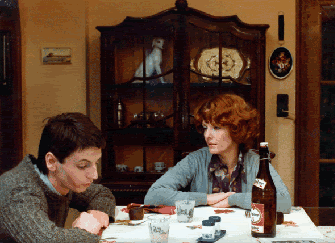
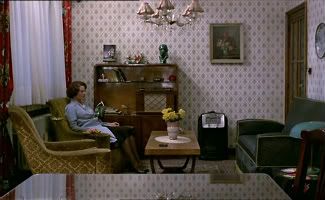 Of course not all of the film's successes are attributed entirely to Akerman; instead, one of the film's greatest strengths comes in the lead performance from Delphine Seyrig. As I have said before, much of the film is mostly dialogue free, yet Seyrig somehow needs no words to completely develop the Dielman character. Perhaps because of the routine like nature of the food preparation, or the detachment shown from the men who pay her for sex, or perhaps even because of the time spent simply sitting with her son at the table, one can understand both her circumstances and specifically why Jeanne is such a compelling central figure. From the trapped sense all the way to Jeanne's perceived independence and awakening, Seyrig is constantly somber and reserved, yet completely full of emotion and believability. Of course the rest of the cast is pretty fantastic as well, and Jan Decorte, in the role of Jeanne's son, makes the most out of his scenes.
 Perhaps I should now talk about the pacing. While I have made slight reference to the repetitive aspects a little earlier, I will take this time to briefly expand on that aspect's impact on the film. Yes, some of the portions of the film are slow because nothing seems to be going on at a surface level, but when sitting down and really watching the film, and specifically watching Seyrig's movements, as she goes through her daily routine, the intensity level is miraculously heightened. Not to mention that when things start slowly unwinding, it hits and it hits hard. During the second portion of the film we see Jeanne encounter a problem with dinner that seems so minute, but the intensity of this event is captured perfectly. The film is so simple on the surface, but even if the viewer misses everything in the film, the ending is a giant clue that some more themes are going on below the surface. While I felt that I had a decent grasp on the film up to that point, the overt symbolism had me re-evaluating some portions of the film up to that point. I am positive that when, in a few years, I sit down with Jeanne Dielman again, I will find much more than I had initially discovered with the film.
 I could probably dissect the film further, but much more capable people already have and they also likely have the advantage of multiple viewings. So as far as an initial reaction is concerned, I feel that I covered enough territory to make it known that Jeanne Dielman is one Hell of a film and certainly something that should not be missed nor should it be dismissed because of it's immense run time. Anchored by a stunningly strong lead performance from Delphine Seyrig, and paired with some fantastically masterful direction from the young Akerman, Jeanne Dielman is worthy of the comparison to Citizen Kane while still existing as one incredibly complex, challenging, rewarding, and strikingly unique examples of film making.
A or 4.728374983215436523145671
Comments are welcome and, for anyone with a literary mind, I encourage checking out my poetry blog filled with all original works for your reading pleasure.
Also I am on the old Twitter thing so I guess you can follow me at twitter.com/FLYmeatwad.