Saturday, July 11, 2009

Raise The Trumpet, Sound The Drum


The Hurt Locker (Bigelow, 2009)

Apparently the latest film from director Kathryn Bigelow has been called the best Iraq War movie ever made. Considering that it is the only film dealing with the Iraq War that I have watched forces me to be inclined to agree with this statement. However, as an action film and a war film, two other genres that I am none too fond of, the film succeeds as a staple of each genre and is certainly one of the best war films and one of the best action films that I have yet to see in my limited exposure to each genre. The Hurt Locker is a breath of fresh air in what has been, once again, a lackluster summer blockbuster season. Even with good films like Public Enemies, there are glaring flaws that are a detriment to the film. In most cases The Hurt Locker avoids these flaws and makes for a compelling ride from start to finish. Though I appear to be getting ahead of myself, it seems more beneficial to delve a bit deeper into the film before calling it one of the year's must see films.

For all intents and purposes The Hurt Locker is an Iraq War movie, and in many senses it is very topical to the fallout of the conflict in Iraq. Instead of taking place during any battles the film focuses on the final 45 days of a company's tour to apparently keep the peace and maintain liberty, or victory, it's never made very clear. Despite being applicable to the Iraq War, the film is structured in such a manner that the conflict is really an after thought. Sure the title metaphor would not work in other historical contexts, this bomb safety suit and the lengthy use it gets appears to be a more modern occurrence, but the interaction of characters and the focus on inner conflict and other psychological strains are, I imagine, applicable to taking part in any high stress conflict. Amidst all the bomb disarming, detonations, and gun fights, Bigelow attempts to get into the collective military mentality rather than simply present a conflict for conflict's sake. While not every attempt she makes succeeds to its fullest potential, Bigelow's work here can best be likened to the sniper in the desert battle sequence: never very far off of the mark.
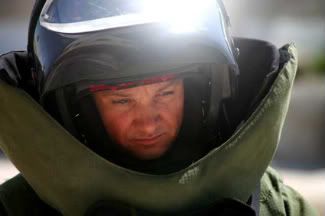
The film has a number of set pieces to build the tension, all of which work spectacularly, I found myself during each suspenseful sequence completely engrossed in what was going on and at times completely wrapped up in the film's world. I do not find myself this engaged at the best of times in most films, so the ability of The Hurt Locker to pull me in as quickly as it did and as often is certainly an aspect worth noting. Of course the majority of this is likely a result of Bigelow's direction and the manner in which she uses the camera. She switches from a standard and very well disciplined hand to a more documentary and free approach on the fly, kicking up and leaving out the grain as each situation demands. However, the visual aspect that stood out most about the film is, without a doubt, the cinematography. I find it with little surprise that Bigelow was, at one point, a painter. Whether it is a man's outline paired against a raging fire, a cat limping through the street, or a bird's eye view of the disarming crew from the top of an Iraqi building, the film mimics a canvas incredibly frequently during the film's over two hour run time.

Speaking of that limping cat, the one problem that I did have with the film was that it seemed to set up all these allusions, we get cigarettes as the focus of two shots and felines as the focus of two more, but none make recurring appearances enough to provide all that much substance. Even the sniping sequence, flies glide around a man, walking over him and into his eyes and mouth, making him no different than any other corpse, is only really used once. Though perhaps the film's decision to not commit to these images is to its strength as The Hurt Locker is such a success because it never takes a side in the Iraq conflict, it just documents. The good is placed along side the bad, fun sequences followed by gruesome ones, and the loyalty of each man to the war is constantly fluctuating instead of remaining constant in generic Hollywood style. There very well may be a political agenda here, but if that agenda exists it is so deeply buried beneath all of the psychology and characters that it might as well not exist at all. In no way do political motivations add or detract from the film though, reinforces the idea that the Iraq setting is not as important to the film as it seems.

I have spent all this time without talking about the acting, all of which is pretty damn top notch. The performance that stands out the most is delivered courtesy of Jeremy Renner in the role of William James. He plays the role with such an intensity and charm that it is hard not to become, at least at points, a supporter of how he handles each situation. However, his brash attitude is also cause for concern and Renner sells this perfectly. It's a really impressive performance and adds a ton to the film. Of course each supporting role is pretty damn impressive as well and the way that humor is handled in the film, always blended in nicely and rarely forced or unbelievable, is particularly impressive. The film is well balanced, action and humor work with psychology and the war perfectly. The film is damn impressive.

The film really grabs hold and does not let go through the entirety of the run. Bigelow has crafted an impressive film that does not only capture the Iraq mentality, but attempts to capture the military mentality. Now I do not have the personal experience to know how well she has succeeded in doing so with the film, but Bigelow certainly provides enough to chew on to provide an idea of this life to the common viewer. Hitting all the ups and downs with a masterful grace, Bigelow brings audiences into the suit, into the Iraq conflict, and captures this intensity magnificently. An unrivaled adrenaline rush, The Hurt Locker is an action film and a war film for the ages.

A or 4.7267187342146293781456239

Comments are welcome and, for anyone with a literary mind, I encourage checking out my poetry blog filled with all original works for your reading pleasure.

Also I am on the old Twitter thing so I guess you can follow me at twitter.com/FLYmeatwad.

Friday, July 10, 2009

What I Read Between The Lines: Your Lies

Rashomon (Kurosawa, 1950)

It has taken me needlessly long to get started with Akria Kurosawa's films. Finally, the Filmspotting marathon that Adam and Matty are doing on the podcast has allowed me the chance to really start watching films from a man who is considered to be a master filmmaker. I'm going to skip all of the historical background and things of that nature, not that I would likely be able to offer much insight in the way of correctly placing him in his time period or alongside his contemporaries anyhow, in order to focus on my reaction to my first venture into Kurosawa's robust library of films.

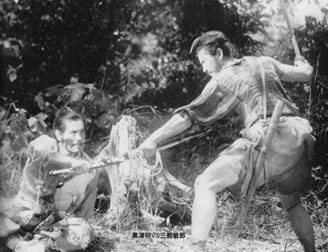
Rashomon has a pretty interesting structure, following a recurring narrative that offers four different occurrences of the same event as a man is put on trial. However, these narrations are narrated by two men at a temple, so really we are hearing a story of a story, and if you take into account the fact that the film is apparently based on another story it adds another fun little layer into the mix. As for the style, it is used much to the film's benefit. Paired with meandering shots through a dreamlike, or perhaps nightmare would be more fitting, forest, the viewer is made to be swept away with each narrative as the idea of fact versus fallacy is constantly in one's mind, but hardly ever able to be discerned in any tangible fashion. Really all we know is what is shown at the Rashomon temple and that the one man is dead, everything else is open to interpretation.

Of course even the way the audience is asked to be engaged and how any individual viewer should interpret the scenario is enhanced by having a faceless inquisitor prod each of the characters to make direct appeals to the camera. The technique is really brilliant and is sure to never give away any details that may place more fact in the hands of a viewer. In a sense, the character that is being told the story by the axeman and the priest is placed in the same situation as a viewer and, towards the end, begins piecing things together on his own as any viewer of the film likely would as well. The film's construction is pretty damn masterful and thought provoking all the way up to a mostly beautiful finale.

Now I have talked all about the construction and have yet to mention the direction and the cinematography. Both are beautifully in the purest sense of the word, Kurosawa's control of the camera paired with Miyagawa's beautifully constructed scenes makes for an experience that is phenomenally striking purely from a visual level, but also one that allows the film to exist almost silently. The dialogue at points is minimal, but none of the tension is ever lost nor does the narrative ever slow down. Dialogue becomes an equal with the images, breaking the barrier between story and painting and doing it wonderfully.

Of course the film's ability to work even in elongated silent sequences, especially when most of the film is so concerned with narrating stories, is also largely thanks to the actors involved. All of the actors give spectacular performances and nothing less than a solid performance can be found. However, mixed in with a slew of really good performances, two particular ones stand out as incredibly impressive. Toshiro Mifune turns in a wonderfully maniacal effort as the bandit Tajomaru, categorized by a signature cackle that embodies the best and the worst of the human experience, while Machiko Kyo is phenomenal as Masako Kanazawa, the wife of the murdered man. Both show an impressive range and turn in riveting performances in their respective roles, but the one scene that really sold it for me is how both act in the axe man's tale. Both interact with each other wonderfully without Mifune or Kyo losing anything to the other.

I have very few gripes with the film. The picture is perfectly paced and sustains its running time nicely, clocking in around 88 minutes. The one part that struck me as odd, though not really a flaw in the film I would say, was the conclusion. I did question the priest's reaction at a pivotal point, and his change actions seemed a little forced, though they worked nicely with what Kurosawa was trying to do, which is the trade off when using characters as representations, as the case appears in the final scene. I am also still wrestling with the film's concluding message, I believe it is rather obvious and if that is true then I suppose I have a bit of a personal problem with what the film is saying rather than a technical problem. To have things end how they do after a wonderfully human and pretty nihilistic speech is delivered seems to undercut what just occurred rather than provide a juxtaposition. Still, I am aware that this problem is purely personal and not a flaw of the film.

Ultimately, I found my first experience with Kurosawa particularly impressive and I cannot wait to delve deeper into the man's body of work. Rashomon takes a seemingly simple tale, shoots it beautifully, tells a story, and then unloads a shotgun shell's worth of philosophy upon the viewer towards the end. The results are hardly painful though, the experience proves mentally stimulating and utterly flooring, capturing the mentality of a lone bowling pin in the ninth frame. I look forward to hearing Adam and Matty discuss the film on the podcast this week and am positive that this marathon is going to be spectacular.

A/A+ or 4.76827914623149236452397856

Comments are welcome and, for anyone with a literary mind, I encourage checking out my poetry blog filled with all original works for your reading pleasure.

Also I am on the old Twitter thing so I guess you can follow me at twitter.com/FLYmeatwad.

Tuesday, July 7, 2009

Come Along With Me, And Let's Head Out To Sea


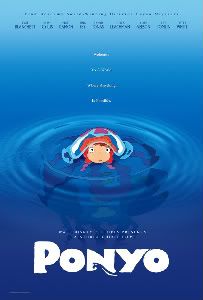
Ponyo on the Cliff by the Sea (Miyazaki, 2009)

Miyazaki is a director and an animator who I tend to have an off and on relationship with in regard to how much praise he has rightfully garnered over the years. Now I am not going to claim to be an expert on Miyazaki, I have seen about six of his films but have yet to see Mononoke or Nausicaä, but I do believe that I have a decent enough grasp on what I have seen to say he is a very talented animator and filmmaker, but certainly not one of the best currently making films. Much like Pixar, the love for Studio Ghibli, and more specifically Miyazaki himself, strikes me as irrational and far too over the top. Unlike his American counter part, Miyazaki does make, usually, decent to good films and not the mediocre product that Pixar pushes out, but it is not like Miyazaki is Satoshi Kon or anything.

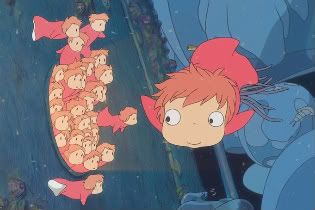
Either way, I went into Ponyo with very little knowledge about the film but also cautiously optimistic that I was about to bear witness to something great. After about a minute or so of watching numerous aquatic creatures swim around an oceanic area, reminding me of Nemo a little bit I guess, I was pretty sure that I had become swept up in the world that Miyazaki was putting on display. The animation, despite appearing fairly mundane on the surface, is absolutely stunning when in motion and the way that Miyazaki handles the water and the aquatic life in the film is nearly unrivaled in terms of technical quality. Top to bottom the film is mostly gorgeous, though I was never too much on the animation of Sosuke, but the way Ponyo is handled makes up for that complaint. Not surprisingly, when the world becomes surreal everything is turned up a notch and the film transforms into something beautiful. Combined with all the details that are put in the world the film certainly succeeds an animated picture in many ways that American films have simply lost over the years as CGI became common place.

All of the voice acting is really good and the person playing Ponyo brought such a sense of wonder to the character that the character became instantly believable. However, the two surprising performances come from Lisa, Sosuke's mother, and Fujimoto. Lisa is such a well developed character, having all the traits of a loving mother mixed in with a fiery rage that makes each time she is on screen an absolute delight. Her relationship with her son is handled nicely, but the strength is found in the way Miyazaki frames her as the family's anchor. On the other hand, Fujimoto is reserved enough to give off the slightly evil feeling without being laughably bad or overly soft. He's a pretty complex character who changes a decent amount during the story, but he never abandons all the qualities that make for a good villain. He's a menacing force, but Miyazaki also has more going on under the surface with him, and the voice actor portrays this beautifully.


Speaking of beautiful things in the film, of which there are several, the action scenes are a thrilling ride that far surpass any action set pieces throughout the year thus far. There is one chase sequence that proves to be incredibly riveting while also being touching at the same time, and all without abandoning any of the tension that such a scene demands. The way the shots are all framed during this sequence help enhance the film as well, keeping the action squarely focused on the screen and never letting thing mesh together or losing the audience during the film's faster parts. Of course all the slower parts are shot masterfully too, and the film does showcase Miyazaki's prowess as a director. Visually the film is stunning, but not simply due to the animation, the technical craft on display in Ponyo is top quality film making no matter how things are sliced.

I must now take time to pause from my gushing and begin wrapping things up with the complaints I have about the film. For a film that deals with such a cataclysmic event, I shall not spoil what said event is, the film lacks a distinct sense of dread. Perhaps the reason for this is to better highlight the relationship between Ponyo and Sosuke, but if that is the case then there had to be a better way of getting the two of them to the script's end without tossing in some underdeveloped conflict that really ups the films stakes incredibly.

On top of that, there are a few parts that seem to drag. Sure they are pretty to look at, but they never feel like they are driving toward anything, just nice little breaks in the plot that are needed to be there because advancing from point A to point B with a cut would leave things far too short. The film works spectacularly in building relationships and when all of the film's themes are fleshed out completely, but the narrative just feels tacked on and I do think that the film would have been a good deal stronger if it had not rushed the plot and just expanded its run time by twenty minutes.

Still, my time with Ponyo was incredibly enjoyable and I would call it my third favorite Miyazaki film behind Totoro at the two spot and Porco Rosso on top. Actually, I was not incredibly surprised to find out after watching that others had made the same connection that I did: the film feels a lot like My Neighbor Totoro. While I could go into a few of the major similarities between the films, I feel that I have done a good job keeping this review just about spoiler free and drawing specific comparisons would begin to give away too many plot elements. Probably best to just wrap things up.

Miyazaki is a master when it comes to expressing and idea on film and Ponyo is no exception. He handles all of the themes with the care of the best novelist; however, Miyazaki overlooks simple narrative decisions that ultimately hold the film back from being a masterpiece. Ponyo is, for me, tier two Miyazaki, sitting side by side with Howl's Moving Castle in an area that is a step below masterworks like Totoro and Porco, but a noticeable cut above a film like Spirited Away. I look forward to seeing this on the big screen when it hits American cinemas, plus it will be interesting to see how all the big name voice actors (Damon, Blanchett, Neeson, and Fey) approach the characters and if they are able to bring the same level of skill that the original voice actors posses. Plus I am interested to see how newcomers, and siblings of some very talented people, Frankie Jonas and Noah Cyrus do in the roles of Sosuke and Ponyo respectively.

B+/A- or 4.28918243702814723105471

Comments are welcome and, for anyone with a literary mind, I encourage checking out my poetry blog filled with all original works for your reading pleasure.

Also I am on the old Twitter thing so I guess you can follow me at twitter.com/FLYmeatwad.
Monday, July 6, 2009

To Share On Our Journey With All Of Mankind


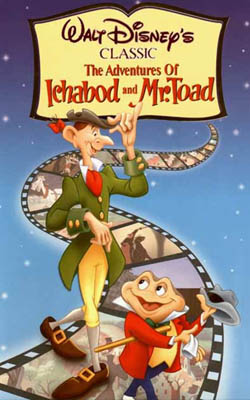
The Adventures of Ichabod and Mr. Toad (Algar, Geronimi, Kinney, 1949)

Thus far, the theme of this marathon for me can be summed up in one word: discovery. Whether discovering great new films like Melody Time or Song of the South, rediscovering and being able to notice what is so great about Bambi, or discovering that I was never off the mark to begin with, ala Fantasia, I can say with confidence that I have discovered a good amount by revisiting the Disney Animation Stuido's compendium. So it is only fitting that this next film is one that basically allows for all types of discovery.

I have come across a film that, for all intents and purposes, should be very close to my heart. When I went to Walt Disney World as a child my favorite ride was always Mr. Toad's Wild Ride. Then it was shut down and my spirit was crushed like Smarty Jones's hopes at a triple crown after losing the final race. Despite loving the ride, I had never watched The Wind in the Willows short that gave rise to this attraction. On the other side, I had, and likely still do have, a VHS copy of The Legend of Sleepy Hollow and I watched it about once a week as a younger child. Still, it has been years since I have watched that short film and I like to think that my tastes have refined a bit since then.

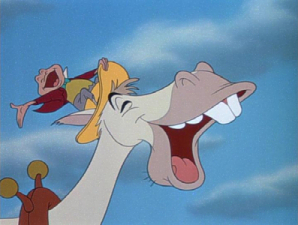
Oddly, after spending some time with the film, and taking a day or so to reflect on what exactly I had just watched, I found that my expectation, that I would be able to confidently say that Ichabod makes for the better segment, is mostly wrong. So that brings me to The Wind and the Willows. Starting off like a simple story, which splendid narration to boot, once the introductions are finished and we get straight into the characters actually being characters the film picks up considerably. The animation is really nice and a number of the shots are absolutely brilliant, but the strength comes in the voice acting. Comedy hits just about every time it is used and the performances from each actor make for some really entertaining dialogue.

Along with the dialogue, the music is really integrated into the story pretty well and is a nice precursor to the more modern Disney musicals and less like the classics. The action sequences are pretty thrilling as well and then there is the whole commentary on the justice system that is juxtaposed beautifully with the comedic world. It's a really carefully constructed film that is a blast to watch and I can certainly see myself revisiting this one in the future to see not only how well it holds up to repeat viewings, but to also see what other subtleties I may have missed. Not to mention that the characters are just fun.

Jumping from fun, or as fun as a bunch of weasels getting drunk can be, to the more macabre, we hop across the pond for a bit of American fiction. Much like The Wind in the Willows, the narration here is pretty fantastic and, I would contest, is what saves the film from being pretty bad on numerous occasions. The character animation, aside from Crane, is pretty standard, and the scenes leading up to the party are all downright ugly, it's like Disney forgot how to draw. The music is good throughout, but that's mostly Crosby's doing as it really never really separates from the story telling quality into the film story that The Wind in the Willows employs, and the story is a personal favorite so I cannot complain there, but I would have liked it more if the film had actually broken the narrative aspect and simply introduced the characters and started developing them a bit, like the characters in the Mr. Toad tale.

Unlike in the Mr. Toad story, here I felt like I would be just as well off reading the Sleepy Hollow tale. Up until the party and chase sequence though the film is simply passably watchable and proves to be the lowest point of the film as a whole. However, the party until the film's end is absolutely brilliant and because the story is so short it makes it worth watching.


Ultimately, this film is nothing more than a standard package film without too much depth, aside from the commentary in the Mr. Toad story and the animation toward the end that makes for a truly diabolical Sleepy Hollow tale. I could see myself listening to Crosby's songs on my downtime, but I can see that with a ton of Disney films, so despite him having a really good voice and helping to make what could otherwise be a dull film watchable until it picks up I do not think that is enough for me to say that the Ichabod Crane adventure is anything special. Actually, as a whole I do not think that the film is anything special and, taking it as a package film, Disney could hardly end on a higher note than Melody Time, but for an enjoyable watch that is a tad above pretty good, this film succeeds.

I should also state that, unlike Fun and Fancy Free, the pacing here is brilliant and neither segment overstays nor under stays its welcome. Sadly, this also means we lose out on those hysterical puppets, but at the expense of a better film, so I guess it all works out. I suppose that's it for the package films. My floors are dirty...bring on Cinderella!

C/C+ or 3.2723786978156217956231

The Adventures of Ichabod and Mr. Toad achieves a 7.9 out of 17, with 0 being Fantasia, 8 being my recollection of another specific film in this marathon that will be revealed when it has been watched, and 17 representing how great Hercules is based on my most recent watching, which was likely over the summer, or winter break.

Currently in the marathon the rankings go as...

1. Bambi - (16.3/17)
2. Song of the South (16.3/17)
3. Dumbo - (14.9/17)
4. Pinocchio - (13.3/17)
5. Melody Time - (10.5/17)
6. Make Mine Music - (8.2/17)
7. The Adventures of Ichabod and Mr. Toad - (7.9/17)
8. Saludos Amigos - (7.7/17)
9. The Three Caballeros - (6.66/17)
10. Fun and Fancy Free - (5.5/17)
11. Snow White - (2.5/17)
12. Fantasia - (0/17)

Comments are welcome and, for anyone with a literary mind, I encourage checking out my poetry blog filled with all original works for your reading pleasure.

Also I am on the old Twitter thing so I guess you can follow me at twitter.com/FLYmeatwad.

Sunday, July 5, 2009

And You Say, "Oh My God Am I Here All Alone?"


Moon (Jones, 2009)

Let's cut the crap. I'm going to keep the references about Bowie and Ziggy Stardust limited in this review. Just getting that out of the way now. There will likely be one in the title because people will expect it and I'll give in slightly to those who think that obvious humor is good stuff. Hell, I can even appreciate the apparent things every so often, so why not draw attention to the fact that David Bowie's son is making a sci-fi film that takes place in outer space, right? It must run in the family, or rather fly in the family. Okay, enough of that shit, let's get down to looking at what is, for the purposes of this review, Duncan Jones's debut feature.

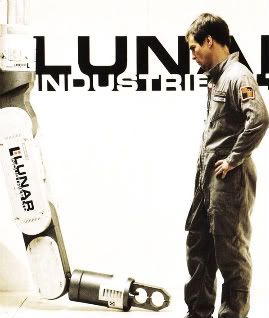
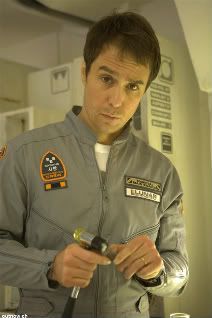
The plot, on the surface, seems fairly simplistic. Sam Bell, portrayed by the ever awesome Sam Rockwell, is working on the Moon for three years to harvest energy. He shares his base with GERTY, a machine apparently designed to assist him during his time on the base. Things start to go awry and the action begins picking up as the tangled web of the LUNAR company slowly begins to unwind during the film's rather lean 97 minute run time. I'll toss up a spoiler section towards the end where I go into more plot details and more of my thoughts about what specifically was so wonderfully handled by Mr. Jones's careful hands. Also, if it has not become at least slightly apparent, I am about to give this film a ton of praise and debate whether or not it can rival Adventureland and Lymelife for the current top spot on my list of Best Films of 2009.

So, speaking of mastery and careful craft, the film possesses an incredibly polished look throughout that really makes the entire film simply stunning to look at, whether it deal with cinematography, direction, or even art direction. The film is mostly minimalistic in terms of colors used, but the way everything blends together is simply wonderful and really makes for a visceral experience that, even if the plot and actors sucked, would mostly make the film worth watching at least once anyhow. From the opening credit sequence to the repeating shots of the harvest machines chugging along on the moon's surface to the simply stunning shot of Sam's rover toward the film's end, the way that Jones works the camera comes with all the mastery of a pastry chef in a bake off. I often found myself wondering if the direction was not as great as the cinematography or if I was just duped into thinking the direction was good because the film looked so good, but every time I started to think about that Jones would offer a shot that quelled my fears. I look forward, greatly, to whatever film Jones decides to tackle next.

I guess for those who are really ultra sensitive, spoilers begin HERE!


In fact, tackling is a pretty nice word to transition into my next paragraph. This film has a good deal of Rockwell on Rockwell action where Sam is tackling Sam and they start to fight. Sure this may sound comedic in nature, or simply ludicrous if a lesser actor had been given the material, but Rockwell provides a tour de force performance that immediately vaults to one of the best in recent memory. While the script allows for the range, Rockwell's ability to sell the performance and really establish the tension between his two selves is impressive and indicative of the man's talents. The real strength in the performance is found in Rockwell's ability to deliver emotion in a film that had mostly sacrificed it in the script in order to make sure the narrative continued and that the philosophical tension really took center stage. Actually, sacrificed is not the right word since the relationship between Sam and Tess is apparent all during the narrative, but rather it is used as a distraction from the film's apparent purpose, which is more philosophical.

The script relies on playing and manipulating expectations to draw more attention to the philosophical questions and the character study that is going on during the film, so the use of various red herrings is nearly always successful and adds another layer to the overall film instead of feeling cheap or gimmicky. The trailer begins to toy with certain cinematic expectations by portraying GERTY as a H.A.L type robot, and despite helping Sam throughout the film the robot's intentions are always under question, it requires the viewer to be attentive. Even the casting of Kevin Spacey, who gives a stellar performance that showcases, once again, his voice acting prowess, seems to make the viewer suspect that there may be something sinister at work in GERTY's system. Even as the mystery of the LUNAR company begins to become more apparent the film never spells things out yet always seems to provide answers, but also asks that the viewer look for the answers rather than be spoke at, as a film like Star Trek seemed more than willing to do numerous times during the film. An example is found in the decaying of Sam. The film continues to make it apparent why he is decaying, but I do not think the film ever comes out and says that he is decaying because it has been three years. Jones taps the viewer on the shoulder, he does not hit the viewer over the head, it is because of this the film is so successful.

Though perhaps not only because of this fact; the film also is incredibly approachable for a science fiction film and for a film that does get fairly existential at points. On the surface everything in the film is so simplistic, but if the viewer so desires the motivations and consequences of each action on and off the space station can not only be explored, but also found in the film through the subtleties that Jones has so carefully scattered throughout the film. I think that, eventually, the film runs too deep if one begins to try and unravel things too much there is a noticeable collapsing point, but the sheer care that has gone into making the script complex yet still so utterly accessible to any viewer makes up for that fact. The script really hits everything perfectly, and it even manages to blend humor in naturally rather than simply taking a break from the film's progression to inject purely comedic scenes. While it may be an odd aspect to wrap up with, the film's pacing is spectacular and ties things together beautifully.

The film is ambitious, intriguing, and near flawless. A fantastic journey about self discovery and a character study for the ages. Will Moon top my list? Currently, no, but as my rankings continue to shift it will continue to fight for the top spot. Let's toss genre's aside, Moon is not simply one of the best science fiction films ever made, Moon is one of the best films ever made.

A or 4.7742389048123758123750235213

Comments are welcome and, for anyone with a literary mind, I encourage checking out my poetry blog filled with all original works for your reading pleasure.

Also I am on the old Twitter thing so I guess you can follow me at twitter.com/FLYmeatwad.

Thursday, July 2, 2009

Hear the Rhythm and Rhyme? It's Melody Time!


Melody Time (Disney, 1948)

Plowing through the marathon we come across what I assume to be the last of the package films from Walt Disney, Melody Time and The Adventures of Ichabod and Mr. Toad. I have yet to watch the latter, though I watched the Sleepy Hollow short many times as a child and am mostly confident in saying that Melody Time is the final of the psuedo-Fantasia films for quite a while. Now I also do not usually have a mind to give things away before writing up my reviews, but my feelings about the atrocity that is Fantasia are well noted so I think that it should come as no surprise when I say that Melody Time, a film consisting of six short films all paired with songs ala Make Mine Music, is worlds above that instrumental insult of a film.

However, what came as a surprise to me was the fact that Melody Time is not only worlds above Fantasia, but it is considerably better than any of the package films of the same type to precede it, excluding Song of the South obvious, even the incredibly surprising Make Mine Music. The common complaint against Make Mine Music was the presence of at least three subpar sketches as well as animation that simply was left over from Fantasia. Now I have contested that in my marathon post about that film, but what I found incredibly striking about Melody Time is that is seems to be a direct response to both Fantasia and Make Mine Music. None of the segments here are anything worse than pretty good, the animation, especially of water, is incredible, and it even has segments succeed that lean more toward the instrumental side of things. My praise of Make Mine Music as being everything that Fantasia should be may have been a bit hasty as I am now fully able to proclaim Melody Time as the best representative of what Walt Disney was attempting to capture during this time in his career. Sure it sacrifices a majority of what made Make Mine Music so diabolical, but who gives a damn? It succeeds at just about everything and makes for a compelling and fun watch.

Now let's break down segments. Things kick off rather quietly with the "Once Upon a Winter Time" short that features a couple ice skating while two rabbits imitate them. Kind of cutesy and lovely and stuff like that all paired with a nice song about how great December is courtesy of Frances Langford. Then shit starts to get real! Lyrics are abandoned as the instruments pick up and make for a thrilling action piece that never overstays its welcome and always is progressing. It all wraps up nicely and really serves as an excellent starting point because it shows the film's ability to blend both the lyrical with the musical. Now it is followed up with a full on instrumental nightmare entitled "Bumble Boogie," but the segment actually works because the instrumental is so powerful and fast paced while the segment is rather short. It's a pretty nice trip too that rivals "Elephants on Parade" from Dumbo as one of the best uses of imagination thus far.

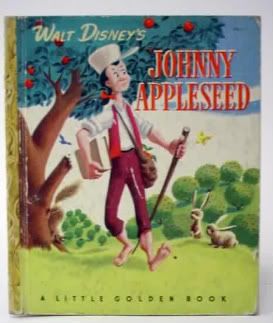
Yet the film does not settle for instrumentals and changes paces rather nicely to the lyrically driven "Johnny Appleseed" segment which, just a side note here, features a word that I will be integrating into my daily vocabulary, "applesass." The overt Christian references in this one would probably make even the most radical televangelist blush, but they are not a huge problem and add to the whole blind devotion thing that the tall tale relies on to explain part of Johnny's reasoning. It's pretty quickly paced and mighty pretty to look at, but the stand out comes at the end and how the film handles Johnny's passing. The final few scenes are beautifully handled and simply engaging cinema. You think Up handles death nicely? Well does that film ever tell an old man with the mind of a child that his corpse is a husk? I thought not! Diabolical Rating: SATANTENSE!


Things get toned down a bit from there, only slightly though, when the "Little Toot" segment begins taking over. It starts off feeling slightly like an aquatic version of the plane part from Saludos Amigos, but the song is actually really charming and the devilish antics of Little Toot are pretty much established from the beginning. His story is pretty predictable, but it's still a joy to watch play out and the animation here is probably the second best of the entire film. The waves during the rescue scene are simply stunning and it is really hard not to get caught up in the adventures of the tiny tug boat. You really are a Big Toot now Little Toot! Probably the most 'cartoony' of all the segments, but still a joy to watch.

Next the film starts to speak to the poet inside of me, in fact it sings to the poet inside me. "Trees," sadly not "The Trees" by Rush, is sang along to some orchestra playing along as we watch trees change through the seasons. Is this where Malick gets his nature fetish? Probably not, but the animation of the title figures are pretty fucking marvelous and, paired with the poem, make for one of the most beautiful and powerful segments in the entire piece. I may even go as far as to call this my favorite segment. The images used are fantastic and the various types of animation are superbly handled, clearly a ton of time and love went into the crafting of this segment. It's truly an artistic accomplishment on par with Bambi as far as Disney animation in the marathon so far is concerned.


The last two segments I imagine people will have trouble with if they are cynical and pessimistic bastards because one is probably a scrapped segment from The Three Caballeros and the other has a lot of live action at the beginning, but I think both are pretty great. The first segment, "Blame It On The Samba," is once again pretty visually stunning and mighty fun. The way the lady swirls in alcohol is cool as well, I liked that a ton because it's like the film is saying drink, dance, and find pretty girls. It's a fun segment with a fun song. I was also a pretty big fan of the closing "Pecos Bill" segment because, aside from the really entertaining live action, the tall tale is interesting and the animation is fun, plus it tells a full story, which is refreshing in a segmented film. The idea of American mythology is really interesting to me as well, reminds me of Greek myths except they are representing the USA, so that kicks ass. USA! USA! USA! It's a great way to close out the film.

Melody Time truly is the culmination of the package films to come before it and it does just about everything spectacularly. Not only is the film leaps and bounds ahead of Fantasia, but it's really so far ahead of the best of these films that I cannot help but be impressed. While there may be questions of the validity of these films in the Disney marathon or if what Walt tried to do was worth all the effort and the years of 'sub par' films, I think that Melody Time truly shows that he was on to something and that the experimentation, both the successes and failures during this time, were incredibly worth while. One of the most entertaining and enjoyable films in the marathon thus far and a perfect way to close out the musical package films.

B+ or 3.998234812370482157801

Melody Time achieves a 10.5 out of 17, with 0 being Fantasia, 8 being my recollection of another specific film in this marathon that will be revealed when it has been watched, and 17 representing how great Hercules is based on my most recent watching, which was likely over the summer, or winter break.

Currently in the marathon the rankings go as...

1. Bambi - (16.3/17)
2. Song of the South (16.3/17)
3. Dumbo - (14.9/17)
4. Pinocchio - (13.3/17)
5. Melody Time - (10.5/17)
6. Make Mine Music - (8.2/17)
7. Saludos Amigos - (7.7/17)
8. The Three Caballeros - (6.66/17)
9. Fun and Fancy Free - (5.5/17)
10. Snow White - (2.5/17)
11. Fantasia - (0/17)

Comments are welcome and, for anyone with a literary mind, I encourage checking out my poetry blog filled with all original works for your reading pleasure.

Also I am on the old Twitter thing so I guess you can follow me at twitter.com/FLYmeatwad.

Wednesday, July 1, 2009

Let Me Hear You Say, "Fight the Power!"

Welcome to Processed Grass, my blog for film, music, television, novels, and any other forms of culture that are not directly video game related, as those cultural venues are covered over at Multiplatform. I will give a proper first post later, but for now let's kick things off with a reflection on a brand new film!


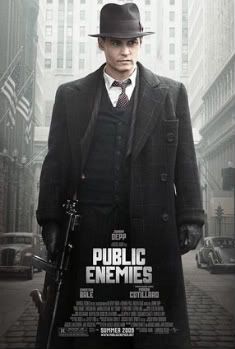
Public Enemies (Mann, 2009)

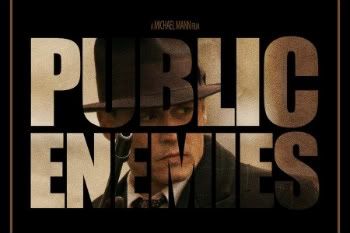
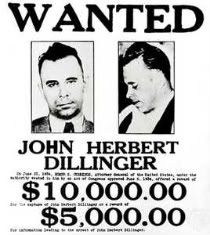
My first experience with Michael Mann comes in the form of Public Enemies, the period piece dealing with John Dillinger, events that I have minimal knowledge about and mostly only know that Nick Twisp would like to adopt the surname in the Youth in Revolt series. Still, it bills Depp and Bale as the lead actors and the 'lesser' roles are really nothing to sneeze at either, so regardless of my knowledge of the events I should at least be able to fall back on a well known director and a good number of big name actors in what I assume, judging by the release date, is so big budget summer popcorn film that is going to follow up Transformers. I mean all the pieces are in place for a smash hit thrill ride that follows the gangster formula and plays to a market that really hasn't seen a similar film released since The Departed, correct?

Well, partially I suppose. Mann's direction ranges from brilliant to irritating, though he handles all of the action sequences spectacularly, unlike two other films featuring Bale released recently, and really the whole film is visually stunning. The costumes are great, the scenes are beautiful, and there are a number of shots that are simply top notch. All in all I'm pretty pleased with what Mann put together. Similarly, the acting is pretty damn great as well, though I don't really understand why Bale is billed as a lead. Sure he plays an important role in the plot, but he is not in the film an incredible amount of time and there are points where it is easy to forget that he is even around. When he is on screen though he's really good, playing his character believably and drifting in and out of accents that seem straight out of his 3:10 to Yuma character and the Jack Rollins character from I'm Not There. The real star though, as expected, is Depp. His performance is perfect, he brings so much to the Dillinger character that each moment he is on screen the audience is left guessing what he will do and how he will react to the situations around him. Depp plays things cool and collected when needed but he also captures the force of a truly dangerous man, it's damn impressive.

Aside from the leads though, all of the supporters do an excellent job whether their roles be small or large. Obviously the next biggest role is the love interest, played by Marion Cotillard, and she does make the most out of her screen time. I haven't seen her in anything else so I really do not have anything else to compare her performance to, but she does a really nice job here and there are a few scenes, one particular one later on, where she is pretty fantastic. Sometimes great actors and actresses come together, and I'm not saying that Bale is a great actor, and things do not always work as well as they should, but in this film all of the actors did a bang up job that became really refreshing in the midst of a lackluster summer movie season.

Actually, the entire film is a nice break from the summer blockbuster season and from the typical summer popcorn film. What could have easily been a generic over the top gangster film takes on quite a few layers by not cramming itself full of overblown gun fights or bank robberies, actually the number of each are kept surprisingly minimal, and really remaining focused on watching the characters exist in this brilliantly established world and documenting what was happening. I'd actually be really surprised if this film makes a ton of money or if it becomes associated with the stereotypical summer blockbuster because the film seems to go above and beyond that label by ignoring most conventions found in other releases this year like Star Trek or Transformers 2.

To be honest the most notable difference between those films, and I suppose a similarity as well, is how plot is handled during the film. Dillinger speaks about not living in the past or being overly concerned about the future, it's all about "where you're going," and the film seems to follow this idea in the way the film is set up. Minimal back story or motivation is given, perhaps because it's a 'true' story or perhaps not, and the film never clearly establishes a definitive goal that should be reached by the end; very little overarching plot exists in the film. Still, the film is incredibly captivating. This structure is mighty interesting and should make for a dull film that does not demand engagement, but Mann establishes the world so perfectly that it is simple to be swept away and simply go along as an observer in a manner that combines all the entertainment of a film with the interesting aspects of a History Channel special. It's pretty damn impressive and it is nice to see Mann not overly cram the film with cliche and convention in favor of entertainment and an easy to swallow film. He simply lets the film exist, adding to the 'real world' quality and enhancing the world that is presented, all blending together spectacularly.

So do I know if all the facts line up? Probably not. Is it the best film of the year or a transcendental experience? Nope. Hell, do I even think that it is one of the best gangster films ever made? Certainly not. But Mann provides an entertaining, interesting, and exciting film that is a breath of fresh air in an over crowded, explosion filled summer, and for that I can be pleased.

B+ or 4.189812423748214727895637198

Comments are welcome and, for anyone with a literary mind, I encourage checking out my poetry blog filled with all original works for your reading pleasure.

Also I am on the old Twitter thing so I guess you can follow me at twitter.com/FLYmeatwad.

Photos from cinematical.com, scribeculture.com, and joblo.com in order of appearance