Monday, July 27, 2009

And Don't Forget To Give Me Back My Black T-Shirt


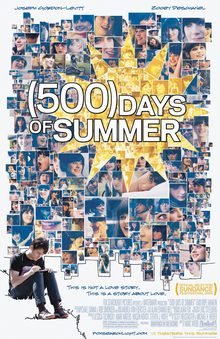
(500) Days of Summer (Webb, 2009)

So I shall preface this review with a piece of information I had not been aware of whilst watching this new picture: (500) Days is Marc Webb's debut feature. Sure that does not change my evaluation of the film, but in relation to that thought I cannot help but be a good deal more impressed with the final result and how everything came together...man. Starring Joseph Gordon-Levitt of Brick fame and Zooey Deschanel of All The Real Girls (both will be referred to as Jo and Zo for the rest of the review), the film sets itself up as the anti-rom-com that plays like a traditional romantic comedy but subverts the genre to unparalleled extremes. It does this, of course, by paying tribute to genre staples that have come before it and adding a good deal of new concepts to the mix. So if you are unable to tell from that remark, I shall state directly that the film does not completely succeed in this ambition. Still, the film has a ton of great moments and some unpolished points, of which I shall now delve into deeper detail.

The film is certainly marked by a distinctive visual style at times, both in the way it looks and the way the camera is used, but the whole thing is pretty erratic throughout. Still, the range of shots Webb uses is impressive and has me excited to see what he works on in the future. The way he uses the camera to call back to other films is mighty impressive as well. Aside from a whole black and white foreign sequence that brilliantly recalls a few Ingmar Bergman films, the hand drawn opening echoes Juno, there's an Annie Hall element to the plot, and then a good deal of others in the between. Sadly these references are not always used to great effect. Unlike the stunning split screen expectations v. reality sequence that heralds Annie Hall, the film's first two acts are mostly genre tributes just for the sake of tribute, including a terrible musical sequence. The film calls attention to use of convention, but like, to quote the severely overrated Dark Knight, a dog chasing a car the film does not know what to do once it catches it. In a sense, (500) Days makes an interesting parallel to Duncan Jones's film Moon, which also subverts genre expectations but to the film's benefit.
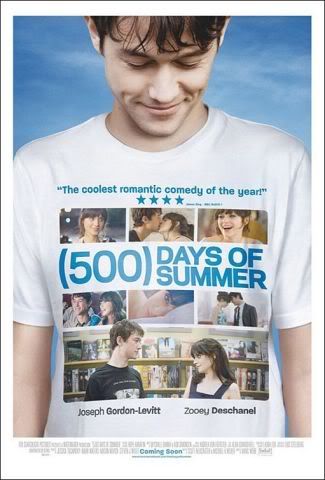
Just like Moon, this film showcases some pretty stellar acting as well. Jo and Zo are brilliant, particularly Zo who gives my second favorite performance by an actress this year. She plays her part perfectly, generating an almost inexplicable magical charm that simply draws the viewer toward her character. In fact she is so genuine in her performance that, when the film makes its big reveal, it almost feels like she has betrayed the viewer. Sadly, the supporting cast is nothing to write home about. Sure they all give decent performances, but the film is clearly a vehicle for Jo and Zo, so not showcasing an outstanding supporting talent is pretty obvious, I assume. Still, none of the performances are really terrible, which is a credit to the film.

Ultimately, (500) Days is an interesting idea that does not completely live up to its potential during the fairly standard one hundred minute run time. However, it should be stated that the film has an unbelievably strong third act. Once that expectations v. reality scene starts the film barrels along and never pulls a punch. Unfortunately, getting to this point we have to deal with so many scenes that lack the needed humor or intrigue to keep things fresh, the first two acts are mighty bad. I am a man who values endings though, and the way the film pulls everything together is so damn great that I can easily state that the film is, at its worst, a pretty solid film that deserves a watch. Hell, I'll even tack on the B+.

B/B+ or 3.6789772394823931523915623

Comments are welcome and, for anyone with a literary mind, I encourage checking out my poetry blog filled with all original works for your reading pleasure.

Also I am on the old Twitter thing so I guess you can follow me at twitter.com/FLYmeatwad.

Thursday, July 23, 2009

Honey, What Reveals You Is What You Try And Hide Away


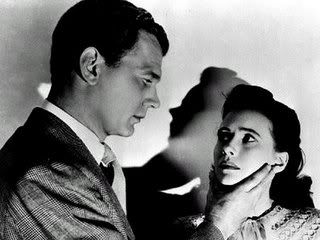
Shadow of a Doubt (Hitchcock, 1943)

Prior to going into this film I had known two little facts that had me pretty excited. The first, and most notable, is that Hitchcock has stated that he considers Shadow of a Doubt to be his favorite of his American films. The second, and more interesting to me personally, is the involvement of esteemed American playwright Thornton Wilder in the script writing process. Obviously these two elements had me pretty excited to see how everything came together and, while I was not sure why I was skeptical, everything blended together seamlessly to craft a compelling and incredibly tense film. While I can say right now that my underexposure to the rest of Hitchcock's work, I have only seen Psycho, results in my unable to informatively agree or disagree with Hitchcock's endearment, but I am going to attempt to make out what makes this particular film so compelling.

I could go on about the direction, but the film is from Hitchcock so it is to be expected that a certain level of pedigree can be found in just about every scene. Instead, I shall start with the acting that is on display during the film's nearly two hour run. Anchored by Teresa Wright and Joseph Cotten as the two Charlies, the two have perfect chemistry and offer an engaging back and forth dynamic that covers, and nails, just about every emotion in the book. Cotten obviously gives a chilling performance as Uncle Charlie and the way he constantly changes his mannerisms depending on the situation is mighty fantastic, but I would have to say that Wright is easily the stand out. Every scene she is in she brings human elements to instead of simply acting to emotion. She displays innocence and the shattering of this innocence and she handles it with such magnificence that I could not help but be bowled over by her performance.

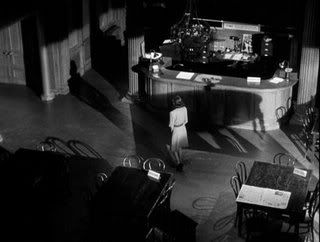
Of course a lot of this has to do with the script. Early on sequences with Ann drip of Wilder's writing, but as things continue to move forward and the film offers up scenes like the one between both Charlies in the bar and the final scene with Wright in the church the film starts to take on a theatrical quality and the dialogue becomes almost poetic. The script is so carefully constructed, or more specifically the dialogue, that the film's themes and the ideas presented are almost immediately heightened to such a high level that the film, even if all the other elements were terrible, would be a fine example of film construction simply for the writing. Factor in how well humor is blended in with the plot and how intense Hitchcock makes the suspenseful sequences and the film takes on a quality of brilliance. Perhaps though the film's second greatest strength is how the viewer is always kept guessing and one can never be sure which direction the film will take in the future.

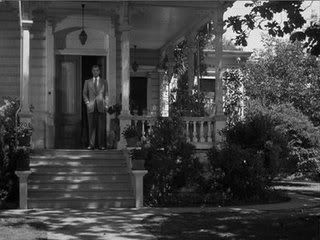
Sadly the film has somewhat of a turning point toward the end where things begin to fall apart. I personally think that everything would have been great if the film has simply stopped when Uncle Charlie makes an ascent up the stairs and we are treated to a beautiful long shot of Charlie holding her hat and standing in the doorway looking upward. But for some unknown reason the film makes one of what quickly become a stream of awkward cuts between scenes and the film starts to show its hand and strip away the ambiguity and suspense in favor of explaining everything to the viewer. A semi romance is tossed in, though mostly handled wonderfully, a few more scenes of visual action instead of the guessing game previously used, and slightly puzzling dinner and train scenes feel incredibly out of place. Now Wilder or Hitchcock attempt to salvage things by having Wright seemingly abandoned by her love interest, keeping the audience on their toes and wondering if Mr. Graham was just leading her along to help with the case, but then he is simply thrown back in at the end to allow for the final monologue to cap off the film. Sure this scene is brilliant and reestablishes the theatrical and poetic aspects of the film, but I must wonder if the film was better off undercutting most of what comes before just to finish on this philosophical note.

However, in the end the film is still a near masterwork and certainly a cut above the other Hitchcock film I have watched. When everything that has come before is so near flawless I can hardly fault a jarring finale, especially when the film actively makes an attempt to atone for these mistakes even in the way the final few scenes are handled. Shadow of a Doubt is a complex, compelling, and suspenseful film that showcases why Alfred Hitchcock is one of the best filmmakers of all time, and the inclusion of Wilder in the script writing process adds a philosophical layer to the film that results in far more than a simple genre film. The film is not without its flaws, but it is one Hell of a ride that has me excited to dive deeper into Hitchcock's stable of films.

A or 4.689825738056123576230981

Comments are welcome and, for anyone with a literary mind, I encourage checking out my poetry blog filled with all original works for your reading pleasure.

Also I am on the old Twitter thing so I guess you can follow me at twitter.com/FLYmeatwad.

Wednesday, July 22, 2009

I'm Staying In The Hotel, Not The Motel Or The Holi-Day Inn


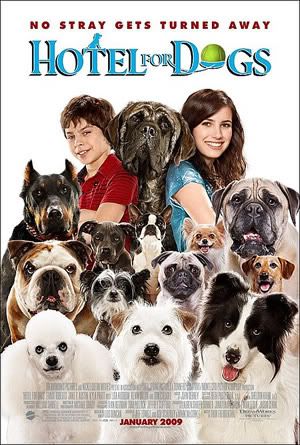
Hotel for Dogs (Freudenthal, 2009)

Coming out of Nickelodeon Movie Studios, I didn't know they were still around, is one of what I like to pretend was one of 2009's most well received blockbusters. That little film, a quiet period piece about the struggles of life, financial strain, and existence in general goes by the seemingly deceptive title Hotel for Dogs. Drawing its influence from the Italian Neo-Realist movement, specifically Umberto D., Hotel for Dogs waxes poetic about all of life's pressing issues and, drawing influence from last year's Wendy and Lucy, makes no sacrifice in regard to emotional power. The fact that the public was able to pick up on such a noticeable masterpiece is pretty much unheard of and quite heartwarming. Or at least that's what I like to pretend.

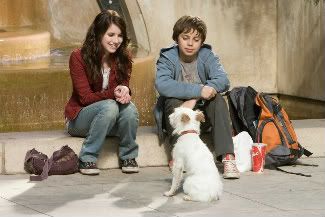
In actuality, Hotel for Dogs is pretty standard stuff at its heart, but the film puts on enough of a show to keep things both fresh and interesting enough to sustain its abnormally lengthy run time of almost two hours. Things start off interestingly enough as the viewer is greeted by a constructed plastic town full of whimsy and the 1950's American Spirit, or something of the sort, before introducing us to Friday as he prowls the streets of some pseudo-city area for some food. Shortly after we are introduced to both Andi and Bruce, Friday's owners and the film's protagonists. Marking these opening sequences is some pretty nice direction, mixing in a few pretty neat shots and sequences, but ultimately nothing of huge interest. All of these things set up nicely for the film as a whole because on the whole the film proves to be a mostly mixed bag of entertainment in spite of the standard technical pieces.

Of course there is one major exception to this, and that is in the design and integration of the devices used inside of the Hotel. Most of the inventions that the film has Bruce come up with are really fun bits of whimsy inserted into the film to give it a nice atmosphere without being too over the top or unrealistic. Sure there is a suspension of belief needed to buy into all of the things that are happening on screen, but the film asks the viewer to do this from the beginning and, for the most part, earns this suspension while still keeping things contained in this world through the whole thing instead of breaking it when it could be convenient for the narrative.

Of course this is not the film's only triumph. While the narrative as a whole is pretty predictable, and when the film takes advantages of connecting plot to larger themes things become pretty obvious, the construction is mostly admirable and the film rarely wastes any time or has any points that feel like stalls in the narrative process. Also the integration of the 'we are orphans and the dogs are like us' metaphor is nice considering that the film is geared toward a younger audience, not to mention that it, mostly, avoids being overly direct or dumbed down to the point where it insults older viewers. There is an extended monologue at the end where things start to get a bit preachy, but it mostly works in context of the film despite almost serving as a literal soapbox. Unfortunately the film does not really integrate humor as well as it could, especially considering that Jake T. Austin has already shown an ability to be incredibly funny when given the correct material. Sure the film has Troy Gentile turn in a strikingly funny performance as Mark, but on the whole the film could have been a good deal funnier than the final product would imply.

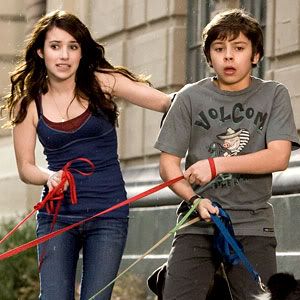
Speaking of Jake T. Austin, I was really looking forward to seeing how he would do in a full length film after watching him develop from a slightly tolerable throw away character to one of the most interesting cast members in Disney's Wizards of Waverly Place series, but I was very disappointed with his part in the film. He always felt like he was trying a bit too hard to be the reserved, sheltered, and conflicted younger brother type. He has a few flashes that are really promising, but the role does not offer much and Austin, sadly, does not do much to make it how own, but he is still growing and he shows promise as an actor. Of course it does not help that he is constantly alongside Emma Roberts. I had jokingly said that, after seeing her in Lymelife, that she has potential to top both my Lead and Supporting Actress lists for the year so far, but little did I know that it would turn out to be almost true. In a sea of near mediocrity, Roberts turns in a marvelous performance that must cement her as the most interesting young actress currently working. The range she shows is impressive, but the believability and personality she brings to the Andi character is endearing and inspired. Most of the supporting cast is really good, but Roberts is clearly the standout star and, while I would really need to think of other actresses to know where she falls in my rankings, she certainly is pretty damn impressive here.

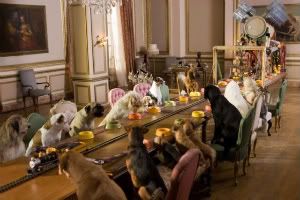
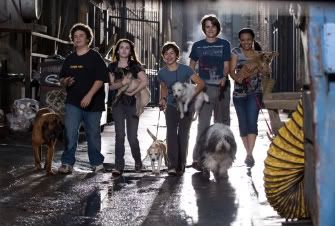
All in all Hotel for Dogs, despite being nothing revolutionary, possesses enough charm, and more than enough dogs, to have kept me both entertained and enjoying my time with the film. Sure, I tend to give most films that involve canines a pass, but here the film is well constructed enough to really succeed and sustain itself without feeling overly cheesy or ever mind numbingly stupid. Highlighted by Emma Roberts' second incredible performance of the year, Hotel for Dogs is a nice bit of escapist cinema with enough earned emotional pull to lift it from decent to good territory. It's a film I would not mind watching again some time in the future and really had my surprised with how much I had eventually enjoyed the film. The film also has a pretty funny Reservoir Dogs homage in it too, which is pictured above.

B/B- or 3.46248136745721357891369576

Comments are welcome and, for anyone with a literary mind, I encourage checking out my poetry blog filled with all original works for your reading pleasure.

Also I am on the old Twitter thing so I guess you can follow me at twitter.com/FLYmeatwad.
Monday, July 20, 2009

Down Here Where The Heat's So Fine, I'll Drink To Your Health And You Drink To Mine


Ratcatcher (Ramsay, 1999)

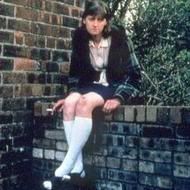
My excitement to watch Ratcatcher, a look at a youth's life during the Glasgow Garbage Strike, was enormously high because I had heard it compared to David Gordon Green's wonderful film George Washington. After finishing Ratcatcher I found the film to be a bit more similar to 2006's film This Is England than it was to Green's masterpiece, but unlike This Is England I am positive that I had an overwhelmingly positive response to Lynne Ramsay's film. The film is constructed beautifully and provides an insightful look at the construction of a child's identity without ever hitting the audience over the head with explanations for why James is the way he is, the boy just exists and grows in response to the people he is connected with and the time in which he lives, nothing more, nothing less. It is with this strength that the film carries itself during the hour and a half run time and really establishes itself as one of the greatest films ever made.

The film immediately starts out by showcasing Ramsay's directorial prowess, a trait that never lets up once during the film. The movie overflows with stunning shots and sequences that high light the atmosphere at the time and showcase some of the most spectacular cinematography I have ever witnessed in a film. At the start of the film, for about the first twenty minutes or so, it is actually very fortunate that the camera is used in such a wondrous manner because without such technical prowess I think it may have easy to lose interest in the hurried narrative; however, the reason the interest in the story is not there immediately is likely a result of how Ramsay opens the film and what expectations she works into the viewer's mind. When a film opens with a character we are generally led to believe that this figure will be the central character, and then Ramsay flips that entire notion on its head. It's a really impressive technique that adds to the film's meticulous construction in just about every aspect. Of course the film picks up immensely after the twenty minute mark when James goes on his first bus ride, so the prowess then begins to elevate the film instead of simply sustaining the movie.

Of course all the technical accomplishment a film may possess can easily be undermined by poor acting, but thankfully all of the actors in the film are really great and handle their roles with similar care to how Ramsay handles the script and the camera. In the role of James, William Eadie turns in an incredibly heartfelt performance that completely captures the mentality of a youth both in and out of place. He shows a spectacular range and is pretty phenomenal. Tommy Flanagan is pretty great as the Da, but of the secondary characters the obvious stand out comes in the form of Lynne Ramsay Jr. in the role of Anne Marie. She hits all of her notes pitch perfectly and always makes the audience want to hate her, but she possess some sort of mysterious charm that really prevents that, until the film begins to close and we see just how perfectly she played the part and how much respect she seemingly had for her character. It's mighty impressive that such a young girl can turn in such a powerful performance.

While it seems that this review is a bit shorter than my other looks at films, admittedly it is pretty rushed, I believe the reason for this is because the film covers so much ground that I am fairly sure that I was unable to completely grasp everything on a first viewing so I figured I would just discuss the highlights until I inevitably revisit the movie in a few years. I would also like to discuss, not at length or give any specifics, the fact that I'm pretty sure the film was designed specifically with my interests in mind. Never has another film gotten an ending so right nor with such mastery, beauty, and naturalism. It really is fantastic. Ratcatcher really nails just about everything in terms of quality and value while managing to turn in a compelling and complex film that takes great care to give the viewer just enough information to make the experience unique and rewarding. Sure it's no George Washington, the movies focus on two completely different topics and George Washington really covers much more territory, but who cares? Ratcatcher is still one Hell of a film that I can fully endorse.

A or 4.39239473285716843591263501236508

Comments are welcome and, for anyone with a literary mind, I encourage checking out my poetry blog filled with all original works for your reading pleasure.

Also I am on the old Twitter thing so I guess you can follow me at twitter.com/FLYmeatwad.
Sunday, July 19, 2009

Feel Like This Town's Gonna Put A Quick End To Me


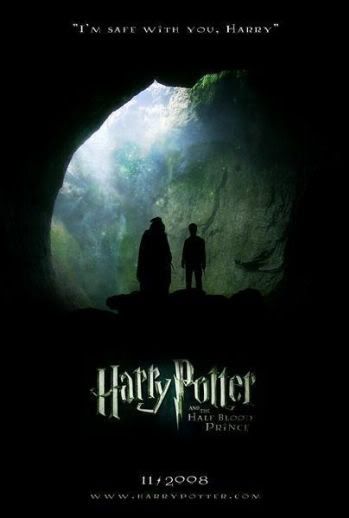
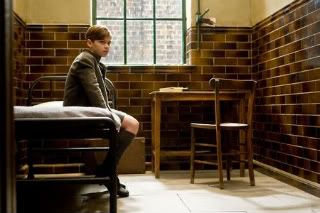
Harry Potter and the Half Blood Price (Yates, 2009)

I shall spare everyone an explanation of my elongated past with the Harry Potter franchise for the sanity of mind of every reader and shall instead offer this brief introduction. I really enjoy the franchise, the novels and the films, though the fifth film I felt was the only one to fall mostly flat in terms of just about everything, so I went into my viewing of The Half Blood Prince with a good bit of skepticism. Yates did not really impress me with the previous film and, it seemed to me, that he was not as capable of handling the franchise as many others had seemingly believed. Thankfully, things turned out differently and I really ended up enjoying my time with the newest Harry Potter film a fairly decent amount.

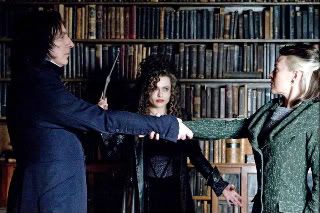
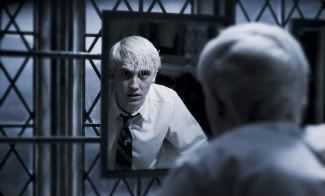
The first noticeable change, and I suppose it's not really the first but for the purposes of this article let's say that it is, comes in the form of the actors. While the franchise has always seemed to be cast near perfectly, and most of the core actors always showed flashes of brilliance, none of the elements ever seemed to come together quite like they do in this film. The main trio really handle the roles well and they are all given a chance to shine during the film, which is pretty damn impressive. I would have to say that Watson is likely the best of the three, but the difference is not incredibly enormous. Not surprisingly though, the supporting cast really compacts the talent and, ultimately, provide the best performances in the entire film. Felton makes the most of his limited screen time and turns in a great performance as Draco Malfoy, Rickman is great as Snape again, new addition Jim Broadbent is fantastic as Slughorn, and Helena Bonham Carter, who is once again stunningly attractive, provides easily the best performance in the film as she reprises her role as Bellatrix Lestrange. The acting one display in the film really is top notch.

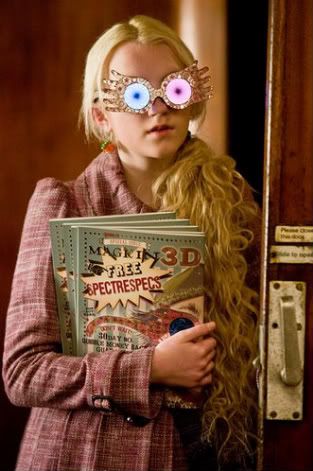
Sadly, the acting cannot make up for the script's flaws. Suffering from the same problem as Watchmen, the film has so much material to cover in such a short time that we never get a chance to sit down and really know these characters. The whole thing is constantly driving toward the end. As a result many of the supporting characters have limited screen time and are unwillingly forced into generic category roles. The most noticeable victim is Lynch in the role of Luna Lovegood. Her only purpose in the entire film is to serve as comedic relief. This would not be a problem if it didn't effect the story, but when Ginny becomes a major love interest with little to no screen time or reasoning it really draws attention to the fact that the film's run time should have been expanded by about another hour at bare minimum.

Thankfully, the film is still mostly delightful to watch and a large reason for this comes from the direction and the cinematography. Yates has a way with shooting the out doors. Each scene that took place outside of a house or the castle was completely breathtaking and captured the world perfectly. The film possesses a quiet beauty at times that is juxtaposed nicely amidst the film's tone. Speaking of tone, the film mostly nails that aspect as well. Each scene has the mood established and enhanced perfectly, both through score and direction. As far as technical aspects go the film rarely, if ever, falters. At the start all the in door sequences feel really crammed and underwhelming, but even that is rectified as the film continues.

Once again, the major complain that I have is that the film is not nearly long enough to flesh out all of the ideas. While I feel that they left a good deal out of the novel that is not even really too big of a deal because the film is compelling on its own and has one Hell of a finale, but I am more referring to the underdeveloped ideas in film. Aside from the aforementioned romance between Harry and Ginny, the whole Half Blood Prince aspect is completely glossed over. What should be half of the plot's driving force and a source of intrigue and wonder throughout the film is under played and the book becomes so minimally used that Snape's reveal at the end comes off as unwarranted and ineffective. The film provides no reason for the audience to wonder who the Half Blood Prince was, so why even provide this cheap throw away explanation?

While my review implies that I had a ton of problems with the film, my only real major complaint is the script and how the narrative is handled. The film is serviceable enough as an adaptation, but as can likely be seen looking at the movie as an adaptation is not my goal and has not really changed my feelings one way or the other. The film likely is the best entry in the series and is probably the best summer blockbuster since Men in Black. In many ways the Half Blood Prince is everything that The Dark Knight, Iron Man, and countless other hyped up yet severely underwhelming films should be. The film is about as good as escapism can get and the technical prowess puts it a cut above most high profile films. Not a great film by any means, the damn script keeps that from happening, but really damn good and an excellent entry in the film series. Unlike coming out of the fifth film, I am incredibly excited for the next two installments in the franchise, especially since the elongated run time may allow Yates to rectify the story telling problems.

B+/A- or 4.0932189347214872318471208

Comments are welcome and, for anyone with a literary mind, I encourage checking out my poetry blog filled with all original works for your reading pleasure.

Also I am on the old Twitter thing so I guess you can follow me at twitter.com/FLYmeatwad.
Friday, July 17, 2009

Surrenderin' For What? No Wavin' The Bandanna. Tell The Tool Man How I Handle The Damn Hammer


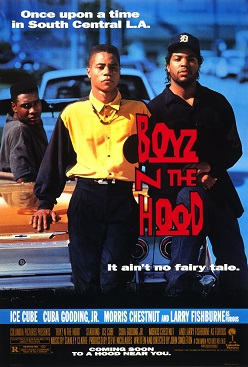
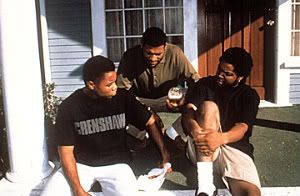
Boyz N the Hood (Singleton, 1991)

I was glancing over my other reviews and I noticed that, with the possible exception of The Adventures of Ichabod and Mr. Toad, I have yet to write a definitively negative review for a film. Going into Boyz N The Hood I was aware that director John Singleton is the only African American to ever be nominated for Best Director and, I learned this later, he is also the youngest nominee for the category. Now add that into the fact that I knew the film had a reputation for being a really great and insightful look at urban violence that neither glorifies or condemns the lifestyle, though that proves to be a misleading notion, while telling a compelling story with believable characters. I usually like films of this nature, the ones that ask questions and expose problems. So mix all of these things together with my fairly high expectations and what result is yielded? My first overtly negative reflection, of course.

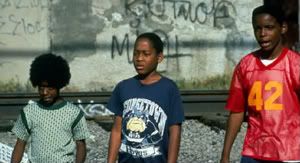
Boyz N the Hood starts off wielding a ten ton hammer that is swung around with more violent rage than any act of brutality in the whole film, all in an attempt to hit the viewer over the head with some simplistic parallel that apparently is designed to be deep or insightful or something like that which hardly works. The scene which I refer to is, of course, the one where the children see that blood is turning yellow and one says "that's because of the plasmids separating," or a similar line. Oh boy, it's like the kids are learning the same thing as everyone except in a different way because of their living circumstances. The streets are just as educational as the classroom. Piss off, John Singleton, you think this is anything but a needlessly overt way to start off a film? Mix that in a few scenes later with Trey's arrival at his father's house depicting, after cleaning, a run down lawn shown alongside the neighbor's beautiful green grass. Lovely, everything is always greener on the other side. Good move.

Thankfully, Singleton backs off of these cliched and overly simplistic literary devices when the boys exit childhood and become high school seniors preparing for the end of school. Sadly, what replaces these tired devices proves to be just as detrimental to the film. Singleton essentially trades in his run down Toyota for a tractor with two wheels. The script takes an odd turn to a very cliched Hollywood story telling sense where a love interest is needlessly thrown in, a wife and bastard child are added to set up for more emotional impact later in the film, and the story takes no turn from the first party until the credits. The film just feels like an independent film fighting with a Hollywood film and, much like Doughboy and Ricky earlier, the film just gets dingy and gives up. While there are the occasional sequences that do take a few risks, as a whole the film is so by the numbers that these small probes into meaningful territory are completely undermined.

What seemed so tough whilst watching the film though was not that the film simply kept inserting cliche after cliche, but that it needlessly heightened just about every circumstance and conflict. A scene towards the end where Ricky's SAT scores are revealed proves to be absolutely cringe worthy. Singleton forces stakes into the film and they really stick out as cheap and unnecessary when placed alongside what is supposed to be a tragically brutal and realistic portrayal of impoverished life. On top of that, Singleton's direction, while a few really great shots are used, such as the walk down the rail road tracks, is pretty erratic, ranging from terrible to incredible at any moment in the film. Toss in the score and many times the film started to feel less like an in depth look at urban life and more like an after school special.

Perhaps Singleton's most apparent crime in the film is not inserting needless drama, though that charge is mighty hefty, but rather the most glaring flaw is Singleton's refusal to let the film speak without dialogue. Despite having opportunities, and even using them at times, to imply things instead of directly speaking to the viewer, Singleton feels compelled to give elongated monologues where Larry Fishburne speaks to the audience about his message, and it really comes off as insincere and overly constructed. Then there are parts where someone talks about how things just keep happening "over and over again." It's all pretty painful to listen to and detracts from any impact the film hopes to make on a viewer. The film is not helped by the actors either. Fishburne is decent, but Cuba is pretty bad and Ice Cube is mostly tolerable.

And of course there is the fact that the film is going over territory already explored in much greater depth, in much more detail and with much more sophistication, in other films. The whole concept of being trapped and unable to escape, or the perceived mentality of being contained, is straight out of Charles Burnett's wonderful film Killer of Sheep. Aside from being a much more striking and emotionally engaging film, Killer of Sheep also exists in a much more reserved fashion and does not need to insult the viewer by spoon feeding ideas at each possible opportunity. On top of this, Spike Lee has explored the other territory this film masquerades as exploring in an attempt to appear complex and thought provoking. Despite it not being a tremendous film, Spike Lee's Do The Right Thing provides a more engaging and insightful look at urban life and the injustices of American society without resorting to the theatrics on display in Singleton's film, allowing for a more naturalistic film that enhances the message instead of detracts.

Much like Do The Right Thing, Boys N the Hood becomes incredibly overt at the end. Yet while Spike continues to call on reality, Boyz N the Hood continues to rely on its cheap theatrics to attempt and force a greater emotional impact on the viewer before proving to be an ultimately hollow experience. The follow up 'here's what these characters are doing now' lines that fade in and out, aside from reinforcing the After School Special feeling, continue to draw attention to the fact that everything on screen is artificially heightened and constructed; thus, any attempt to draw parallels between these characters and the reality is, for the umpteenth time, ground into a dust and blown away in the wind.

Ultimately, Boyz N the Hood is nothing more than a jumbled mishmash of ideas that are far too willing to conform to Hollywood convention to discover the sort of effective statement that the film so desperately attempts to find. Even without considering the fact that other films, and older films, have done what Singleton attempts, Boyz N the Hood still proves to be a joke of a film that struggles to ever find ground solid enough to stand on either as a high profile Hollywood film or as a thought provoking call to social action. I honestly would like to know if anyone, after seeing the Burnett film and the Lee film, can still make a case for Boyz N the Hood being worth much at all. Hell, I'd be interested in hearing this case made even from someone who has not seen either the Lee or Burnett films because it baffles me that this film can be considered anything except for glorified garbage. I imagine there is more entertainment and more insight to be gained from watching Don't Be a Menace to South Central While Drinkin' Your Juice in the Hood.

D/D+ or 1.718921742381742835723108

Comments are welcome and, for anyone with a literary mind, I encourage checking out my poetry blog filled with all original works for your reading pleasure.

Also I am on the old Twitter thing so I guess you can follow me at twitter.com/FLYmeatwad.

Thursday, July 16, 2009

You Can't Even Speak, But All Of Them Speak


In The Loop (Iannucci, 2009)

Every so often television shows get made into films. From what I know most of the adult shows made into films are usually pretty well regarded by fans and usually by critics alike. I do not know why, nor have I seen many of these films, but as talks of the Arrested Development film heat up I find myself caught up in the television to film transition hype and, as luck my have it, my recent viewing of In The Loop, based on the six episode British series The Thick Of It, is an example of a successful transition of a short lived series to the big screen. Now I ought to say that, while I knew a few things about the show, I have never seen an episode of the series nor have I seen any of Armando Iannucci's other work. However, after watching the show the first thing I feel compelled to do is check out the series and Iannucci's older work, so I suppose, at least in that sense, the film is a success.

Of course saying the film's only triumph is its ability to generate interest in the source material, and I suppose its ability to appeal to someone who is not familiar with said material, sells the film incredibly short because the film is one Hell of a ride and a refreshing breath of comedic air amidst a slew of underwhelming and generic comedies. It seems almost fitting that I watched this after Sasha Baron Cohen's latest effort, Bruno, because, with the exception of Adventureland, it really is the only other comedy I have seen this year that has delivered a good deal of substance mixed in with the laughs. Well, let's add In The Loop to that list because, as the posters may imply, the political satire that Iannucci showcases here is incredibly sharp and witty while still remaining mostly hysterical throughout. By blending the UK aspects with the US politics even an ignorant American like myself who is not in tune with any of the minor British references can find some things to grasp on to when things could easily become too culture specific. The film's script is handled with care and Iannucci delivers a beautifully cynical film that is packed to the brim with an engaging narrative.

As for the direction, there are a few shots and sequences that stand out as being visually noticeable, but I do not think that the film ever breaches territory that is beyond very good. Part of this, I assume, is because the pseudo-documentary, fly on the wall, style has been used in numerous sitcoms, most notably both versions of The Office and Arrested Developed, so that seeing it in a feature length film is not all that striking. Still, it's handled really well and it never gets int he way of the narrative at all, so despite not being anything all that new it is also nothing bad. The camera work is solid though and a joy at some times, it is just nothing that I feel needs extended time spent discussing when the film has so many other aspects of the film worth talking about.

Especially worth discussing is the acting, anchored by a stunningly talented cast who all take full advantage of their time on screen. The minor roles, even the limited time that Steve Coogan gets, are all incredibly funny and usually work in the context of the film and help drive the plot forward and, in the case of Coogan, prove crucial to the film's plot. The two major roles that stood out to me were Tom Hollander in the role of Simon Foster and, without question, Peter Capaldi as the wonderfully hilarious Malcolm Tucker. Hollander brings humor to a role that asks him to be humorously ignorant with flashes of brilliance, a fairly standard role, but when the film really begins making his personal conflict more overt he really starts turning in a really stellar performance. Similarly, Capaldi is given a good amount of time to shine at the end of the film because of the the narrative, but really from the beginning he is a bolt of lightning on screen. His angry comedy combines with his biting wit to make for one of the most memorable and enjoyable characters to appear on screen in a long while. He is absolutely hysterical and enough cannot be said about the man's performance.

In the end, In The Loop takes what could have been a solid comedy and elevates it to one of the year's most enjoyable by bringing together a great script, incredible talent, and very solid direction. I have only watched the film once so far, but from what I was able to gather it should be good for repeat viewings and, given the nature of the humor on display, probably contains many lines that I missed the first time around. Incredibly paced and uproariously funny, In The Loop stands on its own as a comedy and is approachable for those who, like myself, may not have been exposed to the source material. Sure the film is not without its flaws, but the laughs are there in droves and all the extraneous materials blend together to make one Hell of a comedy. I could go on about how great the film is, but I imagine, as tends to be the case with comedy, each personal experience will differ. So, while I do not usually do this, I am urging all readers to take the time and watch this wonderful film.

A-/A or 4.21823027147238104623854

Comments are welcome and, for anyone with a literary mind, I encourage checking out my poetry blog filled with all original works for your reading pleasure.

Also I am on the old Twitter thing so I guess you can follow me at twitter.com/FLYmeatwad.